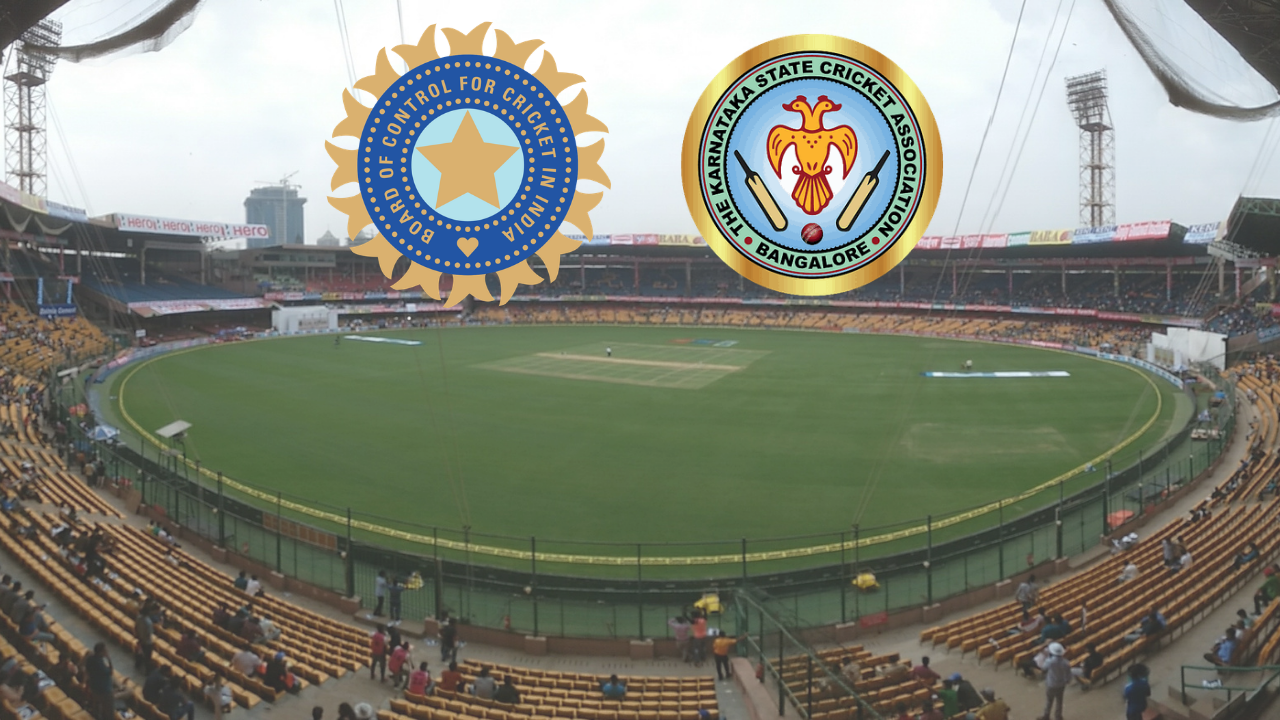
Bengaluru has lost hosting rights for the IPL 2026 final after a dispute over complimentary ticket allocations between the BCCI, the Karnataka State Cricket Association and the Karnataka state government made it impossible for the board to guarantee adequate fan access at the relatively low-capacity M Chinnaswamy Stadium. The Narendra Modi Stadium in Ahmedabad will instead host the title clash on May 31, with BCCI Secretary Devajit Saikia confirming that a formal written demand from KSCA for thousands of tickets far beyond what IPL regulations permit was the decisive trigger. The disclosure has since drawn a sharp political response from Karnataka Deputy Chief Minister D.K. Shivakumar.
KSCA’s demand and the BCCI’s response
The board’s concerns predated any formal correspondence. Informal inputs from multiple channels had already indicated that ticket allocations at Chinnaswamy during league matches were running well above what the IPL permits. When the BCCI sought written clarification, the response that arrived on May 2 confirmed the scale of what was being requested. “Consequently, we sent them an email requesting precise details regarding this matter. We were shocked when we received a response via email from the Karnataka State Cricket Association on May 2nd; in that email, they stated that, over and above the 15 per cent complimentary ticket quota, they would require an additional, substantial allocation of tickets for their members, affiliated clubs, and various others,” Saikia told reporters.
#WATCH | Guwahati, Assam: BCCI Secretary Devajit Saikia says, "Yesterday, the BCCI and the IPL announced the venues for the playoff matches. We have the Qualifiers and Playoffs, as well as the Final match. Therefore, we have selected three venues. One venue is Dharamshala; the… pic.twitter.com/n4YORh7GLt
— ANI (@ANI) May 7, 2026
The full extent of those demands went considerably further. “Most surprisingly, they also requested tickets for their local Members of the Legislative Assembly (MLAs) and Members of the Legislative Council. And also to the government of Karnataka, 700 complimentary tickets. Thus, over and above the 15 per cent allocation, they were demanding approximately 10,000 additional tickets,” he added. To understand the scale of that figure, Saikia set out what the IPL’s standard framework actually provides. “As per IPL protocol, we are required to provide only 15 per cent of the total seating capacity as complimentary tickets to the host association. This constitutes the standard protocol; all host state associations receive a 15 per cent allocation of their total capacity in the form of complimentary tickets,” he noted.
The informal intelligence the board had gathered before writing to KSCA had already pointed in the same direction. “However, we received information from various sources indicating that during the hosting of IPL league matches, the Karnataka State Association was claiming a significantly higher number of complimentary tickets far exceeding the stipulated 15 per cent,” Saikia stated.
Fan access made Chinnaswamy untenable
As previously reported by cricexec, Bengaluru had been designated to host the IPL 2026 final by virtue of Royal Challengers Bengaluru’s status as defending champions, with Ahmedabad confirmed as the replacement after the board moved the title clash away from the city. IPL Chairman Arun Dhumal told RevSportz the board had gone to considerable lengths to keep the final in Bengaluru before concluding that position was no longer sustainable. “See, as you all know, that is the convention and that is the norm (the venue for the final is the home city of the defending champions) that we have followed all these years, barring some incidents where it was not possible or feasible,” he said.
That commitment had already shaped decisions earlier in the season. “And given this convention only, we ensured that the opening game happened in Bangalore, despite the challenges they faced with the state government pertaining to last year’s stampede episode. We wanted to organise it in Bangalore only, but we checked with the state association as to how they would manage it. There is a new legislation that has come up in Karnataka, as you all know, under which I think three tickets are to be given to every legislator,” Dhumal noted. What the board found when it made those checks made the final’s future at Chinnaswamy impossible to defend. “And they had a few more commitments pertaining to their members and other dignitaries, wherein they had committed some tickets at concessional rates and stuff like that. Given that, we would have been in a tricky situation, as very few tickets would have been available to the fans,” he added.
Chinnaswamy’s capacity of approximately 35,000 left no margin to absorb those commitments while protecting fan access for a global audience. The relocation of an ICC Board meeting originally scheduled for Qatar added a further dimension to Ahmedabad’s case. “Another issue was that there was this ICC Board meeting, which was to take place in Qatar,” Dhumal stated. “But it could not take place because of the war at that point in time. So, since that ICC Board meeting is also to be conducted, most likely in Ahmedabad only, that is the reason we thought it appropriate. Since members would be coming in from all across the globe for the ICC meeting, we thought it appropriate to do it in Ahmedabad,” he added. The Narendra Modi Stadium’s capacity of 1.30 lakh gave the board the ticket inventory the occasion demanded.
Shivakumar’s political defence
Karnataka Deputy Chief Minister D.K. Shivakumar dismissed the characterisation of events that had emerged from the BCCI’s disclosures. Speaking before departing for Tamil Nadu, he rejected any suggestion that Karnataka’s requests were unusual by national standards. “In other states, more than 60 per cent of tickets are given to the respective state governments. What is the issue with 300 tickets? BJP, JD(S), or Congress leaders who do not want tickets can return them,” he told reporters.
Shivakumar also addressed his own involvement in the requests that reached KSCA. “I have done everything that R Ashoka had asked for. He had requested cricket tickets, and I arranged them. Our Vijayanand Kashappanavar had demanded more tickets and created an issue over it. As a public representative, I only placed their demand before KSCA,” he noted. He then turned his attention to the political narrative that had developed around the controversy. “People from Gujarat are doing politics over IPL tickets. All this drama is being done to sell more tickets. I had not asked for tickets for myself. Those who do not want tickets can return them,” Shivakumar added.
Dhumal on governance, expansion and the Impact Player rule
Dhumal addressed several broader IPL governance matters during his Cricbuzz interaction. On the BCCI’s move to tighten operational enforcement across franchises, he said: “I believe some reports have come to the honorary secretary regarding certain guidelines not being followed by players or franchises, particularly with respect to PMOA areas and other prescribed norms. Accordingly, we have decided to issue guidelines for stricter adherence to all those rules and parameters so that the officiating standards of the IPL are not compromised.”
On the Impact Player rule, Dhumal acknowledged ongoing debate while defending the regulation’s track record. “Whenever there is a change or a new concept introduced, there will always be debate around it. But we have seen that the Impact Player rule has worked well for the tournament,” he stated. He stopped short of committing to any revision but left the possibility open. “At the same time, if at any point, in the interest of the tournament, we feel there is a need to review it, we can certainly do so – not necessarily to change or alter it, but to assess it. We are always open to feedback, and that feedback is aimed at improving the competitiveness of the tournament,” Dhumal added.
On the prospect of expanding the IPL from 74 matches to a full home-and-away format of 94, he pointed to the improved scheduling window now available to the board. “We are hopeful. We now have a bigger window available for the IPL. Given the bilateral commitments in the previous FTP cycle, it was not possible to increase the number of games earlier,” he noted. “If we had increased the number of matches within the existing window, it would have resulted in more double-headers, which does not augur well for broadcasters or fans. Keeping that in mind, it would be more appropriate to first secure a larger window and then look at increasing the number of games from 74 to 94. That would also give us the opportunity to ensure an equal number of home and away games for all teams against every opposition,” he added.
The ticket allocation dispute and its consequences for Bengaluru raise a broader question about how political commitments made at state level interact with IPL governance frameworks — and whether the board’s intervention here signals a firmer approach to host association conduct in seasons ahead.