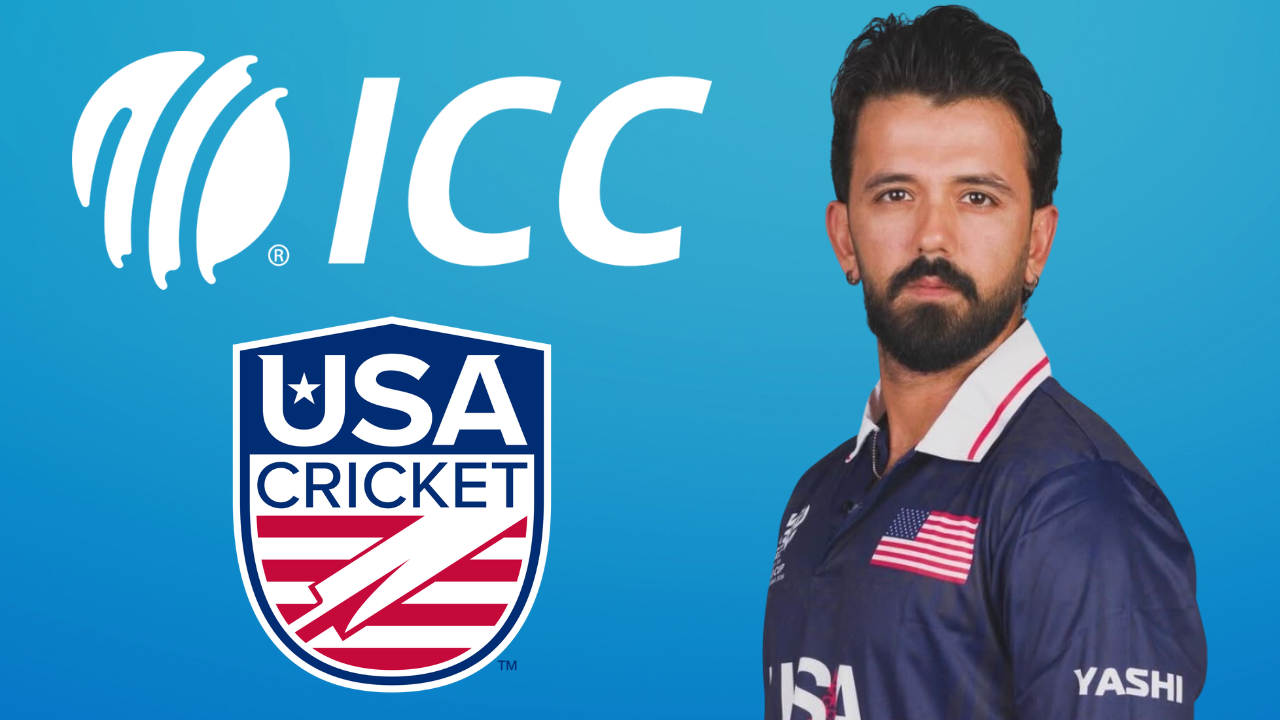
As Associate nations continue to disrupt the competitive hierarchy at the T20 World Cup 2026, USA batter Shayan Jahangir has publicly questioned whether the ICC’s current funding and development model is fit for purpose.
With emerging teams pushing Full Members to the brink, Jahangir’s message is not about participation — it is about parity.
Associate cricket’s breakout moment
From Nepal’s near-upset of England to USA reducing India to 75 for 6 in Mumbai, the 2026 edition has underlined a clear theme: the performance gap is narrowing.
“The exposure and the kind of funding that we get from ICC is lacking…I think we’ve been given the tag of Associate nation, but we are nothing short of a great team. As you have seen in this World Cup, all the teams that are tagged Associate Nations have put on a show, and they’ve given a very tough time to all these big teams,” Jahangir said.
USA’s own near-miss against India has become one of the defining moments of the tournament.
“Nepal almost won a game against England. We almost beat India, having them 75 for 6 – again Surya (Kumar Yadav) playing the way he played. But if we had cleansed those moments, we would have beaten the powerhouse of a World Cup team,” he added.
For ICC administrators, those performances raise a structural question: if Associate sides are already this competitive, what happens with sustained investment?
The funding and preparation divide
Jahangir drew a direct link between financial resources and competitive readiness.
Full Members arrived at the tournament following high-profile bilateral series on international-standard surfaces. USA, by contrast, had not played a T20I since April 2025 amid board-level disruption.
“Preparation is very important, and it has a lot to do with the funding as well. We don’t have the money to have those comps, have those big grounds that we can play on, and I think if we have that funding from the ICC, and it’s a request from us, personally from me, to really look into it, and if you really nurture us, I’m telling you, there’s so much talent in Associate cricket,” he added.
He was blunt in his assessment of the development ecosystem.
“I would say, we have not been watered down properly. We haven’t been nurtured properly. But again, it’s all our players who are putting in the hard yards. Without the financial resources, without the infrastructure, I think if ICC pays more attention to us and all the Associate nations, you’ll see more big games and you’ll see all these teams coming and changing their tag from Associate nations to big teams as well,” Jahangir added.
The implication is clear: performance is outpacing policy.
Talent without visibility
To reinforce his point, Jahangir highlighted the case of Nepal’s Dipendra Singh Airee — a player who holds the record for the fastest T20I half-century yet operates largely outside the global spotlight.
“There are so many cricketers who are so good, but not given the exposure. I think there’s this one guy from Nepal, he scored a nine-ball half century [referring to Dipendra Singh Airee]. And if it was at the highest level, he would get recognition all over the world, and he’s still struggling to play league cricket all over the world. So I think exposure, funding, and also a little push is required and, hopefully, we’ll get it.”
For the ICC’s global growth ambitions, visibility is as critical as viability.
Franchise ecosystems and the USA growth model
While international scheduling remains limited, domestic franchise structures are beginning to fill the gap.
“Since the inception of Major League Cricket, cricket has blossomed in the country,” he said. “There are a lot of youths who are picking up a cricket ball and a cricket bat. I think those are the kids who are going to take cricket forward in the country, and lots of people are taking interest. Even the native Americans who were born and raised in the country also have awareness that America has a cricket team.”
Jahangir also credits exposure to franchise cricket for strengthening belief within Associate squads.
“Being thrown in the jungle against the big boys and coming out strong gives you a great sense of belief,” he said.
“Again, these moments, if we keep seizing them… if most of the players also get those moments and they seize them, they will elevate their game and hopefully as well in the next few years you will see more guys [from USA] performing and more guys representing franchises and league cricket all over the world and everybody is going to be pleased to see the talent that we have.”
From a commercial standpoint, this is where Associate cricket may accelerate fastest: league ecosystems creating talent liquidity even if bilateral access remains restricted.
A personal journey mirrors Associate ambition
Jahangir’s own career arc reflects the broader Associate narrative.
Born in Karachi, he represented Pakistan at Under-19 level before relocating to the United States and eventually debuting internationally for USA in November 2022. Facing Pakistan on the World Cup stage marked a pivotal moment.
“If I look at it in hindsight, I mean everything happened for a reason,” Jahangir said. “It was again a full-circle moment for me. I never imagined playing against Pakistan in a World Cup. I always wanted to play for the country where I was born. But God has plans for everybody. I think whatever happened, whatever decisions I took in the past ten years have worked out for me well. I’m just grateful to be playing for the USA cricket team and looking forward to more opportunities.”
His trajectory — migration, reinvention, franchise exposure, global stage — mirrors the pathway many Associate players are now navigating.
The ICC’s strategic inflection point
With Associate nations consistently challenging Full Members at T20 World Cup 2026, the commercial and governance calculus may be shifting.
Jahangir’s intervention is not simply a plea for resources. It is a challenge to cricket’s distribution model.