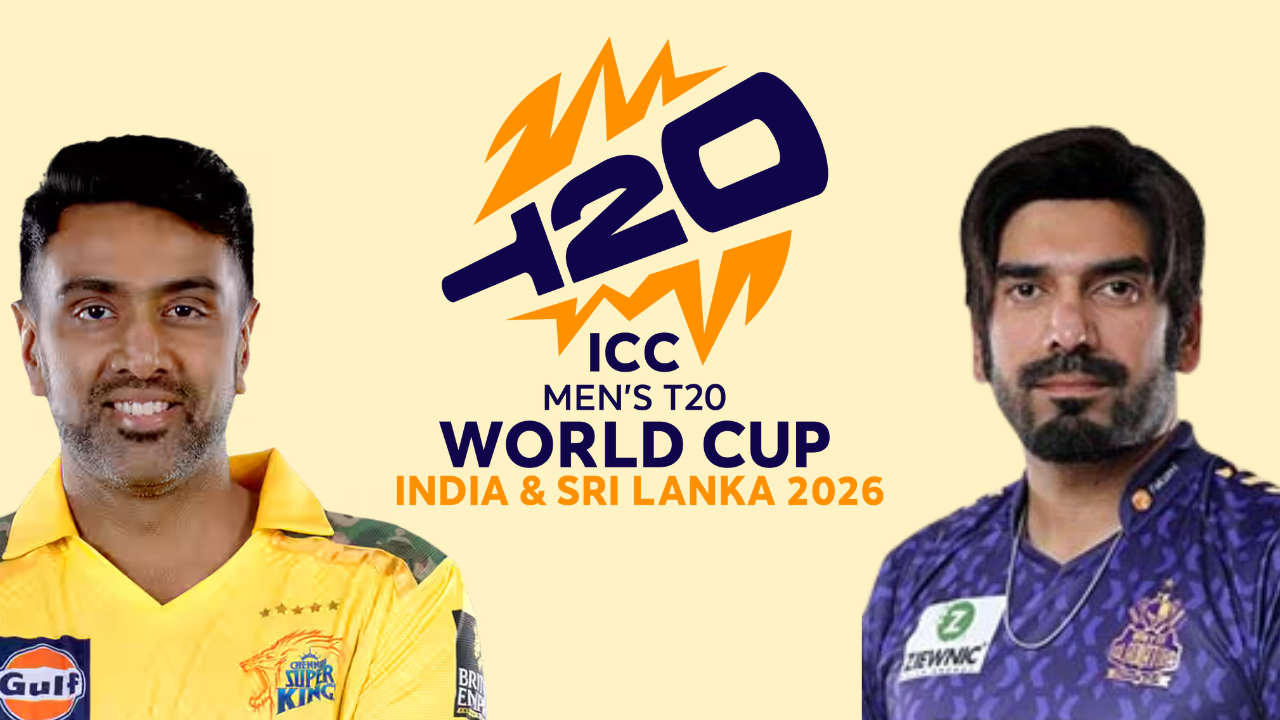
Social media erupts over Tariq’s action following standout World Cup performance
Usman Tariq’s unusual bowling action had largely simmered beneath the surface of global cricket conversation—until Pakistan’s recent T20 World Cup win against the USA. His three-wicket haul was pivotal in securing a 32-run victory, but it also reignited fierce scrutiny about the legality of his action, particularly a prolonged pause before delivery that has divided opinions across the cricket world.
The controversy, long bubbling from isolated moments and occasional criticism, exploded into the mainstream once again—this time on X (formerly Twitter). Former players and current professionals alike weighed in, especially as Tariq gears up for Pakistan’s high-stakes encounter against India.
The pause, the sling, and a growing sense of unease
Central to the debate is the unique structure of Tariq’s action. His staggered run-up concludes with a dramatic pause just before release—disrupting rhythm, drawing comparisons to Lasith Malinga’s sling, and prompting concerns over visibility and fairness. That pause, more than the mechanics of the delivery itself, has triggered the most vocal criticism.
“Even football doesn’t allow players to pause during a penalty run-up anymore. How is this ok? Action – all good. But pause? That too while loading to deliver. This can’t be continued seriously!” wrote Indian Cricketer Shreevats Goswami on X, questioning the validity of such tactics in a game built on rhythm.
Veteran spinner Ravichandran Ashwin responded, offering both agreement and counterpoint. “Agree football doesn’t allow it! While the batter can be allowed to switch hit or reverse without informing the umpire or bowler, after him/her commits to start batting on one side, why are the restrictions only limited to the bowler? In fact the bowler isn’t allowed to change the arm with which he/she bowls without informing the umpire! They should first change that rule.”
Agree football doesn’t allow it!
While the batter can be allowed to switch hit or reverse without informing the umpire or bowler, after him/her commits to start batting on one side, why are the restrictions only limited to the bowler?
In fact the bowler isn’t allowed to change… https://t.co/AOV4OKhwcL
— Ashwin 🇮🇳 (@ashwinravi99) February 11, 2026
But Goswami wasn’t done. Reiterating his concerns, he returned to X with a firmer stance: “Reverse sweep was first played in 1964 and it’s still debatable? Ok. We are talking about the “pause” here. “PAUSE”. A batter doesn’t take stance, look away, pause & then reset before the ball is delivered. He/she is absolutely ready for whatever the bowler has to offer. Let’s not make this bowler vs batter. It’s the PAUSE. If 1 sec pause is ok, then 2 is too, then 10 is too. Cricket is a game of continuity. Pause breaks the rhythm of the game & if you look closely. He kind of “bends his arms” when he bowls the faster one. Hopefully the ICC finds clarity before this becomes the next grey area.”
Reverse sweep was first played in 1964 and it’s still debatable ? Ok.
We are talking about the “ pause “ here. “ PAUSE “. A batter doesn’t take stance, look away, pause & then reset before the ball is delivered. He/she is absolutely ready for whatever the bowler has to offer.… https://t.co/3uH8kGN8mc— Shreevats goswami (@shreevats1) February 11, 2026
Legality versus perception: The ICC rule and Ashwin’s clarification
While online observers pour over screenshots and frame-by-frame replays, the legal framework remains relatively straightforward. According to ICC regulations, “An Illegal Bowling Action is where a player is throwing rather than bowling the ball. This is defined as the elbow extending by more than 15 degrees between the arm reaching horizontal and the ball being released.”
Ashwin, who had earlier highlighted cricket’s imbalance in treatment of bowlers and batters, also offered a more technical breakdown of the issue. “Okay, let me make it as clear as possible. Firstly, the legalities of his action can only be tested at an ICC bowling action testing Centre. Secondly, there is a 15° rule under which a bowler needs to keep his elbow and straighten it and to judge if a bowler is bowling within that 15° mark by the onfield Umpire is impossible. The only solution to that is having a real time in competition testing tool. The above is a grey area and to accuse someone for utilising the grey area is wrong. Finally, if the pause at the crease is legal or not, and that’s where I believe that it is entirely legal because that is his regular action.”
Okay, let me make it as clear as possible. Firstly, the legalities of his action can only be tested at an ICC bowling action testing Centre.
Secondly, there is a 15° rule under which a bowler needs to keep his elbow and straighten it and to judge if a bowler is bowling within… pic.twitter.com/RbTkY6xJ3h
— Ashwin 🇮🇳 (@ashwinravi99) February 11, 2026
A technical query, a biological condition, and echoes of Murali
Aakash Chopra offered a separate layer to the conversation, steering it toward biomechanics: “I feel ‘pause’ is absolutely fine. But I do have a very specific bowling question—if there’s no momentum generated by the run-up, is it possible to increase your pace by 20-25kms on certain deliveries without bending the arm?”
I feel ‘pause’ is absolutely fine. But I do have a very specific bowling question—if there’s no momentum generated by the run-up, is it possible to increase your pace by 20-25kms on certain deliveries without bending the arm? https://t.co/hfVIAhPSBu
— Aakash Chopra (@cricketaakash) February 11, 2026
At the centre of it all, Tariq himself has insisted that what appears to be bending is simply the result of a natural condition.
“There are two corners on my elbow which make it hard for me to straighten fully,” he told The National during ILT20.
And in a separate interview with MYK Sports, he elaborated further: “I do have two elbows in my arm. My arm bends naturally. I have got this tested and cleared. Everyone feels I bend my arm. My bent arm is a biological issue.”
The condition, known as hypermobility or being “double-jointed,” mirrors the challenges once faced by Sri Lanka’s Muttiah Muralitharan, who spent years fighting similar allegations before becoming one of cricket’s most decorated spinners.
Tested and cleared — but doubts linger
The ICC has already addressed Tariq’s action, at least procedurally. Twice reported during the Pakistan Super League, he underwent testing and was cleared both times. But cricket’s laws haven’t kept pace with its optics. The game has no in-match tool to measure elbow flexion, making the 15° rule difficult to enforce real-time. That gap — part regulatory, part technological — is where controversy festers.
The scrutiny has intensified not only because of Pakistan’s looming clash with India, but also due to Tariq’s rising impact. Since debuting just months ago, he has claimed 11 wickets in four games at an economy under six, and his ability to disrupt batters’ rhythm with the pause continues to draw results — and reactions.
Until more advanced on-field testing tools become available or the ICC revisits the definitions, Usman Tariq remains legal. But the larger conversation — about fairness, biomechanics, and outdated cricket laws — is only just beginning.