Bilateral cricket is facing one of its most significant commercial tests in decades. But the industry is not yet ready to cut it back.
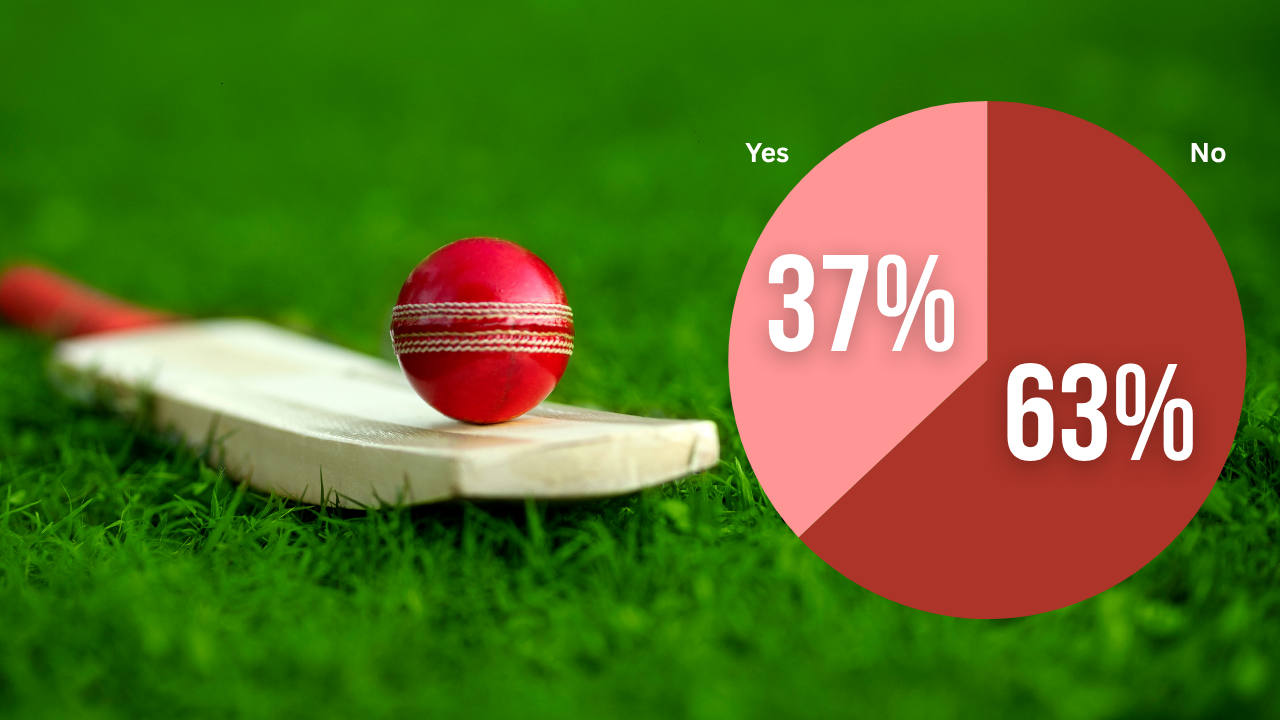
A cricexec poll of global cricket executives found that 63% believe bilateral tours should not be reduced, even as they increasingly struggle to secure broadcast deals, while 37% said they should be reduced in response to the shifting media landscape.
The result highlights a growing tension at the heart of the sport: while bilateral cricket is under mounting financial pressure, it remains structurally central to the global game.
Broadcast market strain exposes deeper challenges
The challenges facing bilateral cricket are no longer theoretical — they are playing out in real time across major markets.
In the UK, England’s upcoming tours of South Africa and Australia have struggled to secure broadcast partners, reflecting a clear pricing reset in the market. Deals that once commanded significantly higher values are now being negotiated around a benchmark of £8 million, illustrating how expectations have shifted.
Broadcasters are also changing strategy. Sky Sports has increasingly moved away from acquiring rights for England’s overseas tours, reducing its long-standing involvement in bilateral series outside major global events. At the same time, TNT Sports — which has previously stepped in for rights passed over by others — has been unable to match fees at that level, constrained by budget pressures and wider corporate uncertainty.
Cricket South Africa CEO Pholetsi Moseki, speaking to SportsBoom.co.za, acknowledged the impact of this environment:
“It’s never a good thing when you have less competition. When there’s less competition, it does impact the offers that are there.”
He added:
“The market is in flux, and it’s going to be like that probably for the next few years. It’s really about how to actually navigate it.”
These dynamics point to a broader recalibration in how bilateral cricket is valued — and sold.
The case for reduction gains traction
For the 37% of executives who supported reducing bilateral tours, the argument is rooted in both economics and calendar pressure.
The Marylebone Cricket Club (MCC) World Cricket Committee has already proposed a significant restructuring of the international schedule, recommending that bilateral One Day Internationals be largely removed outside the year preceding ICC World Cups.
As the committee stated:
“A scarcity of ODI cricket would increase the quality, achieved by removing bilateral ODIs, other than in the one year preceding each World Cup. This would, as a consequence, also create much-needed space in the global cricketing calendar.”
The rationale reflects a wider reality: the international calendar is increasingly congested, with franchise leagues expanding across the year and competing for both player availability and broadcast attention.
From this perspective, reducing bilateral cricket is not simply about cutting content — it is about rebalancing supply with demand.
Why the majority is holding firm
Yet despite these pressures, the 63% majority view is clear: reducing bilateral tours is not the solution.
At the heart of this position is the role bilateral cricket plays in sustaining the global ecosystem.
Unlike franchise leagues, bilateral series underpin financial flows for a wide range of boards, particularly those outside the sport’s traditional power centres. Tours involving leading nations generate broadcast revenue, sponsorship opportunities and competitive exposure that are difficult to replicate elsewhere.
Recent scheduling patterns also highlight how bilateral cricket contributes to the sport’s broader circulation. Tours between established and emerging nations create opportunities that extend beyond immediate commercial return, supporting long-term development and competitive balance.
This structural importance helps explain why the industry remains cautious about cutting back, even in the face of declining valuations.
A shifting market — not a collapsing one
At the same time, the broader cricket economy continues to evolve in ways that complicate the picture.
While bilateral tours struggle in certain markets, other forms of cricket are still securing broadcast traction. Franchise leagues and emerging competitions continue to attract distribution partners and digital platforms across multiple regions, highlighting a divergence in demand rather than a uniform decline.
This contrast does not necessarily signal a collapse in cricket’s commercial appeal — but rather a shift in what types of content are most attractive to broadcasters and audiences.
A question of adaptation, not reduction
The cricexec poll results suggest that the industry sees the current moment as one of transition rather than contraction.
Bilateral cricket is clearly under pressure, particularly in saturated markets where broadcasters are making increasingly selective decisions. But the reluctance to reduce tours indicates a belief that the solution lies elsewhere — in adaptation, innovation, and restructuring, rather than simple reduction.
That may involve rethinking formats, scheduling windows, or broadcast strategies. It may also require a more coordinated approach to balancing international and franchise cricket within an already crowded calendar.
For now, however, the message from the industry is clear.
Even as broadcast deals become harder to secure, bilateral cricket remains too important to cut.