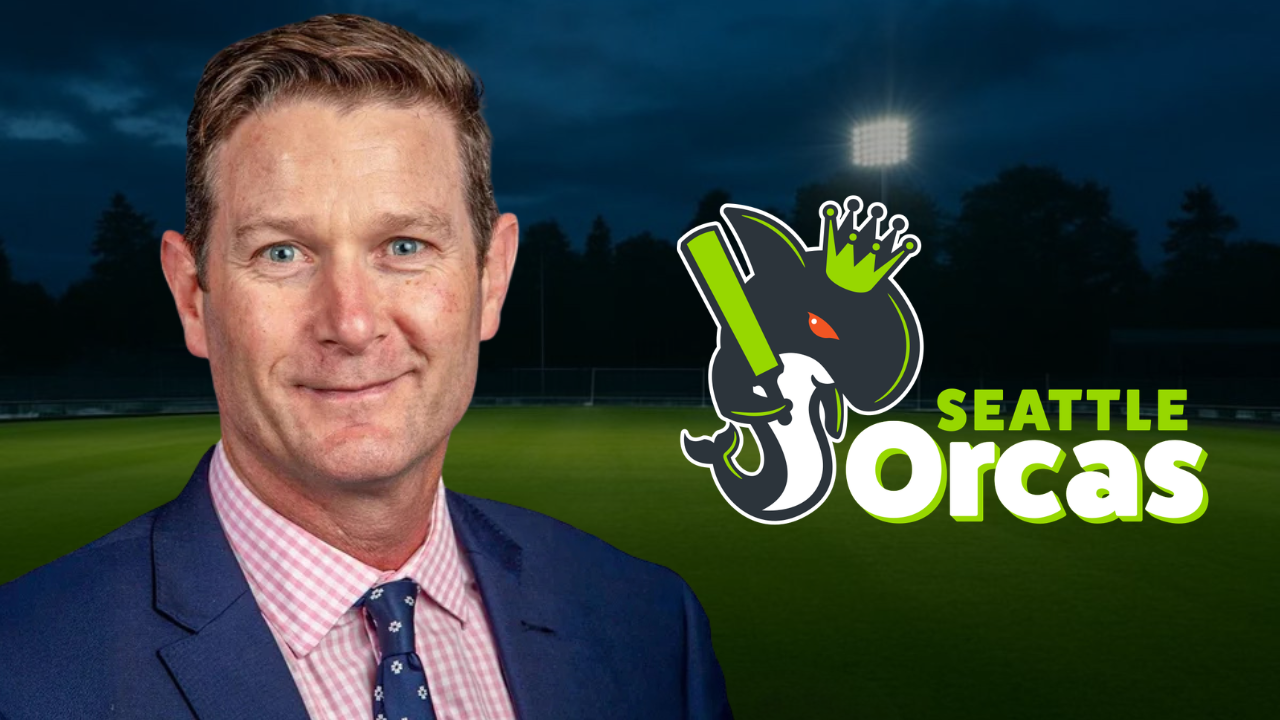
When the Seattle Orcas open Major League Cricket’s fourth season against the Texas Super Kings in Dallas on June 18, they will do so under a Chief Executive who has been in the chair for less than two months. Sean Cary started on April 20. The squad was already largely built, the coaching staff already hired, the season already bearing down. “It’s been such a baptism of fire coming in,” he says. “I’ve been in the role for a month, and we’re less than a month out from the season starting.”
That compressed runway is, in its way, a fitting introduction to a franchise that has spent three seasons trying to convert obvious potential into something durable. The Orcas reached the final in MLC’s inaugural 2023 season, then watched the next two campaigns slip away amid squad churn and, last year, a mid-season reset. The ambition now is to recapture that first-year run and push past it. “The team before me has done a wonderful job in setting up an amazing squad to really go hard and compete for that trophy,” Cary says, framing the goal as repeating the inaugural run to the final and going a step further.
A squad built for character, not just for runs
The roster Cary inherited reflects the central tension of short-format franchise cricket: the constant churn of players in and out, and the difficulty of building anything cohesive on top of it. “It’s almost impossible to keep exactly the same group of players from one season to the next,” he says. “That’s the nature of short-format T20 competition.” Every year, a number of contracted players return to the national pool, and franchises are left hoping the names they want resurface when their selections come around.
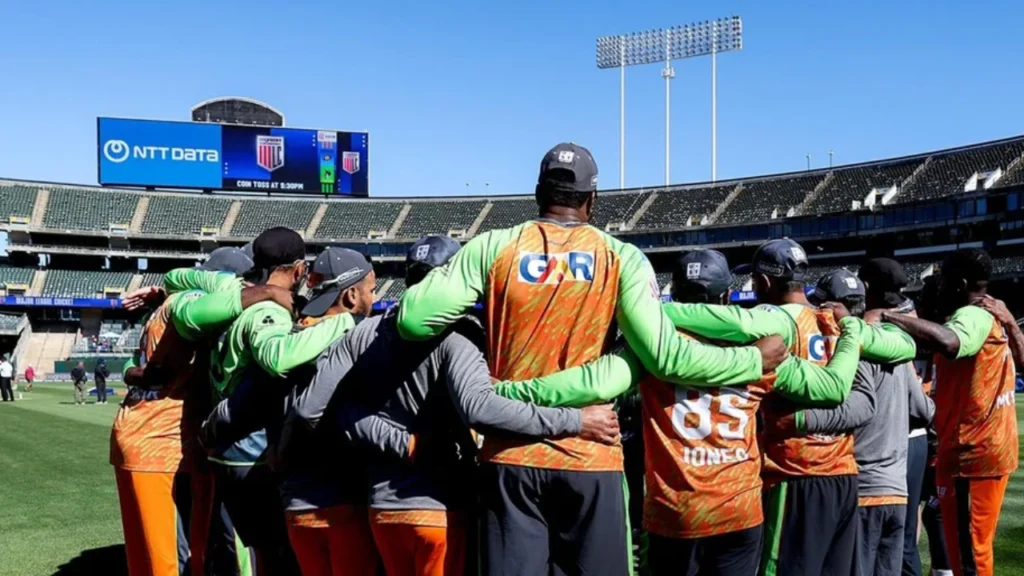
What the Orcas have tried to control, in the absence of continuity, is culture. Cary describes a deliberate effort to assemble a squad around shared values rather than talent alone — “a blend of American players, international players, players that can hit the ball out of the park, players that can bowl at 140 kilometres an hour,” but selected with one eye on temperament. “It’s hard to instill culture in such a short period of time,” he concedes. “But what we want to do is ensure the players understand the values of the team, and what role they’re going to play in fulfilling them.” He credits Head Coach Adam Voges, a multiple Big Bash League winner and former Australia international, and the broader support group around him: “With the likes of Jason Gillespie, we’ve got a world-class coaching outfit that’s going to provide the guide rails around a young, enthusiastic, energetic cricket team.” Recent additions — England’s Tim Robinson and the Australian leg-spinner Tanveer Sangha among them — round out a side Cary believes can make the playoffs.
A loss the franchise is still absorbing
The season arrives in the shadow of a loss the Orcas are still processing. S. Somasegar — “Soma,” the founding Co-Owner whose decades in Seattle’s technology community helped seed the franchise — died in May, weeks before Cary’s first season in charge. The two had only briefly overlapped, but the impact registered immediately. “He was an enormous part of cricket in this country, and more specifically to the cricket fraternity within the Seattle community,” Cary says. “His position, his personality, his character are going to be impossible to replace.”
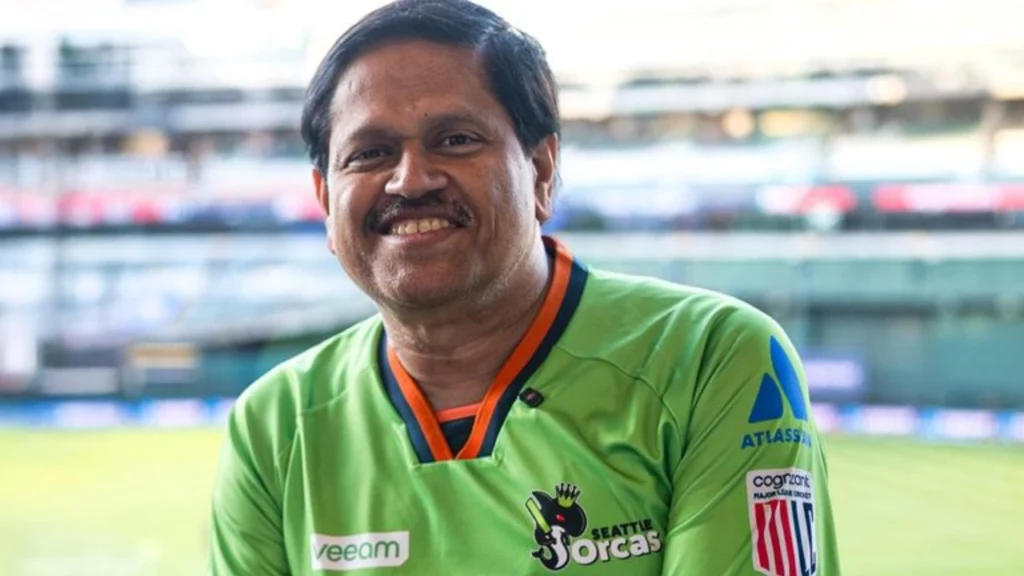
Soma’s death underscored how personal the Orcas’ ownership story is. The franchise was built by a group of current and former Microsoft executives and technology entrepreneurs — Somasegar, Sanjay Parthasarathy, Satya Nadella, Samir Bodas (who also passed away earlier this year), and Ashok Krishnamurthi — whose friendships, as cricexec has previously reported, stretch back roughly three decades to shared roots in Chennai and the early Microsoft Cricket Club. That group deliberately paired its local knowledge with the cricketing machinery of India’s GMR Group, Co-Owner of the Delhi Capitals, which also holds stakes in the Dubai Capitals, Pretoria Capitals, and, since this year, The Hundred’s Southern Brave. The Orcas’ operating logic — a local team plugged into global resources — is now the inheritance Cary has to steward.
The case for Seattle
For Cary, the appeal of the job is partly the place. An Australian who lists the outdoors among his reasons for warming to the Pacific Northwest, he spent a recent weekend hiking and climbing peaks outside the city. But the more consequential surprise was the size of the cricket base already in front of him. “I was really surprised, going through this process, to learn that we have 5,000 registered cricketers and over 400 teams in the Pacific Northwest,” he says. “It’s an amazing catchment area.” Much of that energy comes from the region’s technology workforce and its large South Asian community, already deeply engaged with the game — a foundation the Orcas want to build on rather than merely rely upon.
The strategy Cary lays out is unapologetically top-down. Major League Cricket, in his telling, was created to put the professional game in front of a wider American audience, and as a founding franchise the Orcas carry a responsibility to build awareness across their catchment. With the league expected to add teams over the next several years, that professional tier is the first rung. The next, Cary argues, is the collegiate system. “If we can get cricket into colleges, then we really set ourselves up for putting cricket into high schools and middle schools,” he says. The route runs through the NCAA, and a precondition for it, he notes, is equal opportunity for men and women, boys and girls — which is where the Orcas’ most distinctive bet comes in.

Going out on a limb for the women’s game
The clearest statement of intent this season is not on the men’s roster at all. The Orcas plan to stage a women’s T20 invitational in mid-to-late August, assembling three teams drawn largely from American domestic players and supplemented with international cricketers brought in to mentor and raise the standard. “The Seattle Orcas are going out on a bit of a limb here,” Cary says. “We’re challenging the ecosystem to really invest in the women’s game.”
The rationale is both developmental and strategic. “I just don’t think there are enough playing opportunities for our women’s cricketers at a higher level,” he says, which is why the franchise wants to manufacture a more competitive environment than the current calendar offers. He is explicit that the push originates with ownership: “This is a shout-out to our ownership group, who really wanted to invest in the women’s game, because they see the return on investment is significant.” The longer horizon is a women’s competition running in parallel to the men’s MLC, and beyond that a national side capable of competing when cricket reaches its largest American audience yet. “Their first test in front of a very big global audience,” Cary says, “will be the Olympic Games in 2028.”
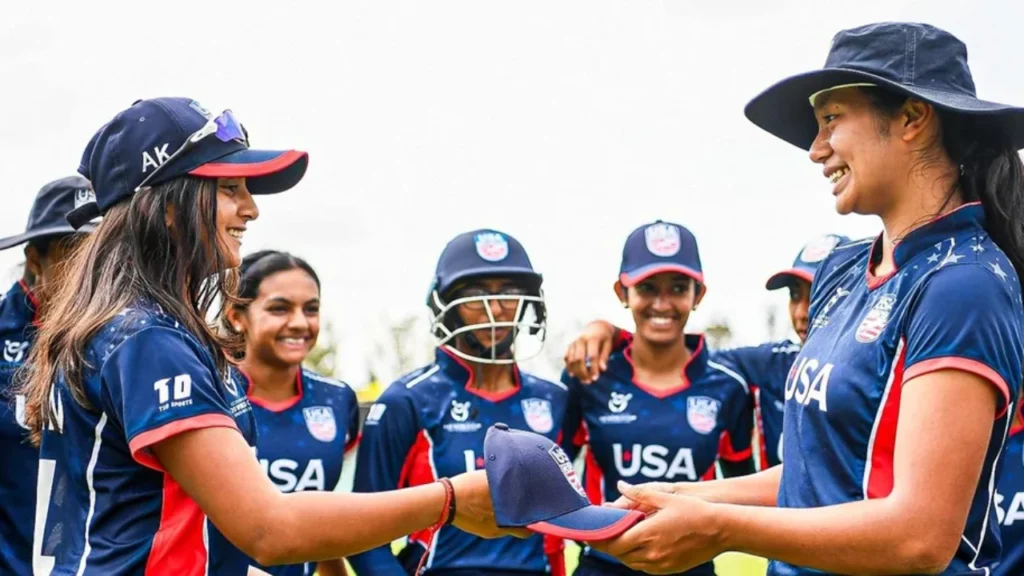
That framing aligns the Orcas with a broader industry conviction — visible across The Hundred’s equal-prize-money model and elsewhere — that the women’s game is where the sport’s growth is most favorable. It is also a notably forward stance for a single franchise to take in a league that has not yet launched a women’s competition of its own.
The long way back
If the Orcas were looking for an executive who understood both cricket’s plumbing and the spectacle of a marquee American event, Cary’s path reads almost as a brief. Born in Subiaco, Western Australia, he was a right-arm fast-medium bowler who played Sheffield Shield cricket for his state between 1994 and 2002 before moving into administration. At Cricket Australia, where he spent seven years rising from Umpire Manager to Head of Cricket Operations, he sat at the center of some of the game’s least spotlighted but most consequential work — managing the relationship with the players’ association and its memorandum of understanding, and helping shepherd the introduction of the pink ball and day-night Test cricket. It was, in other words, a career spent building systems rather than headlines.
The move that took him out of cricket was never planned. “The opportunity of coming to the US and working in tennis was never on my radar,” he says. What changed his mind was the chance to work under Stacey Allaster, the former WTA Chief Executive who became the first woman to serve as Tournament Director of a Grand Slam. “She is a trailblazer,” Cary says. “I thought immediately, this is someone I’m going to learn from.” At the United States Tennis Association, across roughly nine years, he rose to Managing Director of Competition Operations for the US Open, responsible for integrating broadcast, digital, IT, commercial, and venue teams into the delivery of one of the world’s largest annual sporting events.
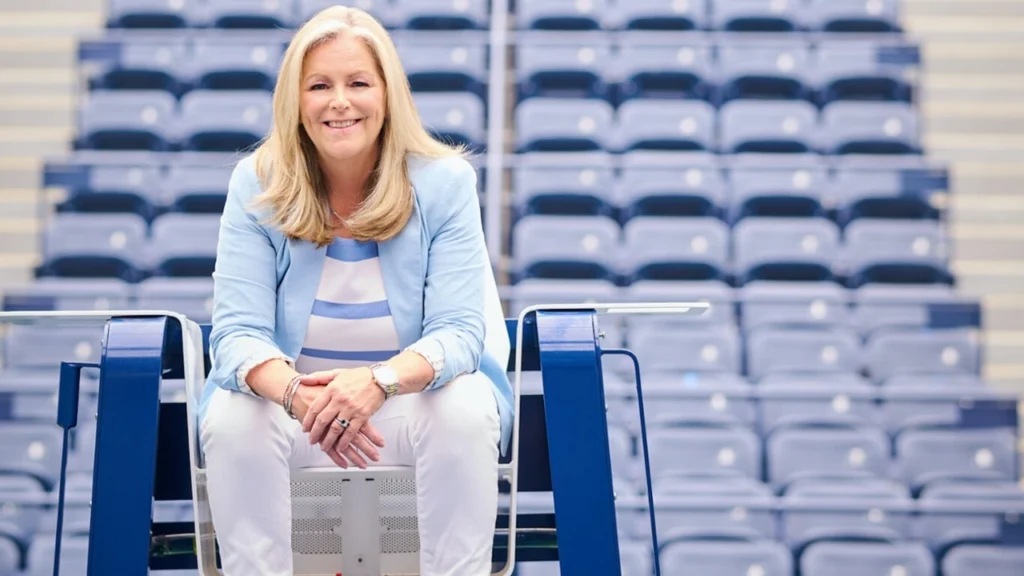
He frames that experience as directly transferable to running a franchise inside a compressed T20 tournament. “One of the things I took out of the US Open is that you can never plan and strategize enough for the unexpected,” he says. “Every year there was a scenario we needed to make sure we had the systems, processes, and people in place to deal with on the spot.” Live sport, he argues, rewards the operators who have rehearsed for the things that cannot be rehearsed.
For all that, tennis was a detour. “I like the game, however tennis was not my passion, and cricket has always been my passion,” he says. “My heart has never left the game, and I’m forever grateful that an opportunity has recreated itself to allow me back in.”
From spectacle to system
There is a through-line in Cary’s return that says something about where American cricket now finds itself. Major League Cricket has already done the hard, attention-grabbing work of putting professional cricket on the map — record crowds, global broadcast carriage, a wave of first-time ticket buyers. The next phase is less about spectacle than about machinery: feeder pathways through colleges and schools, a credible women’s structure, the unglamorous operational discipline that lets a league scale without breaking. Those happen to be the things Cary has spent a career doing, from pink-ball negotiations in Australia to contingency planning at Flushing Meadows.
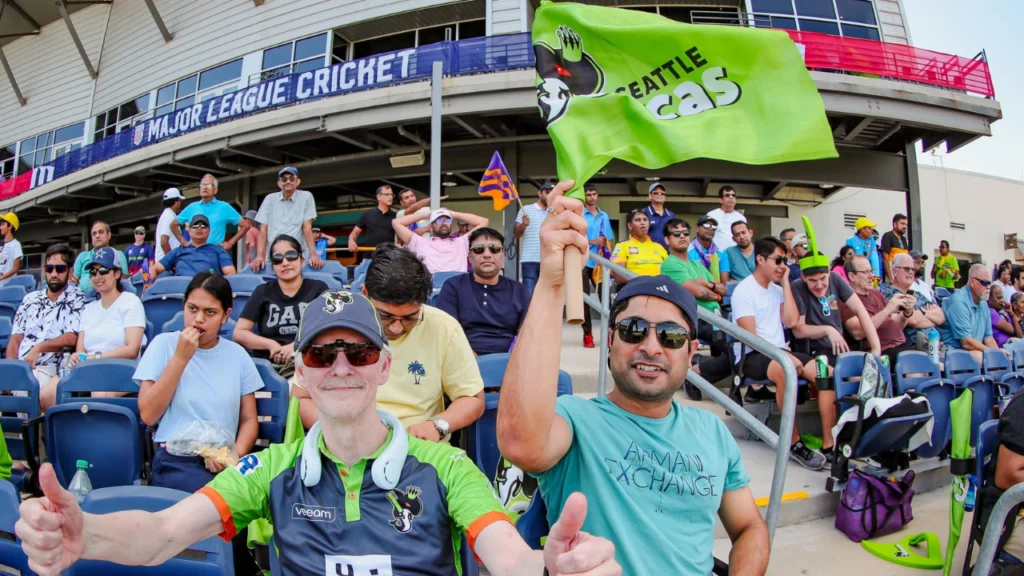
He describes the task ahead in startup terms — building “a franchise and a company from almost a startup position into something that’s going to be bigger and better.” The destination is the one the founders settled on in a branding session years ago and have repeated since: making the Seattle Orcas “America’s favorite cricket team.” It is, as the owners themselves have acknowledged, a phrase that is part aspiration and part dare. With the LA Olympics on the horizon and a women’s tournament he intends to stand up within months, Cary is betting that the slogan gets closer to true the more of the unseen architecture he can build beneath it.