

Cricket has spent most of its history speaking to men. The broadcasts, the sponsorship decks, the stadium experience — much of it was built, more or less unconsciously, around an assumed audience that looked a particular way. Dr. Tara Wilkinson-McClean is blunt about the inheritance. “We all know cricket hasn’t done a great job of either speaking to women or including women,” she says. “But that’s changing, and it has to.”
She would know better than most what that change looks like from the inside. As Head of Partnerships at the Caribbean Premier League (CPL) — a role she has held since the start of 2024, atop more than a decade selling and servicing the league’s sponsorships — Wilkinson-McClean spends her seasons reading the CPL‘s audience and converting what she finds into commercial strategy. And what the audience has been telling her is unambiguous. “All of the research shows that women are in excess of fifty percent of the broadcast audiences,” she says. “Women are the next frontier.”
The CPL is an unusual venue for that argument, and an instructive one. As cricexec has documented, the league was built without the broadcast windfalls that bankroll its larger franchise cousins; serving a regional market of roughly five million English-speaking Caribbean inhabitants, it had to be funded by sponsorship rather than central rights. That constraint forced a discipline now studied well beyond the region — a philosophy of integration over interruption, of selling through the fan experience rather than around it, and of partnerships so durable they have become the envy of wealthier competitions. The model contributes more than US $225 million to the regional economy each year.

In a league where sponsorship is the engine rather than the garnish, knowing precisely who is watching — and being able to prove it to the brands writing the checks — is not a side project. It is the business. Which is what makes Wilkinson-McClean’s reading of the data more than an observation. It is a thesis about where the CPL’s next growth comes from, and she has spent the past two seasons turning it into a sell.
The other way in
She did not arrive at cricket the way most people in the industry do. There was no childhood spent at the boundary rope, no playing career, no obvious on-ramp. There was a LinkedIn message.
It came from Jamie Stewart, the league’s Commercial Director and one of its founding architects, who reached out as he prepared to spend time in the Caribbean building out what would become the CPL. “He was coming to the region and looking to connect with people in this space,” she recalls. “And you never say no to opportunity.” They met. Shortly afterward, Stewart asked whether she would consider working in sponsorship — a field she had never worked in, attached to a sport she had never worked in, though she carried a marketing background. “He took a bet on me,” she says. “He brought me in under his wing and taught me everything about cricket and sponsorship.”
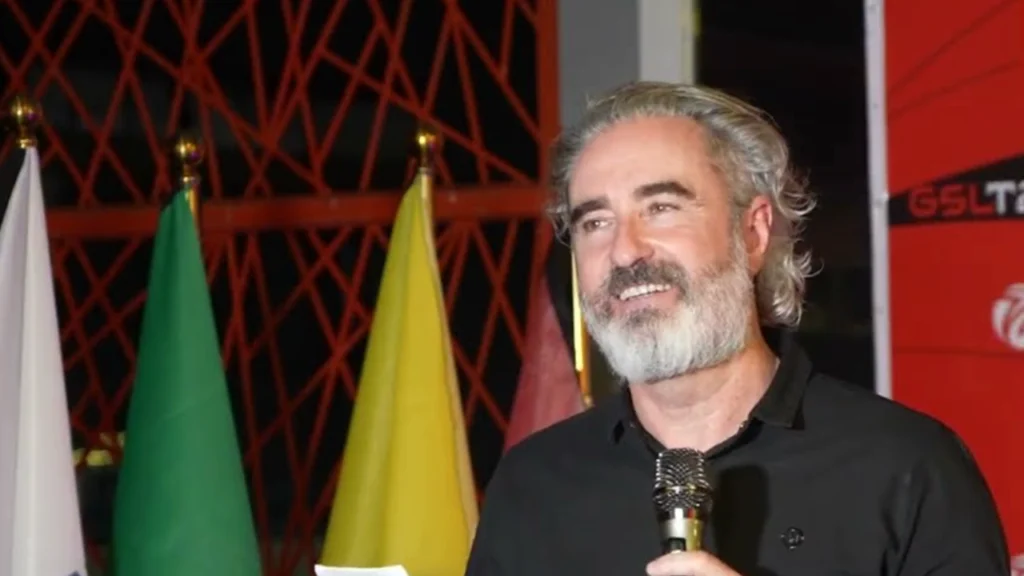
What followed was a conversion of a particular kind. She did not fall for the game so much as for what it could do. “I fell in love with cricket because I realized the platform that it creates — the opportunities and the doors it opens for people,” she says. “I came at cricket from the other way in.” It is a useful vantage point. Someone who arrives through the commercial door, rather than the pavilion, tends to see the audience as a thing to be understood rather than assumed.
One thread
For years, Wilkinson-McClean carried what she experienced as a problem. She was a university lecturer and a sponsorship executive and a brand strategist and an interior designer, and the roles felt like rival claims on a single person. “I felt as though they were different people pulling me in different directions,” she says.
The reframing came through the ICC’s leadership program, and a mentor — Lydia Buthello, Head of the Nita Mukesh Ambani Cultural Centre — who opened their first meeting with a single question: what was the biggest problem she had? When Wilkinson-McClean described the sense of being pulled apart, the mentor sent her away with an assignment — to come back with a simple expression of how all of it intersected. The answer, once she found it, reorganized how she thought about her own work. The common thread was experience.
“When I teach, it’s about the experience my students have and how they see the world,” she says. “When I think about partnerships, it’s the experience for the partner, but it’s also the experience for the fan. And if you think of interior design, when you design a space, it’s about how you want people to experience that space.” Seen that way, the lecture hall and the sponsorship deck and the floor plan stopped competing. They were the same instinct, applied to different rooms.
That instinct shapes how she runs her team. Her classroom style, she says, is built on “teaching them how to think and not necessarily what to think” — a principle she carries directly into the CPL. And it explains the deceptively simple way she frames the league’s commercial work: a sponsor’s business objectives and the fan’s enjoyment are not two things to be balanced against each other. “We don’t see a company’s business objectives and the fan experience as two different things,” she says. “To us, they’re one and the same.” Every partnership begins with the brand’s objectives and then bends them toward something a fan would actually want to encounter. Get that right, in her telling, and retention takes care of itself — a claim Stewart has corroborated, crediting her as a major reason the league’s partners keep renewing.
Women are here
The thesis became a strategy in a conference room.
Each season, the CPL surveys its fans once the tournament is over, and in the responses Wilkinson-McClean found something her sponsors had not been designing for. “Women make up a significant part of the CPL audience,” she says. “And what they’re interested in is a lifestyle approach to sport.” The finding sat in front of her as a question rather than a conclusion: how do you share this with partners so that, when they build their activations, they are speaking to the people actually on the ground?
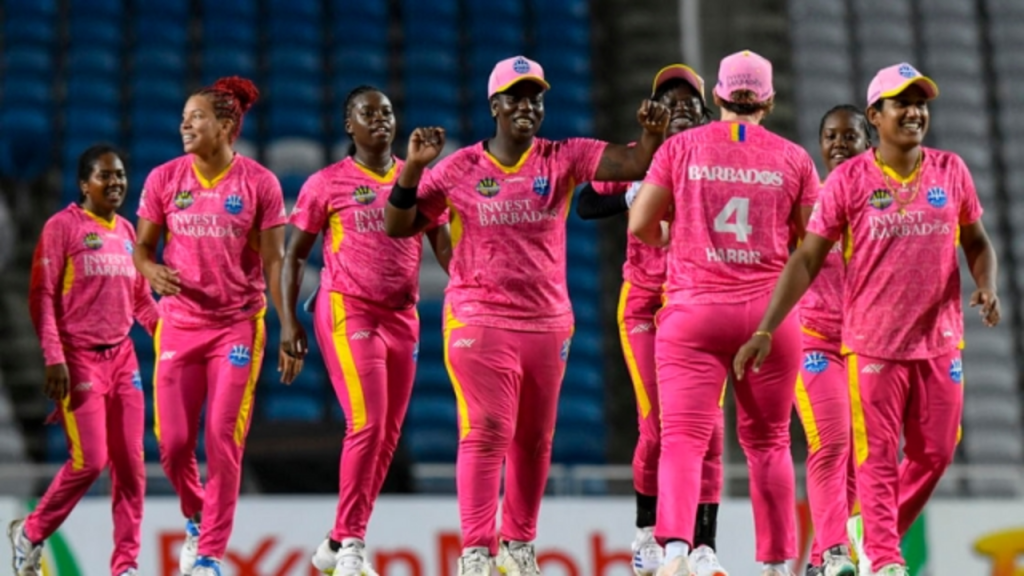
Her answer was to put the data on the table. At a recent partners’ conference, she walked the league’s sponsors through what the numbers showed. “We shared the data with them and we said: women are here,” she recalls. “And they’re showing up in these ways, and these are the things they’re interested in.” The message was not that brands should bolt on a women’s campaign. It was that a large, identifiable, underserved share of the audience wanted the sport plus the world around it. “Women wanted sport,” she says, “but they also wanted the aspects around sport that reflected who they are. We’re very dynamic. We’re interested in investing, we’re interested in lifestyle, we’re interested in fashion.”
The clearest test case came through Massy, the regional conglomerate that served as title sponsor of the Women’s CPL from 2022 to 2025. Rather than treat its presence as signage, the brand reconsidered which parts of its sprawling portfolio to bring forward, and built an activation pitched deliberately at a lifestyle register — designed, in Wilkinson-McClean’s words, “to speak to women and have them more engaged.” It is a small example of a larger reorientation, and a literal application of the integration-over-interruption logic the CPL is known for: the data tells a partner who is in the stands, and the partner answers with an experience built for them rather than at them.
That she can have this conversation at all rests on the platform the league has assembled. “We have the platform, we have the eyeballs,” she says, citing 1.17 billion views across broadcast and social by her count last season. The reach makes the audience worth addressing; the survey work makes the audience legible. What she has effectively done is give the CPL’s commercial pitch a second axis — not only how many are watching, but who, and what they want once they arrive.
The next frontier
It is not a coincidence that the executive reading these numbers holds a doctorate in gender and media studies, with broader scholarship in gender and communication. Where many leagues treat women’s engagement as a goodwill exercise, Wilkinson-McClean tends to treat it as a market that the industry has simply failed to price.
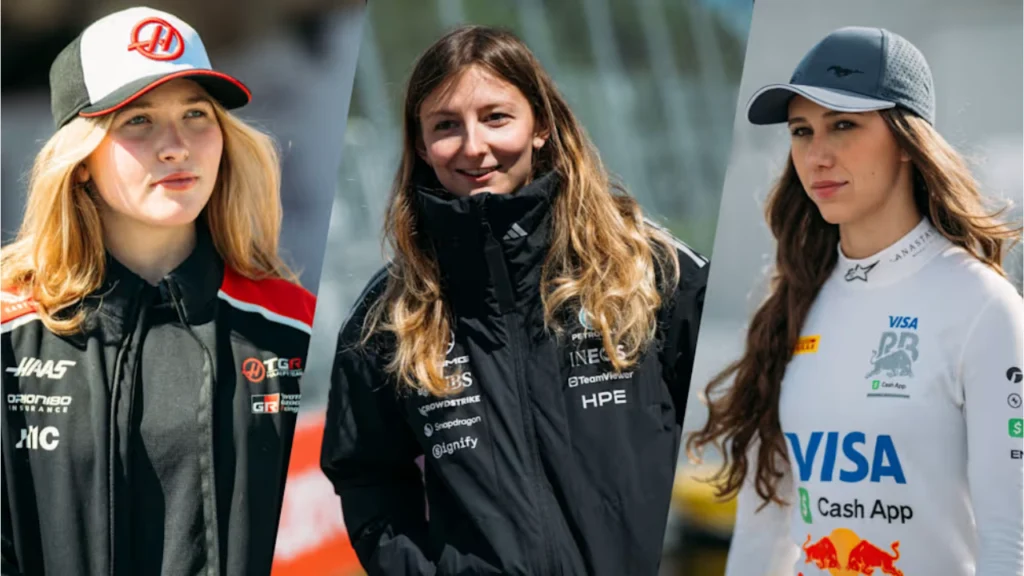
She reaches outside cricket to make the point, to a project she admires: F1 Academy, the all-female driver series that Susie Wolff has run as Managing Director since 2023. The series launched into empty grandstands with almost no broadcast presence and has since built genuine commercial and audience reach. “The numbers don’t lie,” Wilkinson-McClean says. “The level of sponsorship she’s been able to generate, the broadcast views she’s been able to generate — all from looking at the market and saying, this is a gap, this is a niche we haven’t been speaking to.” Cricket, she argues, is beginning to do the same, and the logic is commercial before it is anything else. “The business of it makes sense to include women.”
But she is careful not to frame women as a new arrival to be courted. “Women have always been there,” she says. “It’s just that cricket is now paying attention to the fact that we’ve always been there.” The distinction matters to her, because it changes what the work is. It is not recruitment; it is recognition — and then making room.
For Wilkinson-McClean, part of making room is being visible in it. She talks about leading by example, “showing up in a way where other women who watch me can see that not only is there a space for you, but there’s a space for you to come and show up as who you are, and bring all of your experiences into the role.” The principle has a concrete expression in her team. A couple of seasons ago, the CPL took on a young intern from Trinidad for six weeks; the following year she returned and was hired as an assistant, eventually running rights delivery end to end in her market across the season. Wilkinson-McClean watched that trajectory with something close to recognition. “It’s somebody who took a chance on me, brought me in, and allowed me to grow,” she says. “It’s about giving women opportunities, because we’ve always been there. It’s now about how do we show up, and how do these tournaments give us a platform so that we can add value.”
Seeing herself on the field
If the survey data is the argument’s head, the Women’s CPL is its heart — and the place where Wilkinson-McClean’s commercial reasoning and her belief in representation collapse into a single image.
She was working a match, moving through the stands to check sponsor activations, when she noticed a little girl as Hayley Matthews walked out to the field. Matthews — the West Indies captain, a Barbadian, the most decorated cricketer the women’s regional game has produced — was, to this child, something more immediate than a role model on a poster. “As soon as Hayley walked out, she started to jump up and scream her name,” Wilkinson-McClean recalls. “That moment, for that little girl to see her on the field and to see herself in a player — that’s what we need to unlock.” The point, she stresses, is not that the girl will necessarily become a professional, or even work in the sport. “Even if she does none of that, she had an opportunity to connect with a Caribbean woman on the field in a way that she saw herself.”
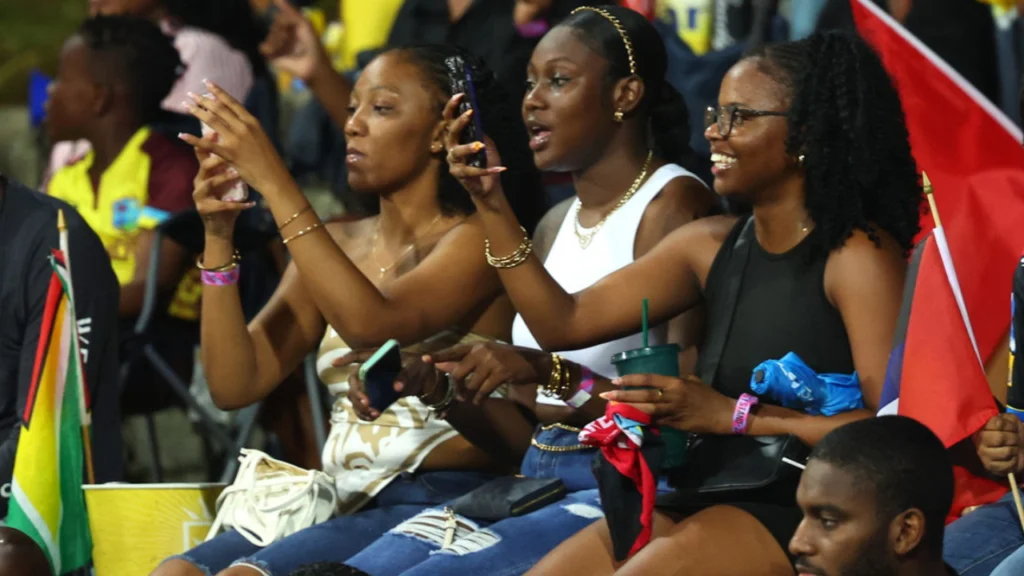
That conviction informs how the WCPL is being built as a brand rather than merely a fixture list. The aim, she says, is to reflect “the fullness of women and how they show up” — which means designing around lives, not demographics. Women at the cricket may or may not have children; so the league asks how to fold children into the day. They arrive with interests that extend past the boundary; so the brand is shaped to meet them there. The through-line is the same one that runs through everything she does: build the experience around the person you actually expect to walk in.
It’s pretty
Long before any of this, there was a small girl in Bridgetown at Christmas, looking up at the lights. Her mother likes to tell the story: the first words she remembers her daughter saying clearly were it’s pretty. “From that moment,” Wilkinson-McClean says, “I’ve always been about space and making things beautiful.”
That instinct became a second practice. She came to interior design almost reluctantly — a competition arose, she hesitated, and it took a friend telling her she was “missing her calling” for her to enter. She won, and has been designing immersive residential and commercial spaces ever since, award in hand. It is not her primary work, but it is arguably the purest expression of her one thread, and the project she is proudest of brought her back, again, to cricket.
When a VIP lounge dedicated to Sir Garry Sobers — the Barbadian who is among the greatest cricketers ever to play — at the Sir Garfield Sobers Sports Complex in Bridgetown came up for redesign, she bid for it and won. She approached the room the way she approaches a sponsorship: as a story to be told. “I found all the friends and contacts I could,” she says, “and asked, tell me about him. What does he love to do? Who is he?” What she learned shaped the space. One wall became a run of newspaper clippings tracing his life, part museum and part lounge, so that a visitor could read his story in a single sweep. The other end became a bar, because Sobers loved nothing more than watching cricket with his friends. The result is a place to gather that also, quietly, narrates the man it honors.
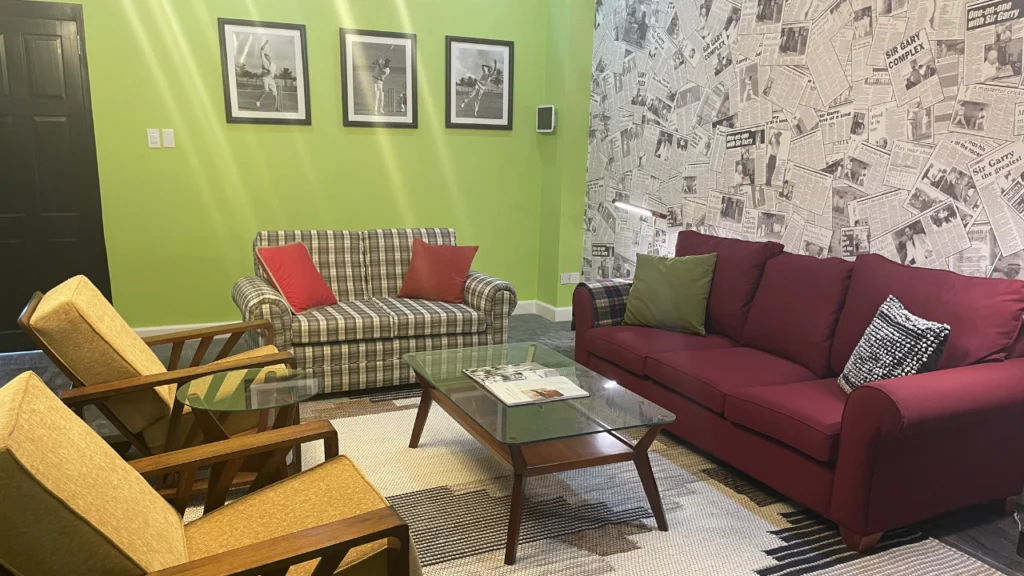
It is a useful way to understand what Wilkinson-McClean actually does for the CPL, and why the league’s case for women is, in her hands, both commercial and human at once. A sponsorship, a lecture, a national legend’s lounge, a stadium full of fans the sport is only now learning to see clearly — to her, they are all the same problem, solved the same way. Find out who is really there. Then build something they can see themselves inside.


