
A carnival that became a business model
When the final ball of the 2025 Caribbean Premier League was bowled on September 21 at Providence Stadium in Guyana, and the Trinbago Knight Riders lifted the championship trophy for the fifth time, the noise that followed was pure Caribbean theatre. Brass bands erupted, fans danced in aisles draped in Republic Bank blue, and fireworks lit up the sky above the Demerara River.
The CPL final has evolved into more than a sporting event — it’s an annual reaffirmation of regional pride. The tournament’s cultural pull is so strong that brands now plan campaigns around it, governments time tourism drives, and fans across six nations treat it as a shared national festival.
Only days later came confirmation of that confidence in commercial form: Republic Bank renewed its title sponsorship of the CPL for three years through 2028, extending one of the most stable commercial relationships in modern cricket. The deal, which also includes the Women’s CPL and the Five for Fun grassroots programme, signaled not just continuity but evolution — a sign that CPL’s fan-first model had matured into one of the most effective sponsorship ecosystems in the sport.
Pete Russell, CPL’s Chief Executive Officer, celebrated the moment, saying Republic Bank’s involvement “ensures three more years of investment into putting together what is one of the world’s great cricket leagues.”
For Jamie Stewart, the league’s Commercial Director and one of its founding commercial architects, this was another example of what the CPL’s and the Caribbean do best in the cricket world: turning culture into value. “Companies want to invest where they see value — brand equity, sales, all the usual metrics — but here in the Caribbean there’s a deeper sense of what that value means.”
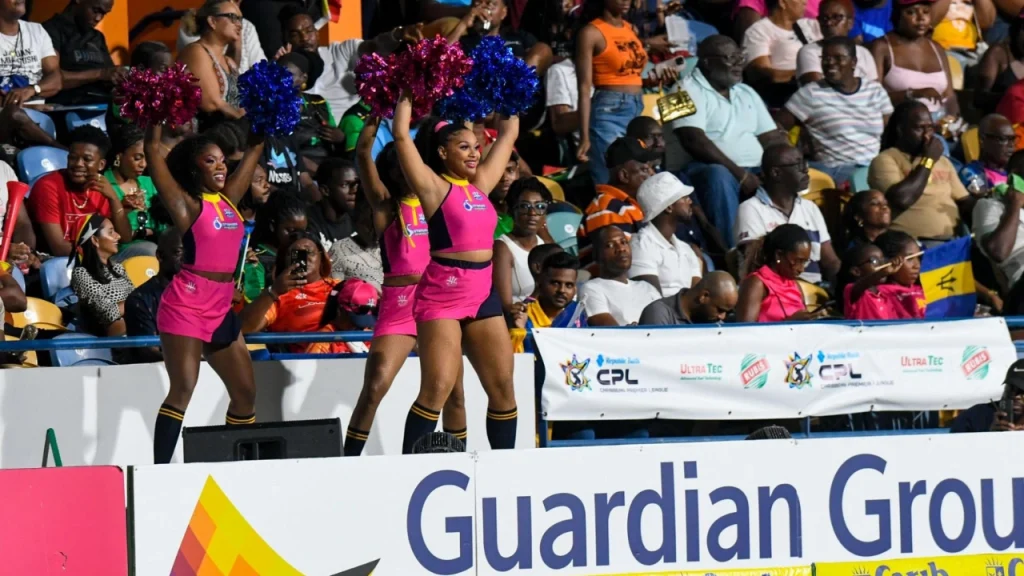
That model now contributes over US $225 million annually to the regional economy.
In a world of billion-dollar broadcast deals, the CPL’s growth remains grounded in human energy and brand partnerships. The story of how the CPL harnessed all this to build a sponsorship juggernaut is not only fascinating, but full of lessons for the broader cricket industry.
The architect: Jamie Stewart’s commercial blueprint
To understand CPL’s longevity, you have to understand Commercial Director Jamie Stewart.
Before he helped build the CPL, Stewart lived multiple cricketing lives. A left-arm spinner from Western Australia, he came through in the 1990s in a side stacked with names like Adam Gilchrist, Tom Moody, Justin Langer, and Damien Martyn. “The batting lineup was ridiculous,” he remembered. “People like Mike Hussey and Simon Katich couldn’t get a game.” Stewart even trained in India extensively with Bishan Bedi, his bowling idol.
In that pre-T20 era, cricketers had to work for a living, and Stewart built a parallel career in publishing sales. After he was done playing he received an unexpected opportunity to help launch a sports-marketing agency in India. “It was called Sporting Frontiers,” he said. “We went around all the international cricket grounds and bought their signage rights, then bundled them together to sell as one package.”
That work led Stewart to IMG, the mothership of global sports marketing, where he helped land the Samsung Cup sponsorship for the India-Pakistan series, and later to the ICC, where he oversaw global partnerships from 2004 to 2007.
Then in 2007 Stewart left the ICC to launch his own Delhi-based sports marketing agency, Commune Sports & Entertainment – which he runs to this day – through which he did extensive work for Mumbai Indians in the nascent IPL, as well as other sports and clients in the fashion industry.
Importantly, at his agency he also continued to work with the ICC to sell rights for the 2007-2015 cycle. “We more than five-x’d the revenues,” from the pervious cycle to the 2007-2015 cycle, Stewart said. “From well under a hundred million dollars (US) to over half a billion.”
In the early 2010s, Stewart had a client interested in sponsoring a major tour of the Indian Men’s cricket team, but the upcoming England and Australia tours were already spoken for. However, as Steward learned, “India were touring the Caribbean in a few months.”
He reached out through contacts to Digicel, a leading mobile carrier in the Caribbean and, as Stewart relates, “a major sponsor of West Indies Cricket at the time” to try to sub-license sponsorship rights, and in the process got connected with Pete Russell, an English sports and marketing executive who was consulting to Digicel at the time.
Stewart visited the Caribbean for the first time and completely fell for it. “I went over for a couple of games,” he said. “It’s a magical place. I kept thinking, wow, this is incredible.”
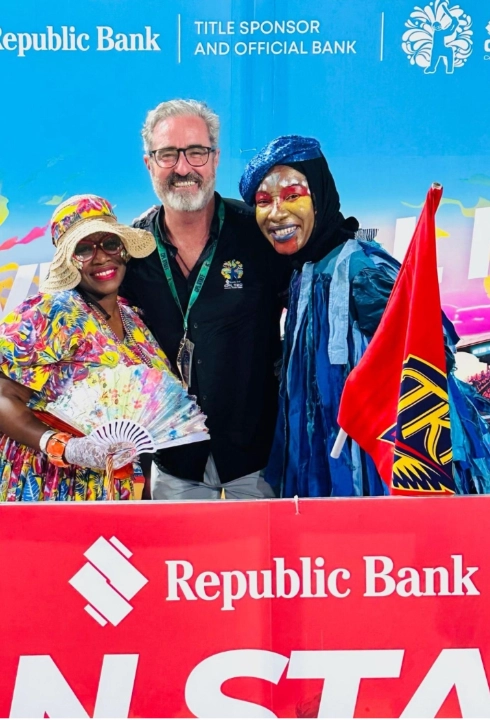
The league that was destined to be Caribbean-first
That emotional connection became the league’s seed. In 2012, Stewart and Russell began shaping the idea that became the Caribbean Premier League, rooted in the special character of the West Indies.
There was an existing fledgling “Caribbean T20” tournament that was struggling financially. But Stewart and Russell had bigger vision : “The West Indies is such a powerful and much-beloved brand – everyone’s second-favourite team. We thought maybe there’s a way of marrying Indian capital with West Indies cricket and create something much bigger and grander than the Caribbean T20.”
The two designed a “public-private” partnership – a common structure now, but novel at the time – that would give the West Indies Cricket Board equity while “ring-fencing” the league to make it investable. “We came up with a framework,” said Stewart, “and Cricket West Indies said to us basically ‘if you can find investment, we’ll support this.”
Despite obtaining the CWI’s backing, few initially believed the CPL could work, having seen the predecessor Caribbean T20’s struggles.
“Even when we were modelling it, people said there’s no money for cricket in the West Indies, you won’t get any sponsorship,” Stewart recalled. “Fortunately, we didn’t listen.”
From the start, their goal was to make the league unmistakably Caribbean — not a smaller IPL or copy of the Big Bash, but something born from the region’s own rhythm. From a backing perspective, they had naturally been talking to Digicel about being the CPL’s lead sponsor as they simultaneously pitched Indian investors.
But in a moment that foreshadowed the future of the CPL, Stewart related, “eventually Digicel said, ‘actually, why are you bringing Indian money? We’ll be the investor.’ And that’s where it all began.”
Within three months, the CPL’s first season was underway. “It was manic and a bit chaotic, but we got it away,” he said. “Digicel put all their marketing muscle behind it, and the rest is history.”
With Digicel as the main investor, the final piece to put in place was a title sponsor. For this, Stewart and team managed to land Limacol – a heritage personal care product from Guyana which was so established in the region that it had practically not advertised at all for the previous two decades.
Limacol remained the title sponsor for the first two seasons, not only ensuring the commercial viability of the league in its seminal days, but solidifying its strong support in Guyana. In fact, the first CPL franchise was sold in Guyana after its Sports Minister caught word of the league and flew to Barbados to lobby the founders for a Guyanese franchise. That Minister is now Guyana’s two-term President, Dr Irfaan Ali.
A commercial model built for the Caribbean
From its inception, the CPL’s challenge was clear: a league built for a target market of five million English-speaking Caribbean inhabitants meant no billion-dollar TV deals, no central-rights windfall, no expensive tickets. Only the passion of fans and the belief of brands could drive the CPL.
“Most sports leagues rely on their domestic television rights to fund the league,” Stewart said. “We didn’t have that luxury. We had to be funded by sponsorship.”
To tackle that challenge, they decided to lean into the CPL’s Caribbean roots. Stewart says: “we knew we had such a unique product. We’re the only sports league that’s played across a series of tropical islands that are stunning to look at in themselves before even a ball is bowled.
“We’ve got these incredible fans who know how to dance, who play incredible music, percussion instruments and soca music and dancehall. It’s such a culturally vibrant part of the world. All the more reason to say: let’s celebrate everything that’s the Caribbean. That’s our brand.”
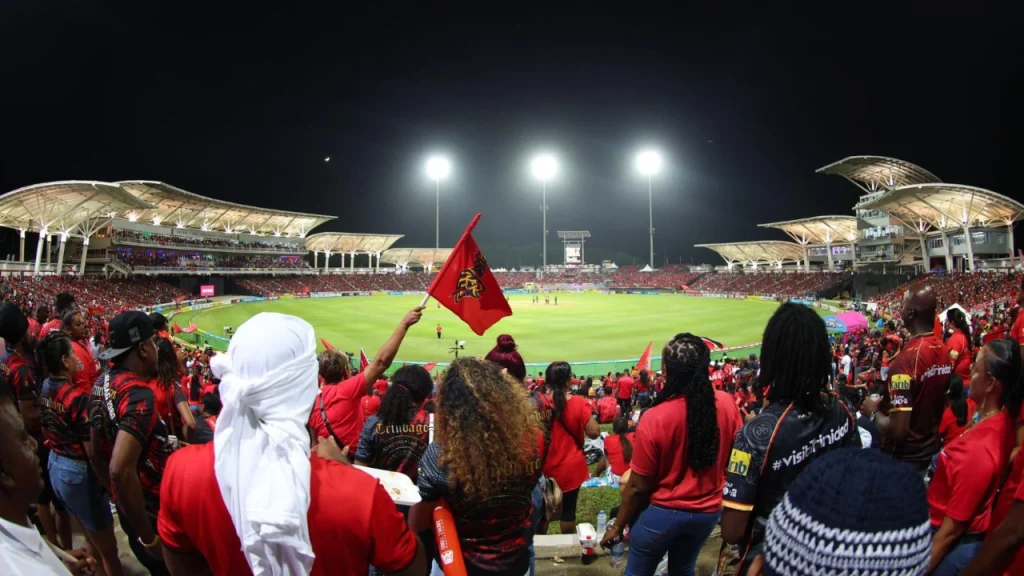
The six host nations and teams, with homegrown anthems and soundtracks embedded the brand in regional culture. Each venue — from St Lucia’s Darren Sammy Stadium to Guyana’s Providence — became a local expression of a shared Caribbean story.
That story quickly resonated with local sponsors, said Stewart: “we were very fortunate from the beginning that some of the major companies of the region said: ‘this is good for the Caribbean, so we’re going to back it – we believe what’s good for the Caribbean is good for us.’”
El Dorado Rum and Guardian Life were among the first to commit. “El Dorado was the first cab off the rank,” said Stewart, “they literally committed when it was just an idea on a page. Guardian Life did the same, and they’re both still with us today.”
Soon more local sponsors came on board: “SM Jaleel – the Coca-Cola of the Caribbean – were another one who, supported us early. Courts, the region’s biggest retail player, were with us in the first year, and they’re still with us today.”
That loyalty quickly helped establish a sponsorship culture based on shared purpose. And collectively, these partners helped forge a regional Caribbean identity and unity previously not achieved.
In fact, Stewart described how the former Prime Minister of a Caribbean cricketing nation told him that the CPL “is finally the spirit of CARICOM realized – because you’ve got players from Caribbean countries representing teams in other Caribbean countries,” all united by music, shared pride, and of course, cricket.
Through the focus on local identity and partnerships, the erstwhile startup was growing into the region’s most unifying export.
This momentum, combined with what Stewart described as his team’s relentless focus on “world-class delivery and implementation” also attracted global sponsors such as Visa and DHL. Their initial interest “originated out of the regional teams” for the brands, but had to be vetted through their respective global partnership teams who were sold on what they saw coming out of the CPL.
More than a decade later, the partnerships continue to grow and the league continues to thrive. “The last couple of seasons have been the strongest yet,” Stewart said. “The CPL has deepened its relationship with the fans and the people of the Caribbean.”
Perhaps the best way to understand the CPL’s success in this area is to take a deeper look at two of its most significant sponsor relationships: title partner Republic Bank, and its longest-running partner, El Dorado Rum.
Case study: Republic Bank — transforming perception through cricket
If the CPL showcases regional pride, Republic Bank has used it to redefine how the Caribbean sees its leading financial institution.
“For us in the West Indies and across the Caribbean region, two of the most impactful unifiers, in my view, are sport and culture,” said Preston George, the bank’s General Manager of Marketing. “And in the realm of sport, cricket — and in particular West Indian cricket — has played a significant role.”

George said the CPL offered Republic Bank a natural bridge between its community mission and its business objectives. “Apart from providing financial services, we pride ourselves as an organization that makes a positive difference in the lives of our people and the communities within which we operate. So when CPL came along, we saw that we could actually bring value and happiness back to our people.”
That sense of shared purpose made the decision an easy one. “We first positioned ourselves as the Official Bank of the CPL, and that morphed into us becoming Title Sponsor in 2023.”
He called it a partnership built on “natural synergies” — restoring pride in the game and nurturing new talent while speaking to a younger generation of fans. “The T20 also brings along a new generational cohort in terms of following the game,” he said. “As a financial entity, we ourselves were going through generational change — from traditional, in-branch banking to digital engagement.”
Beyond those synergies, Republic Bank aimed to evolve its brand identity through the partnership. “We are headquartered in Trinidad, when we first became associated with the CPL, we were still seen largely as a Trinidadian bank,” George said. “One of our key performance indicators was to be seen as a Caribbean regional bank. I’m pleased to say we have far exceeded our target. Our tracking shows we’ve driven that transformation in brand perception from a Trinidad bank to a Caribbean regional bank.”
The partnership also widened the customer base. “We’ve been using the partnership with clear business indicators around brand, around growth in new customers, to drive our strategic initiatives around digital transformation, digital adoption, and product penetration.”
During the 2025 season, Republic Bank shifted its marketing from broad corporate messaging to specific product campaigns built around the league. “We’ve deliberately moved a lot of our advertising collateral away from corporate-branding type advertising to more product-oriented advertising,” George said. “As our strategic objectives evolve, we’ve been using the CPL to drive those business imperatives.”
At the centre of that pivot is Republic OnBoard, the bank’s digital onboarding portal. “If you’ve been watching the games, you’ve seen Republic OnBoard on the pitch map” he said. “It’s our digital portal that takes you to our internet-banking platform. As a new customer, you can open an account in under fifteen minutes, and you’re automatically enrolled for online banking. It’s all about convenience and enhancing the customer experience.”
The numbers bear it out. “During this year’s tournament, we’ve seen three major things,” George explained. “First, a huge attraction of new customers — close to 30,000 people who didn’t previously bank with us. Second, existing customers are opening new accounts and products they may have wanted before but never found convenient. And third, we’re seeing greater usage of our digital platforms and a 50-50 split between in-branch and online account openings.”
Beyond the numbers, the partnership has changed the emotional tone of the brand. The CPL has given Republic visibility and credibility in a youthful, energetic context.
For Stewart, that alignment captures the league’s ethos perfectly. “Republic Bank have been incredible partners,” he said. “They look at the economic, cultural, and social impact and recognise that supporting the CPL is supporting the Caribbean itself.”
Case study: El Dorado Rum – the spirit of the Caribbean
Where Republic represents transformation, El Dorado Rum represents tradition — the region’s taste distilled into a brand. For Sharda Veeren-Chand, Head of Marketing at Guyana-based Demerara Distillers Limited, the relationship with the CPL goes all the way back to the tournament’s birth.

“Jamie reached out to us thirteen years ago with very short notice that this was coming together and they were looking for a sponsor,” she said. “When he presented the vision of the biggest party in sport and that it was going to be regional for us it was a no-brainer.”
The partnership, she explained, reflected the company’s own DNA. “We have the world’s best rum, arguably, and we’ve gotten such tremendous support from the Caribbean,” she said. “Every island and country has its own rums that they’re passionate about, but El Dorado is the one rum that most Caribbean people will tell you they enjoy.”
That cultural reciprocity made the sponsorship feel natural. “Supporting an activity in the Caribbean where people are enjoying themselves — that’s what our product is about too: responsible enjoyment.”

When they first signed on, the league was still just an idea, but the vision resonated. “The CPL vision was to make this into the biggest regional sporting event,” she recalled. “Our vision was to make ourselves the largest regional rum brand. The two were such a natural fit. Have we both achieved that vision? I would say so, yes.”
Thirteen years later, that belief has paid off. “For us in Guyana, cricket is in our blood,” Veeren-Chand said. “There is no CPL cricket match that’s not at least seventy-five percent full — most of the time it’s completely sold out. Cricket is part of our culture, heritage, and history as Guyanese people, and rum is too, so the synergy was a natural one for us.”
Longevity, she said, comes down to emotional connection. “It’s the consumer engagement,” Veeren-Chand said. “Being part of something that embodies the Caribbean spirit — no pun intended! — has been incredible. Watching people get so competitive about cricket quite like they do about rum, the passion that this has brought out in the consumers, has been great to watch.”
The brand lift has been clear across the region. “CPL has definitely cemented our place as a Caribbean rum — the Caribbean rum,” not just a Guyanese brand.
El Dorado’s finals activations in Guyana have become their showcase. “Interacting directly with consumers from around the Caribbean — that’s what I enjoy most,” she said. “A lot of the time we interact only indirectly through our distributors or bartenders, but CPL gives us a great opportunity to engage face-to-face. The feedback we get, whether through socials or directly in the stadium, gives us a great feel for what consumers want and how they feel about us, what they like and what they don’t.”
For Jamie Stewart, El Dorado’s early faith remains a defining symbol of the league’s ethos. “They believed before anyone else did,” he said. “They showed that Caribbean companies could think regionally and stay the course.”
The Playbook — integration over interruption
The core of the CPL commercial philosophy is this: don’t sell around the experience — sell through it.
The constraint of a limited TV audience became a creative advantage, as Stewart and the team came up with ways to provide the most value to sponsors. Instead of selling static signage, CPL focused on in-match storytelling: celebrations, activations, and regional imagery that made sponsors part of the entertainment.
“We try to tell the brand story through integrations into the match fabric,” Stewart said. “You can’t do it in a way that jars for the spectators.”
Those integrations have become hallmarks: from El Dorado’s rum-branded celebration dances, to Republic’s On Board overlays, every activation is designed to blend naturally into the game. “Because we don’t have the same television revenue as other leagues, we had to find ways for sponsorship to add value to the viewer, not distract from it,” Stewart explained.
That means treating sponsors as storytellers, not just advertisers. The partnerships team, led by the long-tenured Dr. Tara Wilkinson-McClean, runs activations like live productions. “Tara does an amazing job,” Stewart said. “She’s a big reason why we’ve had such high retention rates.”

That high retention and partner loyalty is the envy of many global leagues. Stewart credits the human factor. “Sport is emotional,” he said. “If the sponsor’s activation adds to that emotion, the fan remembers it — not as an ad, but as part of the joy.”
By embedding brands into the entertainment rather than around it, CPL created a template now studied from Sri Lanka to the United States. It proved that even without massive rights fees, emotional design and operational excellence can deliver commercial strength.
Those stories — corporate and cultural — prove that the league’s value isn’t just broadcast minutes or ticket sales. It’s community energy converted into economic momentum, with the ripple of the CPL’s US $225 million impact fueling hospitality, tourism, and local production across six host nations.
What other leagues can learn
Asked why the CPL succeeded where others struggled, Stewart has a few thoughts. He distills the formula into a few guiding principles.
First, and foremost: “You need to be clear what you stand for,” Stewart said. “We’re about the Caribbean — the music, the dancing, the culture. Sometimes leagues try to be all things to everybody. But you need to decide what your brand proposition is and just go for it.”
Second, Stewart continued, “embrace your domestic markets. The clearer you are about who you are and what you stand for, the easier it is to sell your product to those most likely to get it.”
Third, is a focus on engagement. But not just fan engagement. As Stewart explains: “everyone talks in terms of fan engagement, about how you engage fans emotionally and create those emotional connections. But I think that same holds true for when you’re building and selling commercial partnerships. How can you engage these brands in a deeper way that captures their imagination, then gets their internal teams excited and emotional about the league.”
This is often best accomplished, according to Stewart, through stories: “some of our partners, for example, are of a Hispanic background, and they’re learning cricket for the first time. But then they see their brand story woven into this incredible sports event. Much as sport is about storytelling, selling sport is about storytelling too. We need to build those narratives and stories that engage the commercial community as much as engage the fan base.”
The business of joy
More than a decade since its first ball, the Caribbean Premier League has become something rare in world sport — a competition that feels both commercial and communal, both global and unmistakably local.
For Jamie Stewart, the league’s journey proves that authenticity is still core to its business model. “We’re about the Caribbean — the music, the dancing, the culture.” As a result, CPL events continue to have “energy unlike anything experienced, not just in the cricket world, but in the global sports world.”
That celebration has become the CPL’s operating philosophy — not a marketing slogan, but a way of connecting every partner, player, and fan in one shared rhythm.
Every match night — when a fan opens an online account from the grandstand, raises a glass of El Dorado, or engages with Guardian’s in-venue activations team — the league’s founding promise plays out in real time.
And for global sport, the CPL continues to offer a simple lesson from a complex region: build on authenticity, and the joy will take care of the business.
The CPL’s Current Sponsors
CPL TITLE SPONSOR: Republic Bank
CPL PARTNERS: El Dorado Rum, Guardian Life, Carib, Visa, Kallco, BetExc, Sky365, ExxonMobil
CPL SPONSORS: DHL, Samsung, Digicel, BYD, Torginol Paint, OmegaXL, TCL, Courts
CPL SUPPORTERS: Rubis, Lucozade
WCPL TITLE SPONSOR: Massy