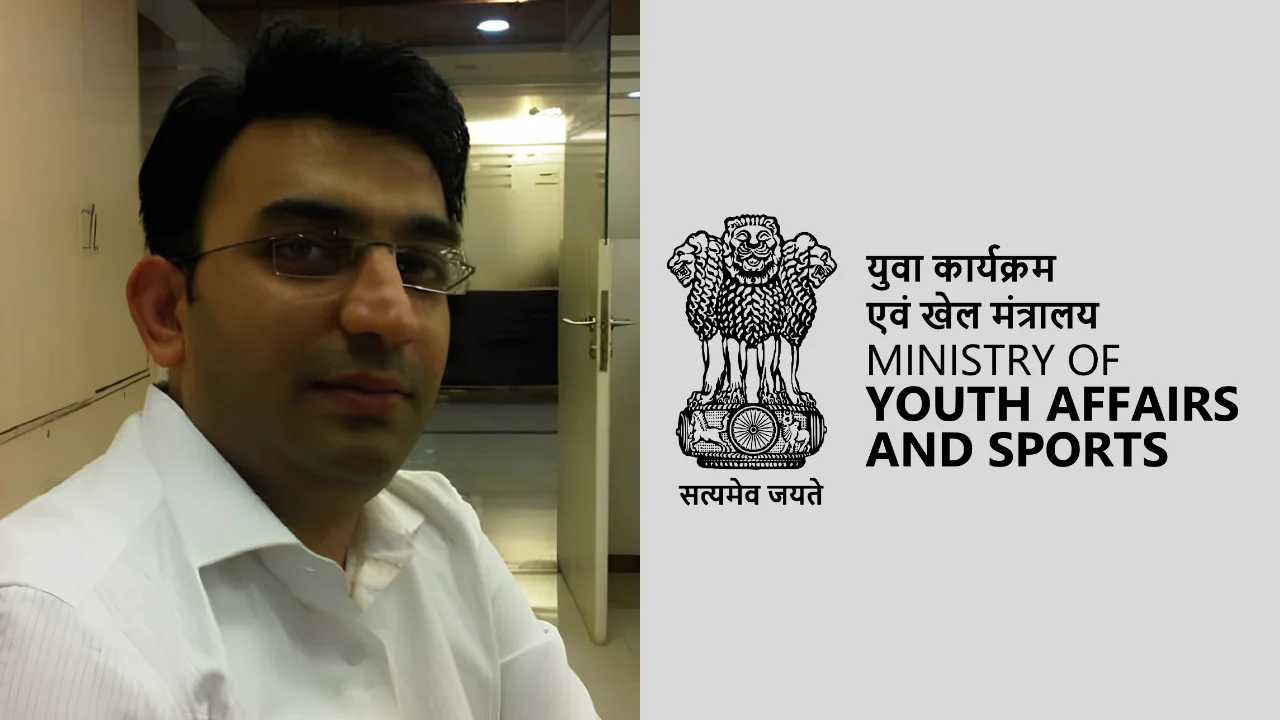
India’s Ministry of Youth Affairs and Sports has appointed **BCCI** CEO and IPL COO Hemang Amin to a high-level committee tasked with transforming the country’s sports league landscape, bringing together some of the biggest names in Indian sports, broadcasting and corporate investment.
The 14-member panel will develop a national framework for establishing professionally managed, commercially viable sports leagues, with a particular focus on Olympic disciplines, women’s sports, youth competitions and emerging sports.
Alongside Amin, the committee includes senior representatives from Reliance Industries, GMR Sports, Adani Sportsline, JSW Sports, JioStar, Sony Pictures Networks India and Zee Entertainment.
The initiative represents a significant effort by the Indian government to replicate elements of the commercial success achieved by established competitions such as the Indian Premier League (IPL) across a wider range of sports.
The committee has been given eight weeks to submit its recommendations, with its findings expected to address everything from franchise ownership and media rights to government financial support and grassroots development.
IPL and BCCI leadership to help shape India’s sports league strategy
Amin’s inclusion gives the committee direct access to leadership experience from India’s most commercially successful cricket competition.
As BCCI CEO and IPL COO, Amin brings expertise in operating a major franchise-based sporting property, including commercial partnerships, broadcasting arrangements and league administration.
He will work alongside executives representing several of India’s most prominent sports investment groups.
The committee includes P.K.S.V. Sagar of GMR Sports, Sanjay Adesara of Adani Sportsline and Divyanshu Singh of JSW Sports, organisations with extensive involvement in India’s professional sports ecosystem.
B Srinivasan of Reliance Industries is also among the members, bringing another major corporate stakeholder into the government’s planning process.
The committee will be convened by Kunal, Joint Secretary (Governance) at the Ministry of Youth Affairs and Sports, with Vineel Krishna, Joint Secretary (Khelo India), also participating.
Raghuram Iyer, CEO of the Indian Olympic Association (IOA), will provide representation from the country’s Olympic sports administration.
The combination of cricket executives, franchise investors, sports administrators and government officials signals an emphasis on developing league structures that can attract sustained private investment rather than depend indefinitely on public funding.
JioStar, Sony and Zee executives bring media rights expertise
Broadcasting and digital media rights are expected to be central to the committee’s recommendations, with several of India’s leading sports media executives included in the group.
Among them are Ishan Chatterjee of JioStar, Rajesh Kaul of Sony Pictures Networks India, Anupam Swaroop of DD Sports and Parag Darade of Zee Entertainment.
Their participation reflects the importance of television distribution, streaming platforms and media rights monetisation in building sustainable professional competitions.
For emerging leagues, securing broadcasting partnerships and developing an attractive commercial proposition for sponsors can be among the biggest obstacles to long-term viability.
The committee will examine strategies to attract investment through franchise ownership, sponsorship agreements, broadcasting contracts, digital rights and Corporate Social Responsibility (CSR) funding.
It will also consider how different sports can adopt business models suited to their individual audiences, commercial prospects and stages of development.
Rather than recommending a single league structure for every discipline, the government wants the panel to identify models that reflect the sporting and financial realities of each competition.
Government funding and infrastructure support under consideration
One of the committee’s most consequential responsibilities will be evaluating whether targeted government support can help emerging sports leagues overcome their early financial challenges.
“While several sports leagues in the country have achieved varying levels of success, many disciplines with strong sporting and social potential face commercial viability hurdles during their initial stages,” the ministry said in a statement.
The panel will examine potential mechanisms for financial assistance, including direct and indirect funding and preferential access to publicly owned sporting facilities.
“This includes evaluating targeted interventions such as Viability Gap Funding (a one-time government grant to infrastructure projects), direct and indirect financial assistance, and concessional access to Government sports infrastructure,” the Ministry stated.
Such measures could lower the initial costs of establishing leagues in disciplines that have limited existing commercial infrastructure or broadcasting demand.
The committee will also consider how national and state governments, local authorities, sports organisations and private investors can work together to support new competitions.
Its recommendations are expected to distinguish between sports capable of attracting substantial commercial investment and those that may require additional support during their development.
Women’s sports, Olympic disciplines and grassroots development prioritised
The government’s plans extend beyond creating commercially successful competitions.
A central objective is to establish more consistent competitive opportunities for athletes, particularly in disciplines that lack established professional pathways.
The committee has been directed to prioritise Olympic sports, women’s sports, youth competitions, indigenous sports and emerging disciplines when assessing opportunities for new leagues.
It will also examine how professional competitions can connect with schools, colleges, universities and local sporting clubs to strengthen talent identification and athlete development.
The ministry wants these connections to “foster grassroots participation”, particularly among younger athletes and women.
A more structured league ecosystem could provide athletes with regular competitive exposure while creating clearer pathways between community participation and elite performance.
The government also sees broader economic opportunities in expanding the sports league sector.
Beyond generating investment in teams and competitions, the ministry believes a stronger professional sports industry could create employment across broadcasting, technology, sports management, event operations and related services.
Governance, athlete welfare and financial transparency in focus
Commercial expansion will be accompanied by an examination of the governance structures required to support sustainable leagues.
The committee will develop recommendations covering institutional governance, financial transparency, athlete welfare and sporting integrity.
These issues are particularly important for competitions seeking long-term commitments from investors, sponsors, broadcasters and participating teams.
The panel will assess existing leagues to identify the operational and financial challenges that have contributed to differing levels of success across Indian sport.
It has also been authorised to consult National Sports Federations, league administrators, investors and sports technology companies before finalising its proposals.
The resulting framework will include a phased implementation roadmap informed by international practices and tailored to India’s domestic sports market.
The initiative aligns with the government’s Khelo Bharat Niti policy vision and its broader Viksit Bharat @2047 development ambitions.
What India’s sports league expansion could mean for cricket
For the Indian cricket industry, the committee’s formation highlights the growing influence of the IPL’s commercial and operational model on the country’s wider sporting ambitions.
The IPL has demonstrated how franchise investment, centralised commercial arrangements, major media rights agreements and professional league management can support the development of a valuable sporting property.
However, extending comparable structures to other sports presents different challenges, particularly where audience demand, sponsorship markets and established fan bases remain relatively small.
The committee’s work will therefore be important in determining which elements of successful franchise competitions can be adapted to sports at different stages of commercial development.
Amin’s participation also places the BCCI and IPL leadership within a broader national discussion about the future of professional sport in India.
For now, the panel has eight weeks to produce its roadmap, setting up a potentially significant next phase in India’s efforts to build a larger and more financially resilient professional sports industry.