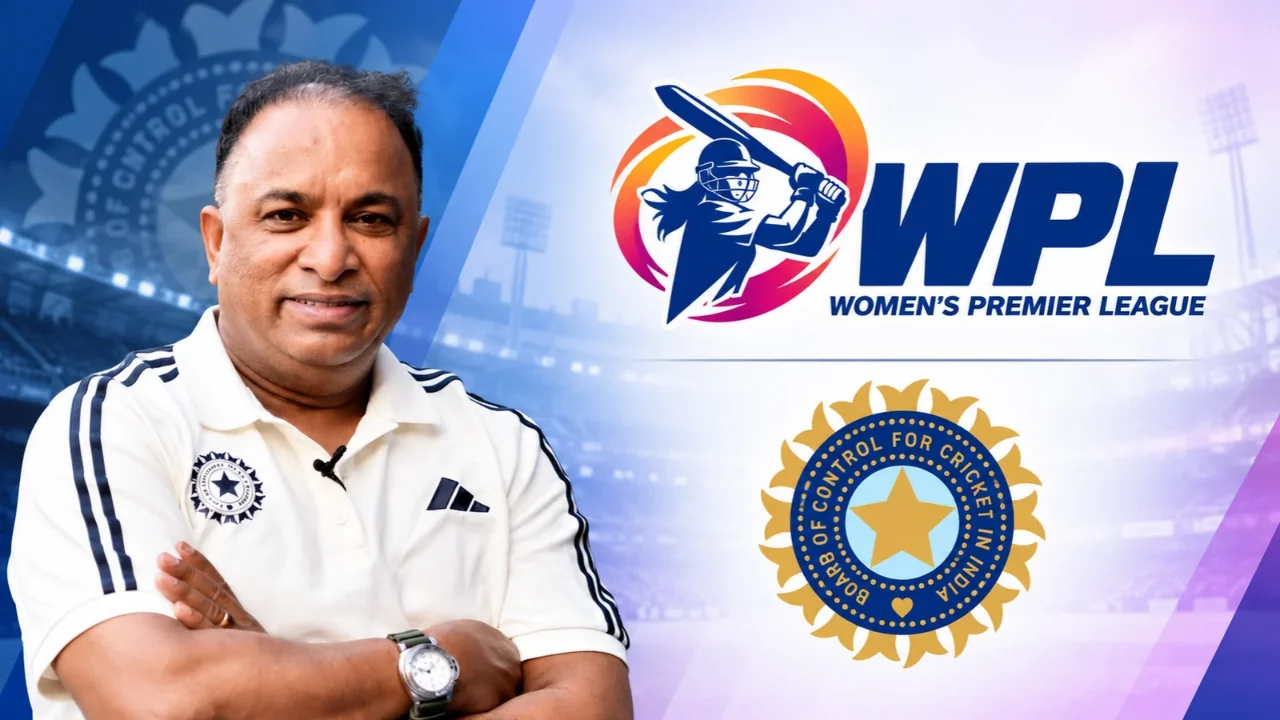
The Board of Control for Cricket in India (BCCI) is preparing to consider expanding the Women’s Premier League (WPL) beyond its existing five franchises from 2028, as growing competition from overseas women’s cricket leagues raises questions about the tournament’s next phase of development.
BCCI Secretary Devajit Saikia has indicated that discussions on increasing the number of teams will begin in 2027, alongside a broader review of the competition’s structure and operations. No expansion has been formally approved, but the comments mark a significant development for a league that has maintained the same five-team format since its launch in 2023.
The prospect of expansion comes at a time when the WPL faces increasing competition for international players from Australia’s Women’s Big Bash League (WBBL) and England’s The Hundred, both of which have been strengthening their commercial and player recruitment models.
BCCI to consider adding WPL franchises
Speaking to the WPL in an exclusive interview during the WPL 2027 auction, BCCI Secretary Devajit Saikia said: “From next year, we will definitely have to do some brainstorming sessions to increase the number of teams, as well as in other areas where we can improve. Not only the players, but so many other areas we are having involvement in, right from the coaches, selectors, etc and various stakeholders are involved here.”
Saikia’s comments come four years after the BCCI established the WPL as India’s premier women’s franchise cricket competition.
The league began in 2023 with Mumbai Indians, Royal Challengers Bengaluru, Delhi Capitals, UP Warriorz and Gujarat Giants, with the five franchise rights collectively attracting investment worth almost £500 million (approx. US$670million).
The substantial initial investment established a new commercial benchmark for women’s franchise cricket, while the competition also provided leading Indian and international players with access to lucrative contracts.
Saikia added: “WPL is one of the big leagues in franchise cricket after IPL. We have come a long way in four years and ultimately we are now dominating women’s cricket. WPL has contributed to the success of women’s cricket in India.”
Limited WPL auction places highlight expansion challenge
The restrictions created by the five-team format were particularly evident during the WPL 2027 auction in Kochi.
Around 150 players registered for the auction, but only 27 squad positions were available, including seven overseas slots. The limited number of vacancies followed the previous season’s mega-auction, when franchises undertook a broader restructuring of their squads.
With most teams retaining the bulk of their playing groups, opportunities for new domestic players and international recruits were considerably restricted.
The auction also featured a maximum base price of INR 50 lakh (approx. US$53K), although successful bids could exceed that figure.
Among the overseas players entering at the highest reserve price were Sophia Dunkley and Sophie Molineux, while several established internationals, including Alana King, Alice Capsey and Danni Wyatt-Hodge, were absent from the auction list.
Australia Captain Sophie Molineux emerged as the most expensive acquisition, joining UP Warriorz for INR 1.10 crore (approx. US$116K).
Delhi Capitals secured Indian batter Kiran Navgire for INR 75 lakh (approx. US$79K), while UP Warriorz signed Sneh Rana and Sushma Verma for INR 30 lakh each (approx. US$32K).
The relatively small number of available contracts has become an important consideration as the BCCI evaluates whether the league’s existing structure can accommodate its growing pool of domestic and overseas talent.
The Hundred and WBBL challenge WPL’s financial advantage
The WPL’s launch transformed the financial landscape of women’s cricket, with its inaugural player auction producing contracts that were previously uncommon in the women’s game.
Royal Challengers Bengaluru’s acquisition of Smriti Mandhana in 2023, for example, established a major salary benchmark for the competition.
However, subsequent investment in rival leagues has increased competition for players across different salary brackets.
The Hundred has benefited from new private investment, which has supported higher player remuneration, while the WBBL has also introduced changes to its recruitment arrangements, including moving away from its overseas draft.
Although leading WPL players such as Nat Sciver-Brunt and Ashleigh Gardner remain among the highest-paid cricketers in women’s franchise competitions, the financial proposition for players outside that top tier is less straightforward.
Scotland all-rounder Kathryn Bryce illustrates the difference.
Bryce entered the WPL 2027 auction at the lowest reserve price and was recruited by UP Warriorz for approximately £8,000 (approx. US$10.7K). In contrast, Manchester Supergiants paid £65,000 (approx. US$87K) for her services in The Hundred.
The difference is particularly notable because the WPL permits teams to field an additional overseas player from an Associate Member nation, although that provision does not increase the number of overseas players permitted in a franchise’s squad.
International scheduling has created another complication. England’s T20I series against Sri Lanka is scheduled to overlap with the closing stages of WPL 2027, adding to the considerations facing players balancing national commitments with franchise opportunities.
Expansion could open opportunities for players and new markets
Adding franchises would increase the number of available squad positions and potentially create more opportunities for Indian domestic players, emerging international cricketers and established overseas professionals.
It could also provide the BCCI with a route to broaden the competition’s geographical reach.
The WPL has operated with matches concentrated at a limited number of venues, restricting opportunities for franchises to develop regular home audiences in their respective markets.
A larger competition, accompanied by a broader hosting model, could offer additional opportunities for ticketing, sponsorship and local fan engagement. However, no decisions on new teams, venues or commercial arrangements have been announced.
For the BCCI, the challenge will be to balance expansion with the financial and operational requirements of a competition that has already attracted substantial franchise investment.
The 2028 season has emerged as the potential next stage in that development, with the BCCI expected to begin discussions in 2027 on how the WPL can accommodate more teams while maintaining its position in an increasingly competitive women’s cricket market.