
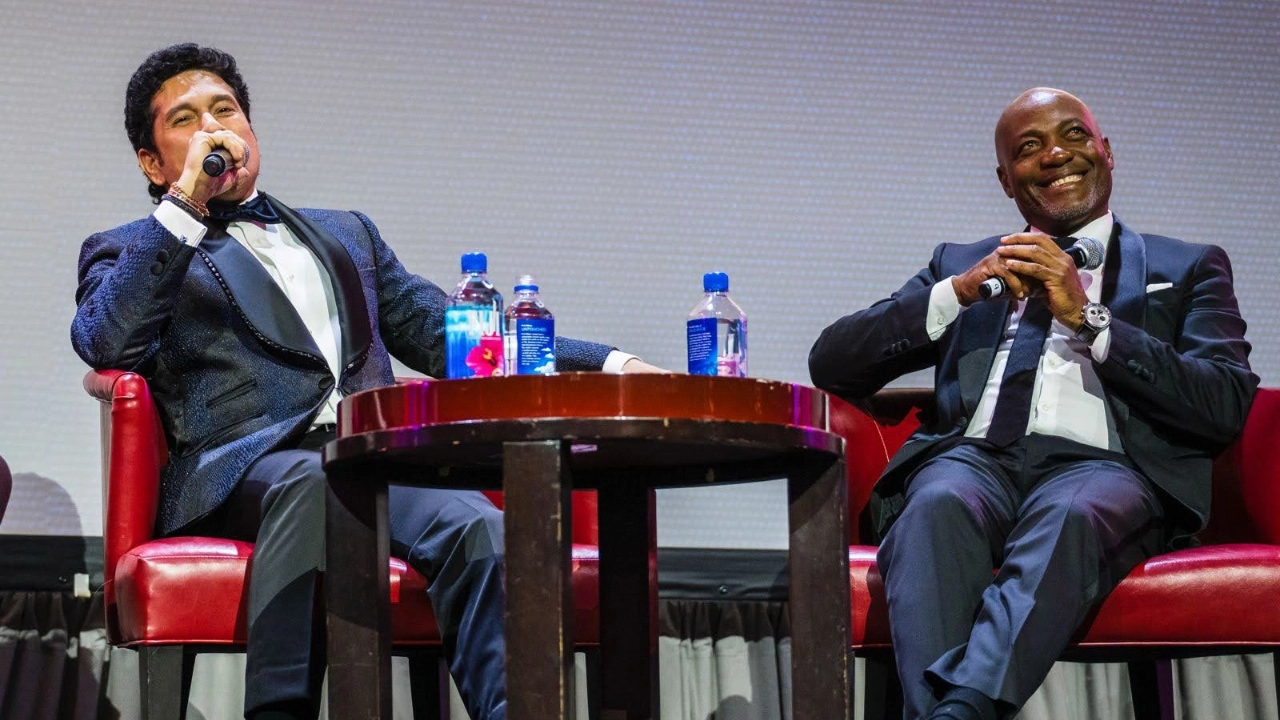
When Brian Lara and Sachin Tendulkar took the stage together at the Hilton Anatole in Dallas on October 2, the roar of 500 guests marked not just nostalgia — but a celebration of cricket’s next frontier. The two icons, whose careers defined an era of batting brilliance, reunited to launch Season 2 of the National Cricket League (NCL) — and to help carry the sport’s message deeper into the United States.
Tendulkar, a co-owner of the NCL, was returning for his second straight season. Lara, in his first official appearance with the league, quickly became the emotional center of the weekend — moving from a gala spotlight to a grassroots mission in South Dallas.
Old rivals, lifelong friends
On stage together, the mutual admiration flowed freely.
“I remember my first meeting with Brian in Toronto — I was 17,” Tendulkar told the crowd. “We played against each other the next day, both scored thirty-odd, and somehow we just clicked. It became more than a cricket friendship — it was mutual respect.”
Lara smiled, reminiscing about watching the teenage Tendulkar dismantle the world’s best bowlers. “When I was 16, I couldn’t hit a ball to the boundary. This young man was thumping the best in the world. From that day, it wasn’t competition, it was respect.”
The banter that followed blended humour, reflection, and decades of shared history. Tendulkar compared Lara’s flamboyant strokeplay to “Caribbean calypso,” while Lara described Sachin’s batting as “Indian classical.”
“Every time India played the West Indies, it was Tendulkar versus Lara — but we both had to remind people it was India versus the West Indies,” Tendulkar said. “Still, that rivalry brought the best out of us.”
Lara returned the compliment: “He was the most complete batsman I ever saw.”
Beyond cricket, the pair spoke about empathy, discipline, and using sport as a force for good. Lara’s remarks on men taking responsibility to “step back and be bigger” — part of the evening’s domestic-violence awareness campaign — drew a standing ovation.
From gala lights to school grounds
The next morning, the glamour of the Hilton Anatole gave way to the heat and wind of a South Dallas football field. Brian Lara — now out of his tuxedo from the night before and instead donning jeans, sneakers, and cap — stood at midfield of Franklin D. Roosevelt High School, a public school where most students had never seen a cricket bat.
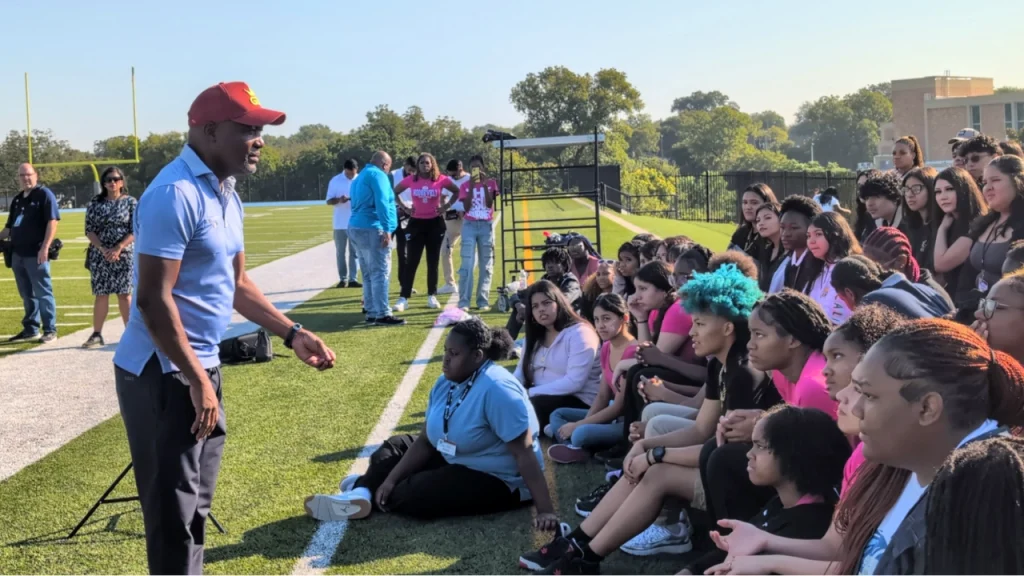
“We had told the kids he’s the Michael Jordan of cricket,” said Coach Jametria Green, one the school’s basketball coaches. “But when he showed them the photo of him teaching Barack Obama cricket, that’s when they realized, oh, this guy’s a big deal.”
At first, curiosity looked like confusion. The bats felt awkward, the rules alien. Then Lara took the bat himself. With one smooth swing, he sent the ball bouncing toward the school boundaries — and suddenly, the field erupted in laughter and cheers.
“They were literally hitting the ball off the bounce,” Green said. “They were having a blast. For a lot of them, it was their first time holding a bat — any bat — that wasn’t for baseball or softball.”
For Lara, the morning was more than a clinic; it was a mission. “It was an amazing experience,” he told cricexec in an exclusive interview later that day. “You know, you don’t find a cricket field on an American football ground. But what surprised me was how interested the kids were. They were listening, they were asking questions — they were into it.”
He smiled recalling the moment he saw their faces light up. “You could see that spark — that curiosity. That’s where the game starts. You can’t expect people to just find cricket in a book or online. We have to take it to them — into schools, into the community.”
Lara spoke passionately about the responsibility that lies with those who already understand the game. “People like me, people who know cricket — we’re the ones who have to bring it here. You can’t expect non-cricket people to pick it up on their own. It’s on us to create those moments where they can touch it, feel it, play it.”
The field that morning became one of those moments. Students laughed as they fumbled catches and whiffed completely while batting. But Lara never stopped encouraging. “Nice shot!” he called out. “Don’t worry about where it went — just hit it again!”
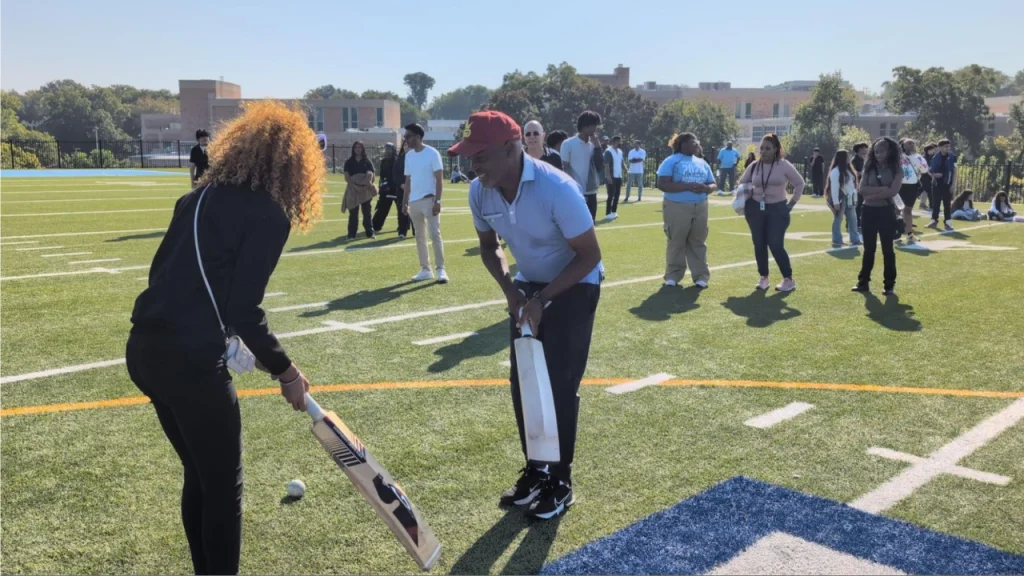
One of the standout players, Green said, was Janiyah — “a huge softball fan,” who quickly adjusted her stance and started timing the ball cleanly. “She was grinning the whole time,” Green said. “You could tell she was hooked.”
When the session ended, Lara and his helpers made sure every student took a swing before leaving. “That’s how it starts,” he said. “One good shot, one smile — that’s how you grow a game.”
The visit left a mark not only on the students but on Lara himself. “To me, it’s about introducing something beautiful,” he said, excited about how the students took to the sport. “You plant a seed,” he said. “Maybe one of them becomes a player. Maybe another becomes a fan. But they’ll remember that morning — and that’s how cricket grows in America.”
That afternoon, free tickets were handed out to the students to attend the NCL’s opening match. “We’re going tonight,” Green said proudly. “It’s their first cricket game ever — and now they’ll actually know what’s happening.”
Sachin takes cricket to wall street
While Lara was introducing cricket to South Dallas, Tendulkar was introducing it to Wall Street. On Friday morning, he joined NCL Chairman Arun Agarwal at the New York Stock Exchange to ring the Opening Bell — a symbolic gesture marking cricket’s arrival in America’s financial mainstream, and made possible through the NCL’s official partnership with NYSE Texas.
“Ringing the NYSE Texas bell is more than ceremony — it’s a symbol of cricket stepping onto the world’s financial stage,” Tendulkar said. “Just as markets connect investors, cricket unites billions of fans across cultures.”
An American cricket moment
With the NCL final scheduled for Monday, October 13, the opening weekend felt like a passing of the torch — from cricket’s greatest era to its newest stage. Lara and Tendulkar, two legends once separated by oceans and rivalries, shared a common mission: to bring the game they mastered to a new audience.
Reflecting on his morning in South Dallas, Lara told cricexec that what he witnessed gave him real belief in cricket’s potential in the United States. “I believe at the end of the day, you want to get it into the schools,” said Lara. “You want to get it into the hearts and minds of American kids, to appreciate the sport, and to understand the sport.”
“They’d never seen a cricket bat before, but they were excited, they were talking about it,” he said. “That tells you something.”
He paused, smiling at the thought. “You don’t have to challenge football or basketball. Cricket can just be another sport they love — once they understand it, they’ll love it.”


