
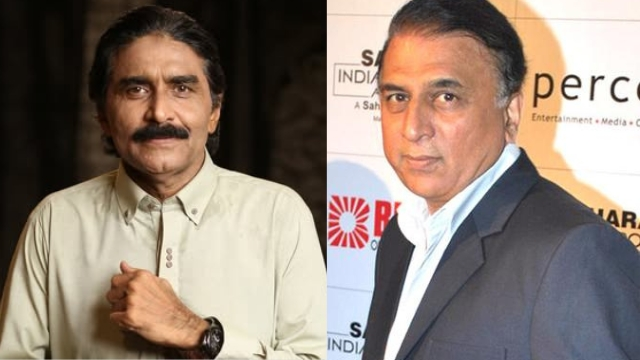
Sunil Gavaskar has come under fire from several former Pakistan cricketers after suggesting that Pakistan should not be allowed to participate in the upcoming Asia Cup 2025 following the Pahalgam terror attack in India. Gavaskar also hinted that the Asian Cricket Council (ACC) might need to be “disbanded” under current leadership.
Gavaskar’s comments came after the attack in Pahalgam, Jammu and Kashmir, which left 26 civilians dead—the deadliest on Indian soil since the 26/11 Mumbai bombings. With the Asia Cup set to be hosted in the UAE this September, jointly by India and Sri Lanka, his remarks have ignited a cross-border controversy.
Miandad and Basit Ali call for restraint
Among the first to respond was former captain Javed Miandad, who expressed disbelief. “I can’t believe Sunny bhai said this. He’s a respectful, down-to-earth person who always stayed away from politics,” Miandad said in a televised interview.
Basit Ali called Gavaskar’s remarks “stupid” and stressed the need to avoid hasty conclusions. “Let the investigation conclude. Cricket should remain above political hostilities,” he said.
‘Politics should not mix with sports’
Former Pakistan spinners Iqbal Qasim and Mushtaq Ahmed echoed similar views. “Gavaskar is a responsible figure loved on both sides of the border,” Qasim noted. “Politics should not mix with sports.”
Mushtaq Ahmed invoked a quote attributed to Hazrat Ali: “Never decide in anger that forces you to regret.”
Mohammad Rizwan: ‘Whatever happens, cricket should go on’
As diplomatic tensions continue to rise—with India suspending the Indus Waters Treaty, removing Pakistani player accounts from social media, and severing commercial ties—Pakistan ODI captain Mohammad Rizwan took a calmer tone. “Whatever happens politically, cricket should go on,” he said in a press briefing.
Indian voices call for complete cricketing severance
On the Indian side, former BCCI President Sourav Ganguly has publicly urged the Board of Control for Cricket in India to cut all ties with the PCB, including boycotting matches in ICC tournaments.
This isn’t the first time cricket has become the epicenter of regional geopolitics. With the Asia Cup 2025 just months away, the fallout from Gavaskar’s statement underscores how deeply the game remains entangled in India-Pakistan relations.
While official decisions remain pending, the backlash from former Pakistani players highlights the fragile balance between sports diplomacy and national sentiment in South Asia.


