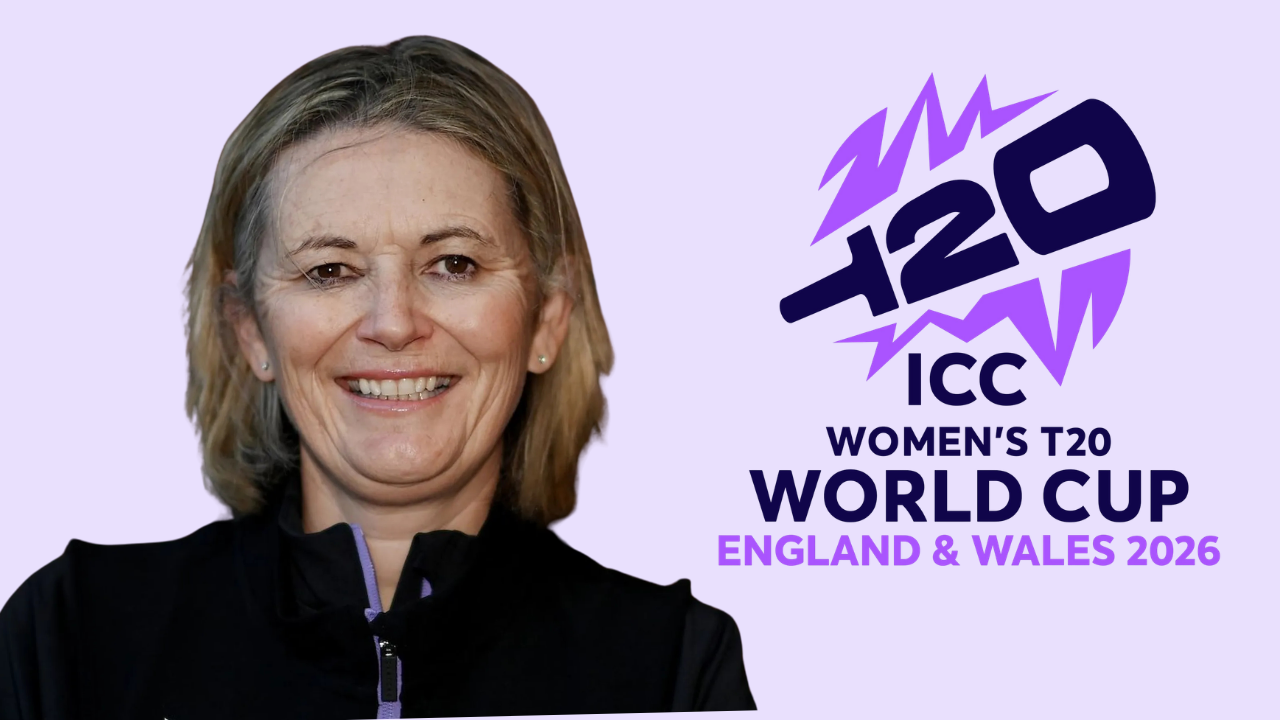
A long-running concern around England Women’s fitness has been put to rest, with the team now operating under a significantly higher and more structured performance framework.
England Women’s Head Coach Charlotte Edwards, speaking on the BBC Test Match Special debate show, made it clear that the issues that once dominated discussion around the squad have now been fully addressed, pointing to a clear transformation in both standards and mindset.
“It’s not just all about whether you can run round a track. It’s all the other elements to it that we’ve tried to make just as important,” Edwards said on BBC Test Match Special debate show, outlining a broader, more holistic approach to fitness and performance.
That evolution has been central to how England now define readiness, extending beyond traditional endurance metrics to include agility, fielding sharpness, and overall athletic output.
Redefining standards within the squad
Since taking charge, Edwards has focused on creating clarity around expectations, ensuring players understand both the requirements and the pathway to meeting them.
“I think once you set out the expectation, the players know what they need to do. And we’ve added in sort of benchmarks over the winter,” she noted, highlighting the introduction of structured performance targets designed to drive consistency.
Those benchmarks have played a key role in aligning individual preparation with team objectives, forming the backbone of a system built on accountability and measurable improvement.
Visible gains reinforce internal belief
The shift in approach has already translated into tangible on-field progress, particularly in areas where athleticism is most visible.
“I don’t know if anyone watched the fielding from the recent [intra-squad] series, but it’s some of the best fielding I’ve seen, certainly from our group, the improvements we’ve made,” she said, pointing to fielding as a clear indicator of the team’s enhanced physical capabilities.
Beyond individual moments, the collective standard has risen, reflecting a group that has adapted to increased demands and embraced a more professionalised framework.
“We’ve got to keep raising the standard. The players have fully bought into that, which, that was, I guess what I set out to do and am really pleased with the buy-in,” she added, underlining the importance of sustained commitment to the process.
From criticism to accountability
The current progress stands in contrast to the concerns that surfaced following England’s early exit from the Women’s T20 World Cup, when questions were raised about whether all players were meeting the required physical standards.
At the time, Alex Hartley told BBC Test Match Special in October 2024, “About 80% of the England team are fit and athletic enough, but there are girls in that side who are letting the team down when it comes to fitness.”
That critique exposed gaps in preparation and consistency, ultimately shaping the direction of changes introduced under Edwards’ leadership.
Confidence built on measurable progress
With clearer expectations, defined benchmarks, and visible improvements across key performance areas, England’s internal environment has shifted toward one of accountability and confidence.
“We’re in a really good place. The results are all so high. I couldn’t be more chuffed – we’ve made real progress,” Edwards said, reinforcing the belief that the team’s transformation is not only evident internally but also reflected in performance outcomes.
As England approach a home Women’s T20 World Cup and the milestone of Edwards’ first year in charge, the emphasis now moves from fixing past issues to sustaining and building on the progress made.