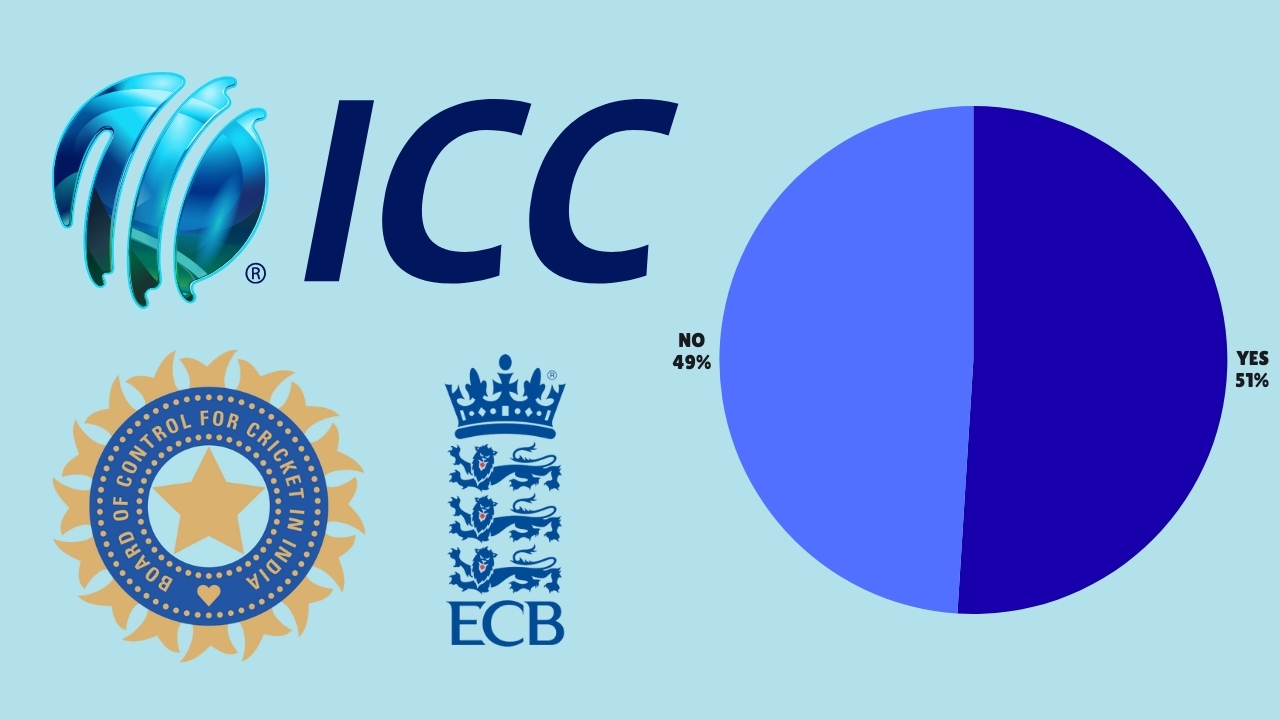
The cricket world is finely divided over one of the most contentious changes ever proposed to Test cricket’s playing conditions — whether teams should be allowed full injury substitutions. In a new Cricexec poll of leading global cricket industry executives, 51% backed the introduction of such replacements, while 49% opposed, underlining just how polarising the issue has become.
The debate, reignited by Rishabh Pant’s painful toe fracture in the Manchester Test and Chris Woakes’ shoulder injury at The Oval, has drawn in some of the game’s most respected voices. The International Cricket Council (ICC) is now actively considering a rule change that would allow like-for-like replacements for serious external injuries — a move that would end more than a century of rigid substitution restrictions in the longest format.
The case for change
Supporters of the reform argue that modern Test cricket demands flexibility in the name of fairness, spectacle, and player welfare. Former England captain Michael Vaughan believes the principle is straightforward: “Injury replacements should be permitted in Test cricket in the first innings of the game. There should be an independent doctor on site. If the doctor deems a player unable to carry on playing, you should be allowed a sub.”
Vaughan warns against extending it beyond the first innings — “there could be a little bit of skulduggery” — but says losing a key player early “affects the game and the entertainment, which fans pay money to watch.”
India head coach Gautam Gambhir is unequivocal: “Absolutely, I’m all for it… If the umpires and the match referee see and feel that it’s a major injury, I think it’s very important. Imagine if we had to play with 10 men against 11. How unfortunate would this be for us.”
TMS commentator Alison Mitchell agrees, noting that concussion subs already exist: “Surely it should be brought in for other injuries… If an injured player can’t take any further part in a match, we have to find a way of keeping the contest going.”
Simon Mann, also of TMS, calls it “an anomaly” that cricket remains an outlier: “Every other sport has it. Why not in cricket?… perhaps a halfway house would be to permit a replacement for a clearly injured player in the first two days of a Test.”
The cautionary camp
Yet, for every advocate, there is a sceptic concerned about potential abuse of the system. Former England captain Nasser Hussain warns: “You’ve got to be very careful… players will push the rules and the laws to the limits.”
Jonathan Agnew, the BBC’s chief cricket commentator, echoes that: “Common sense says yes, of course, but you need a satisfactory way of showing beyond doubt that the player is genuinely injured. I think that would be open to all sorts of arguments.”
Former spinner Vic Marks points to rugby’s infamous ‘fake blood’ incident as a cautionary tale: “You wouldn’t want to see anyone have the opportunity to fake injuries… but it is something that should be examined.”
England captain Ben Stokes is more blunt, calling the conversation “absolutely ridiculous”: “There will be too many loopholes… injuries are a part of the game… The conversation should be shut down.”
Beyond injuries – a bigger rethink?
Some voices believe the debate should go even further. Former Zimbabwe seamer Henry Olonga suggests opening the door to tactical subs: “If you want to grow the game globally, then make it more like other sports where subs are allowed… If a fast bowler is going for a few runs, why not replace them with a spinner?”
BBC Sport’s Stephan Shemilt also sees merit in this approach: “Either allow a replacement for all reasons, or not at all. I’d say that a 12th player can be named before the toss and that player can be introduced for tactical reasons or an injury… That would add a layer of intrigue.”
A decision looms
For now, the ICC’s working proposal focuses on external injury replacements only, with trials already under discussion. Whether that garners enough support to overcome fears of gamesmanship remains to be seen.
But with cricexec’s poll showing opinion split almost exactly down the middle, the governing body faces an unenviable task: balancing tradition with fairness, and spectacle with integrity. The next ICC committee meeting could mark the beginning of a more flexible — or more fiercely entrenched — era for Test cricket.