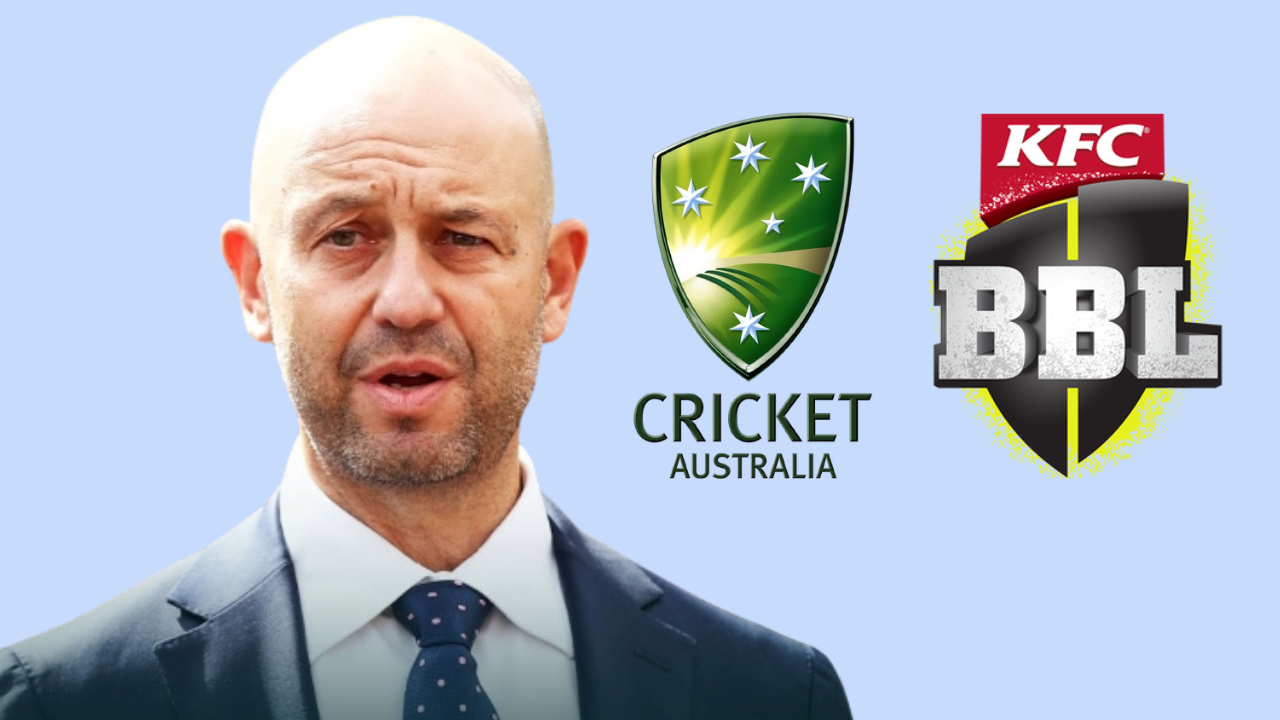
Cricket Australia Chief Executive Todd Greenberg has admitted the organisation failed to properly explain the reasoning behind its push to bring private investment into the Big Bash League, as divisions across Australian cricket continue to complicate plans for the competition’s future structure. The debate around privatisation has intensified in recent weeks amid resistance from multiple state associations, growing concerns over player retention and wider questions about how the BBL can remain competitive in an increasingly crowded global T20 market.
Greenberg acknowledged the criticism surrounding Cricket Australia’s handling of the process while speaking to SEN. “There’s no doubt we could have, and should have, done a better job of the public narrative of why we’re doing private capital and why the concept of private capital is valuable for Australian cricket.”
He also reflected on the resistance the proposal has generated within parts of the Australian cricket system. “I do think it’s easy to run the other argument. Because ultimately people don’t like change in any form of life, cricket particularly. Change comes hard. So on reflection, we probably could have and should have done a better job of that.”
Greenberg also defended Cricket Australia’s consultation process while speaking to SEN. “In saying that, we have desperately tried to run this project with our stakeholders, with our members, with our players, and have a good natural discourse through that.”
He added that disagreements around the proposal had not damaged relationships across the Australian cricket system. “One of the things I am proud of is, despite some tension in the system, relationships are really strong. We’ve got alternate views, but those views are well heard. They’re well understood. I maintain really good relationships, as does our board, with all of our counterparts, and that’s fine, because healthy debate is a good thing for cricket. We should be debating these issues. These are big conversations to have, so we’ve got to be having them together. We just should be having them in the right tone, which we are.”
Cricket Australia pushes case for private investment
Cricket Australia’s position has increasingly centred on the belief that external investment will eventually become unavoidable if the BBL is to remain among the world’s leading T20 competitions. Speaking on the ABC Cricket Podcast, Greenberg said private capital was becoming an inevitable part of the global cricket economy. “This might feel new in our country, bringing private capital into sports, but it’s certainly not new globally. The concept of bringing private capital to cricket is inevitable at some point.”
Greenberg added that Cricket Australia’s focus was not simply securing the largest financial offers available. “The question will remain about when that actually happens. My view is it will happen. What we have to make sure is the levels of control are in place and you’re not just taking the biggest cheque, you’re looking for the right partner.”
The growing number of T20 leagues around the world has become a major factor in Cricket Australia’s thinking as competitions across India, England, South Africa, the UAE and the United States continue attracting investment and expanding commercially. “Can all of these leagues survive and can they all thrive?” Greenberg asked.
He also outlined Cricket Australia’s long-term ambition to position the BBL among a smaller group of globally dominant T20 tournaments. “I think what the future looks like is global T20 leagues will have, and I use this term loosely, a concept of a grand slam where there’ll be three or four major T20 global leagues participating around the world.”
Greenberg added: “Clearly the IPL’s already found its niche, I think The Hundred’s anchored itself into a slot, and unashamedly we want to ensure the BBL sits in that apex.”
State divisions complicate privatisation plans
As previously reported by cricexec, Cricket Australia’s original plan to move all eight BBL franchises into a unified privatisation process stalled after New South Wales and Queensland opposed the proposal. Cricket Australia has since shifted toward a staggered model that could allow willing states to pursue private investment independently while others retain the option to join later.
Victoria, Western Australia and Tasmania have emerged as the strongest supporters of bringing private capital into their franchises, while South Australia has explored a hybrid approach that would permit selective participation across the league. The divide has forced Cricket Australia to reassess how any future investment structure could operate within the game’s federated governance model.
Cricket Australia Chairman Mike Baird and Cricket New South Wales Chairman John Knox also held discussions this week as negotiations over the league’s future structure continued. Speaking to SEN, Greenberg said: “I think there’s good rapport between two of them.”
He added: “Obviously they are private conversations, but the two gentlemen have known each other a long time though. I expect that we’ll make some progress over the coming weeks.”
Greenberg acknowledged the urgency surrounding those decisions: “I feel like change is on the horizon. We’ve got to make sure we have an ability to influence that level of change.”
He also warned that delaying decisions around investment could weaken the BBL’s long-term position in the global T20 landscape. “I think we’ve missed the boat.”
Greenberg continued: “That’s not the greatest strategy in the world when the global cricket landscape is moving and it’s moving at speed.”
Concerns over player retention and salaries
A major part of Cricket Australia’s privatisation argument has centred on player payments and the widening financial gap between the BBL and rival franchise leagues. As previously reported by cricexec, the Australian Cricketers’ Association has pushed for a larger share of cricket revenue as discussions around the league’s future structure continue, while Cricket Australia has argued that increasing total revenue through new investment is the preferred pathway for lifting player salaries.
Greenberg questioned whether the BBL’s current model could continue competing globally without additional capital entering the system. “The open question remains: Is our model fit for purpose in the next decade? Can we continue to attract and retain the best players … to the BBL in a market where we’re up against private capital all over the world in T20 leagues?”
He also praised the BBL’s current standing despite increasing global competition. “I think we’ve done a brilliant job in the BBL, in fact I think we’re punching well above our weight considering where we are and what we have.”
Greenberg said future commercial decisions could have major implications for the competition’s next media-rights cycle. “My open question is: Can we continue to do that if we don’t make decisions now that will impact the next media rights deal?”
Cricket Australia seeks long-term place in global T20 market
Greenberg also linked the privatisation debate to broader concerns around the future availability of Australian players as franchise opportunities continue expanding internationally. Speaking to SEN, he said Cricket Australia still expected strong commitment from the current national setup despite the growing financial pull of overseas leagues.
“I’ve had some conversations with players about that. We’ll have a really strong Australian team,” Greenberg said.
He added: “We’ve got an amazing group of players now who literally will sacrifice lots of money in order to play for their country.”
He added that the bigger concern was how future generations of players may respond to the changing economics of the sport. “But I keep saying this, and I’ll keep saying it again, will the next generation have that same level of stickiness to want to play a Test match against Bangladesh in the top end while there may be half-a-million dollars available to them for a month or more to play in a T20 franchise league? That’s the open question on us in the future.”
Greenberg also warned that richer overseas leagues could eventually draw talent away from Australia if the BBL cannot significantly improve player salaries. “If those salary caps are significantly higher than ours over the coming years, and players can earn more in those areas, then players will follow those. That’s a real risk to us.”
He added: “I want to make sure that for Australian cricket, our ambition is to have a league that runs at the key part of the year for us, which is the December-January window, and it’s the best T20 league in the world at that moment in time. To do that, we have to have a significant amount of money in our salary caps to attract not only the best players from overseas, but to retain and attract our own best players. Without those levels of investment, we will not retain those players in the future.”