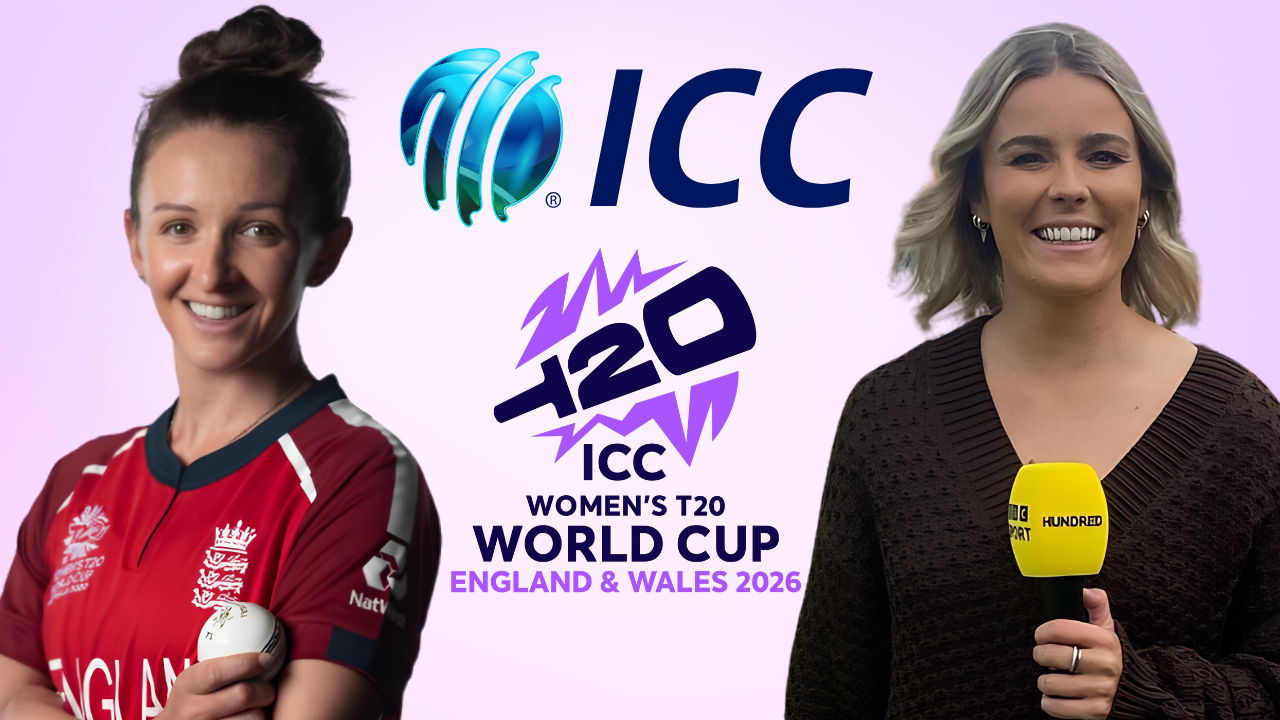
Kate Cross and Alex Hartley have revealed they received death threats and online abuse after questioning the ICC’s Women’s T20 World Cup semi-final scheduling, with the pair later saying the ICC clarified that the fixture timings were not designed to favour India but to maximise spectatorship in the UK and global viewership.
Speaking on No Balls: The Cricket Podcast, the England duo addressed both the reaction to their earlier comments and the explanation they received from the ICC, while urging greater civility on social media following the controversy.
Online backlash follows scheduling debate
Hartley revealed the scale of the online response after their discussion of the tournament schedule attracted widespread attention.
“We’ve been getting death threats and abuse online,” Hartley said.
Cross described the volume of messages they received after clips from the podcast circulated widely online, adding: “I woke up this morning to post about the ICC scheduling for the semi-finals to 450 comments on that Instagram post. Normally, we will get 30 per post. There’s been a little bit of confusion because what we said doesn’t warrant death threats and abuse.”
🚨 U-turn from Kate Cross and Alex Hartley: "That statement had nothing to do with India, and we are receiving death threats."
"That post received 450 comments. There seems to have been some confusion because I don't think what we said warranted the death threats and abuse we… pic.twitter.com/vQqAMSqCQl
— Indian Cricket Ministry (@Tejashyyyyyy) June 30, 2026
The backlash followed a debate over the ICC’s playing conditions, which stated that if India reached the semi-finals, they would play in the first semi-final regardless of whether they finished first or second in Group A. Under the standard tournament format, the Group A winners were due to face the Group B runners-up in the first semi-final, with the remaining qualifiers meeting in the second.
ICC explains the scheduling rationale
After the discussion generated significant attention, Hartley said she sought clarification directly from the ICC over the reasoning behind the scheduling.
“I’ve actually spoken to somebody at the ICC to clarify everything that has been said. This is what the ICC said, ‘We’d like to clarify that this has nothing to do with India and that this has been done to optimise spectatorship in the UK as much as the global viewing.’ So, my interpretation of that is that the 6:30 start is for the UK audience.”
Cross also stressed that neither she nor Hartley had intended to criticise the India women’s team.
“It feels like we’ve cleared that up. Thanks everyone that has got in touch and supported us. That’s been lovely reading all those (messages). It’s mad, isn’t it? We spoke about social media so much on this platform but let’s just be a bit kinder. Like I wasn’t slagging off India as a cricket team.”
She added: “I was just saying ‘I don’t think that any tournament should be based on a cricket team getting through a semi-final’. Turns out that wasn’t right anyway. To the person that quote us, if you are going to quote us, quote what we say don’t quote what you think we’ve said. The people have opened up to their interpretation.”
How the controversy began
The discussion originated before India’s final group-stage fixture, when Cross and Hartley questioned why the tournament schedule appeared to guarantee India a place in the first semi-final should they qualify for the knockout stage.
🚨🤯 Shocking: Kate Cross and Alex Hartley believes that the ICC is showing favoritism toward the BCCI
"Can we talk about the fact that, if India qualify for the semifinals, they're guaranteed to play in the Tuesday semifinal because the ICC believes that's the best slot for… pic.twitter.com/i5wt0Ah6K3
— Indian Cricket Ministry (@Tejashyyyyyy) June 28, 2026
Cross said: “Can we talk about the fact that if India qualify for the semis, they’re guaranteed to play the Tuesday semi-final because the ICC think that’s the best one for them to play in time-wise.”
“Happens in men’s cricket, women’s cricket. All World Cups,” Hartley replied.
Cross continued: “Everyone’s gonna plan it based on when India are gonna play. It’s absolutely mental. I don’t understand how you can go into a tournament and the governing body would prioritize one team like that. I know exactly why they are doing it. I think it’s absolutely ridiculous.”
“It is bad, it is bad,” Hartley added.
Tournament moves on after India’s exit
The debate ultimately became academic after India failed to reach the semi-finals. The defending ODI World Cup champions were eliminated following their defeat to Australia in their final Group A match, allowing South Africa to progress to the knockout stage instead.
Australia have since defeated West Indies to book their place in the Women’s T20 World Cup final, while England will face South Africa in the second semi-final on Thursday for the remaining place in the title decider.