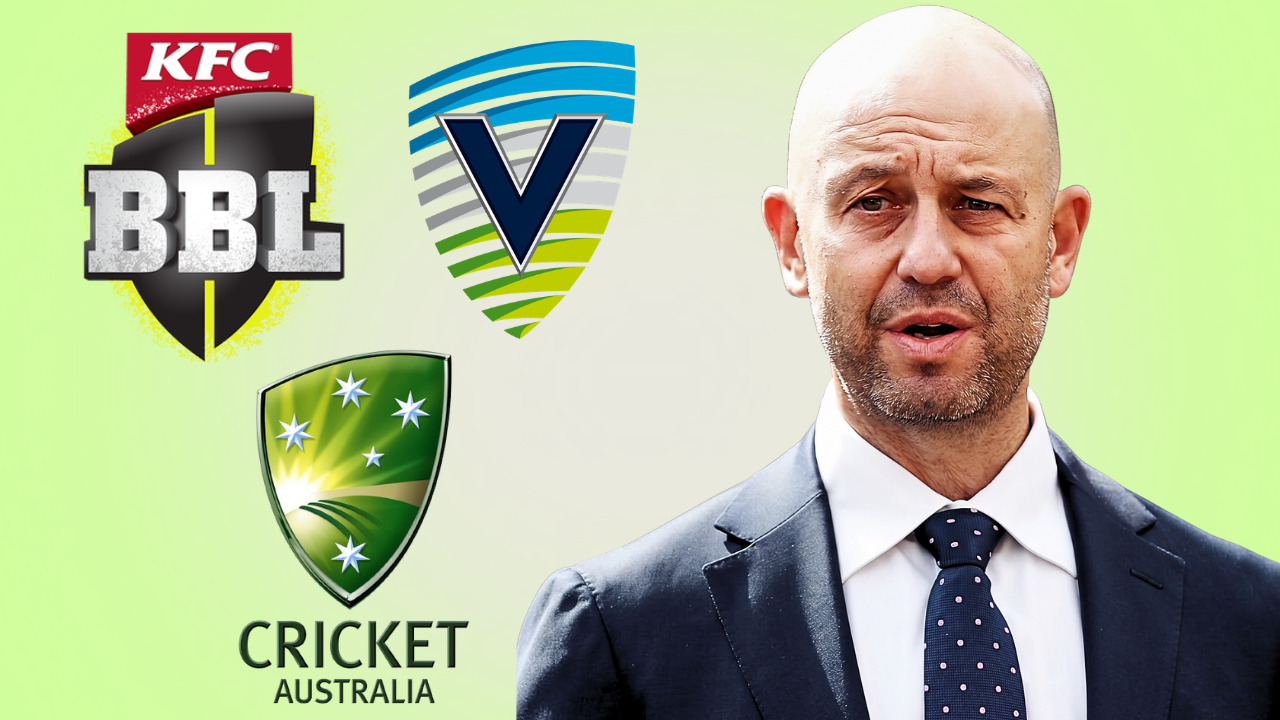
Australian cricket’s increasingly fractious debate over Big Bash League privatisation reached a new flashpoint this week, with Cricket Australia convening an emergency conference call with state leaders after Cricket Victoria‘s merger announcement triggered an immediate and widespread backlash, according to a report by ESPNcricinfo. The call, held on Thursday, brought together Chief Executives and Chairs from New South Wales, Queensland, South Australia, Western Australia, and Tasmania — every state bar Victoria, whose CEO Nick Cummins and Chair Ross Hepburn were not invited to the discussion.
A federation pulled in different directions
The divisions now running through Australian cricket’s ownership debate did not emerge overnight. As previously reported by cricexec, Cricket Victoria formally advanced plans to merge the Melbourne Stars and Melbourne Renegades into a single Cricket Victoria-operated entity while positioning one BBL licence for sale to external investors — with IPL-linked investment groups among the frontrunners to acquire the second licence and rebrand the franchise entirely. The announcement, which came on Tuesday after staff at both clubs were briefed internally, caught several state associations off guard and accelerated what had already become a deeply contested national governance question.
As previously reported by cricexec, New South Wales, Queensland and South Australia had each moved to request an urgent meeting with Cricket Australia following the revelation, with the Australian Cricketers’ Association also raising serious concerns about the pace and direction of the process. Australian Cricketers’ Association Chief Executive Officer Paul Marsh was direct about where things stood. “As it stands, Australian cricket is not unified on a way forward and as a result, we are a long way off a solution,” he said in a statement.
Victoria moves alone, others push back
The state-by-state breakdown of opinion has made Cricket Australia’s position an exceptionally difficult one to manage. New South Wales remains committed to a self-funding model and has consistently argued that private investment is not necessary for the BBL’s future. Queensland, which joined NSW in rejecting Cricket Australia’s initial privatisation proposal in April, has opposed private capital without offering an alternative framework. South Australia has occupied a middle position, advocating for a hybrid model that would allow willing states to pursue private investment while others opt in at a later stage. Western Australia and Tasmania have been broadly supportive of selling stakes in their franchises.
According to SEN, Cummins took steps to manage the fallout from Victoria’s announcement by sending an email to the other state associations explaining the reasoning behind the decision in an attempt to repair relationships before Thursday’s call.
Nick Cummins had previously been unambiguous about the commercial logic underpinning Victoria’s position, telling the Sydney Morning Herald: “We can’t sell uncertainty to sponsors, we can’t sell uncertainty to players, we can’t sell uncertainty to staff.”
Greenberg moves to hold the process together
Thursday’s conference call produced no dramatic resolution, but it did produce something Cricket Australia clearly needed — a reaffirmation that the process would continue through the agreed channels. According to ESPNcricinfo, states voiced their concerns directly to Greenberg and Cricket Australia Chair Mike Baird, and a general consensus emerged to hold the course and allow the scheduled in-person meetings in Melbourne next week to proceed as planned — with state executives meeting first, followed by Chairs the following week.
Cricket Australia Chief Executive Officer Todd Greenberg addressed the situation in a statement following the call. “We had productive discussions with several State chairs and CEOs today to ensure talks about the possible inclusion of private investment in the Big Bash Leagues remain fully aligned,” he said.
On Cricket Victoria’s timing, Greenberg was measured but candid. “The timing of the news about Cricket Victoria’s intentions in the event of private investment was not ideal. But we understand their challenges,” he added.
The broader message from Cricket Australia was one of collective purpose over individual positioning. “It is very important to restate that Cricket Australia, the States and the ACA all have the best interests of Australian Cricket at heart, and we will continue discussions to find the best way forward,” he noted.
What remains unresolved
The Melbourne meetings next week will be critical in determining whether Thursday’s consensus holds. No formal decision on privatisation can proceed without approval from the Cricket Australia board, and any ownership changes affecting BBL clubs must also be negotiated within the framework agreed between Cricket Australia, the states, and the ACA — a process the players’ association has been clear is far from complete.
Victoria’s move has nonetheless set a precedent. It is the first state association to formally advance a privatisation process, and the pressure it has placed on Cricket Australia to accelerate its timeline is unlikely to ease regardless of what next week’s meetings produce. With competing state interests, unresolved player negotiations, and a federation that remains divided on the fundamental question of whether private capital belongs in the BBL at all, Greenberg’s task of finding alignment is as much a political challenge as it is an administrative one.