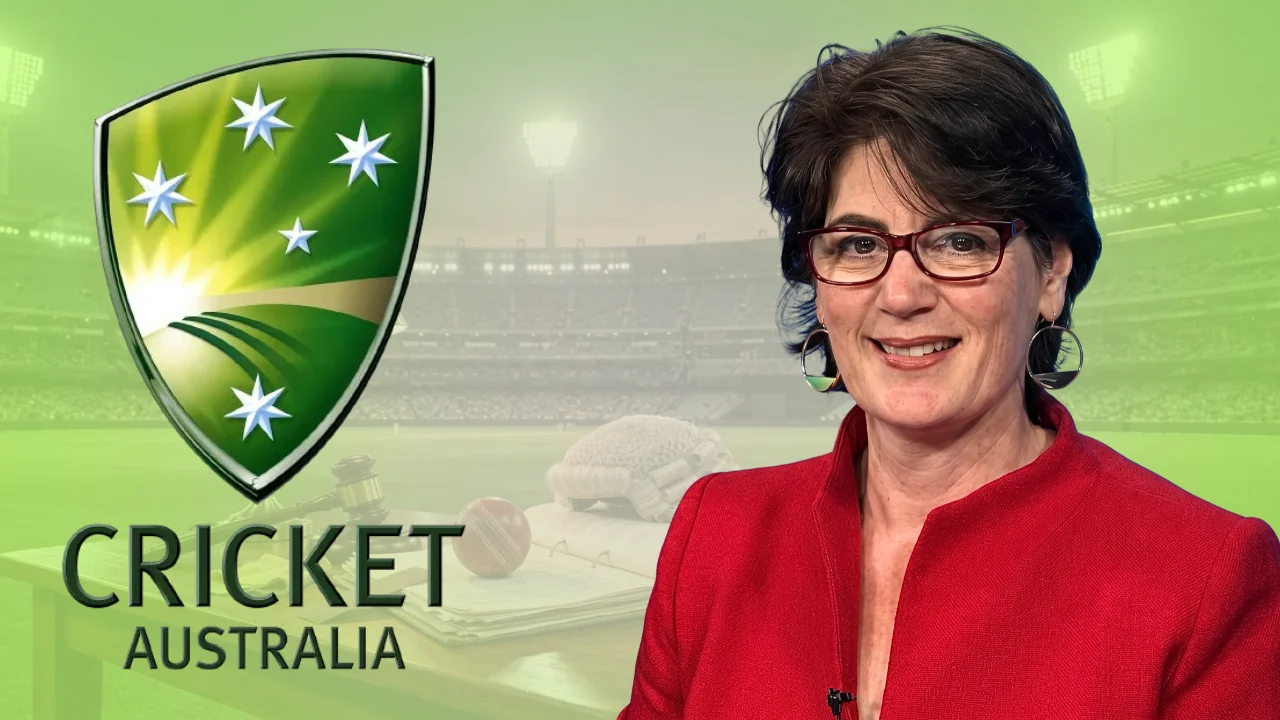
Cricket Australia (CA) has dramatically expanded the scope of its independent Sandpapergate forum to include the 2017-18 Ashes series against England, appointing prominent Australian barrister and transparency advocate Fiona McLeod AO SC to lead a process that could take several months to complete.
The governing body released the forum’s terms of reference on Friday, November 27, confirming that the independent review would extend beyond the controversial 2018 tour of South Africa to examine ball-management practices throughout the preceding Australian summer, as well as the conduct and scope of Cricket Australia‘s original investigation.
The decision represents a significant development in the governing body’s efforts to address the escalating controversy surrounding the 2018 ball-tampering scandal, which has exposed deep divisions within Australian cricket and raised fresh questions about institutional accountability, transparency and the handling of the original investigation.
However, Cricket Australia has maintained that the forum will not constitute a formal reopening of the investigation and will not result in retrospective punishment or new disciplinary sanctions.
Cricket Australia broadens Sandpapergate forum to examine entire 2017-18 season
The inclusion of the 2017-18 Ashes represents a substantial expansion of the forum’s original remit, which was initially expected to focus on the South Africa tour.
Under the newly announced terms of reference, McLeod will examine:
- Ball-management practices during the 2017-18 Ashes series against England.
- Ball-management practices across all four Tests of Australia’s 2018 tour of South Africa.
- The events of March 24, 2018, when Cameron Bancroft was caught using sandpaper to alter the condition of the ball in Cape Town.
- The conduct and scope of Cricket Australia’s original 2018 investigation.
Players and support staff involved in the South Africa tour will be invited to participate, alongside individuals who served in Cricket Australia’s management and on its Board at the time. Additional participants may be included at McLeod’s discretion.
The forum will remain open for six weeks, with participants permitted to provide written or verbal submissions on a voluntary and confidential basis.
McLeod will subsequently prepare a report identifying the principal themes emerging from the submissions and outlining recommendations for the governing body. Cricket Australia has committed to publishing the report in full within 30 days of receiving it, alongside its response.
Cricket Australia Interim Chair David Boon said the process was designed to provide those involved with an opportunity to share their accounts.
“We’re grateful to Fiona McLeod AO SC for agreeing to lead the Independent Forum which has been designed to give voice to all the players and staff on the 2018 Test tour of South Africa,” Boon said.
“This is an opportunity to provide their accounts in a safe environment and to provide the CA board with relevant information including about the events of that tour and resultant investigation.
“We are acutely aware of the enormous toll the renewed focus on this tour eight years ago has had on those involved and their welfare remains our main priority.
“This forum is the best opportunity for people to speak and be heard, and for CA to listen and learn.
“Publishing the report in full is part of our commitment to transparency, and to be open with cricket fans about what we learn. It is also very important to understand that it will not seek to sanction or recriminate.”
Cricket Australia rules out new sanctions or findings of individual responsibility
Despite the expanded scope of the forum, Cricket Australia has placed clear limitations on what the process can achieve.
The review will not determine individual culpability, reconsider the punishments handed down in 2018 or recommend further disciplinary or legal action.
Cricket Australia stated in its terms of reference:
“The forum is not a disciplinary process or adjudication. It will not make any adverse findings about, or determine the responsibility of, any individual, revisit the sanctions previously imposed or recommend retrospective punishment or legal action.”
While the final report will be made public, individual submissions and witness accounts will remain confidential.
The framework presents Cricket Australia with a delicate balancing act. The governing body is seeking to restore confidence in its handling of the scandal while protecting the welfare of former and current players and encouraging participation from individuals who have offered conflicting accounts of the events.
The absence of compulsory participation and the prohibition on determining individual responsibility could also raise questions about the extent to which the forum can resolve the outstanding disputes surrounding Sandpapergate.
Who is Fiona McLeod, the barrister leading Cricket Australia’s Sandpapergate forum?
McLeod brings more than three decades of legal experience to the role, including extensive involvement in some of Australia’s most significant public inquiries and royal commissions.
According to multiple sources, independence from Cricket Australia and transparency were considered essential elements in establishing the forum.
McLeod has built a reputation as an advocate for institutional accountability, integrity and transparency in public life.
Her legal career has included representing the Commonwealth in proceedings involving the Victorian Bushfires Royal Commission, the Queensland Floods Commission and royal commissions examining institutional child sexual abuse, aged care, banking and disability.
She has also been involved in the Yoorrook Justice Commission and an investigation into embryo transfer errors at Monash IVF in 2025.
McLeod has held several prominent leadership positions within Australia’s legal profession, including serving as President of the Law Council of Australia, the Australian Bar Association, the Victorian Bar and Australian Women Lawyers.
She also entered federal politics in 2019, unsuccessfully contesting the Victorian electorate of Higgins as a Labor candidate.
In her 2021 monograph, _Easy Lies and Influence_, McLeod wrote:
“When listening to a lie, we can be confounded momentarily – we do not expect people to lie to us, especially those entrusted with authority.”
“Many are unable or unwilling to discern the truth and act accordingly, despite overwhelming evidence.”
She also addressed the broader consequences of failures in institutional accountability.
“The issue of corruption and the failures of accountability continue to trouble me. Once seen in the political domain, they cannot be unseen,” McLeod wrote. “Once trust is lost, personal grievance festers.”
McLeod’s approach to transparency and confidential testimony
McLeod has previously examined how independent commissions can encourage witnesses to come forward while balancing public transparency with the protection of individual reputations.
She has highlighted the benefits of confidential preliminary interviews in anti-corruption inquiries, particularly where witnesses may otherwise be reluctant to participate.
“In New South Wales and Victoria, the process of public hearings conducted after private and confidential hearings has assisted in flushing out corruption at the state and municipal level, encouraging witnesses to come forward and government agencies to better protect against the risk of corruption,” she wrote.
“The risk to the reputation of individuals should be balanced with this to ensure there is a public interest in a public hearing, informed by a confidential preliminary investigation.”
Although those observations were made in a different institutional context, they provide insight into McLeod’s approach to sensitive inquiries.
Cricket Australia’s decision to protect individual submissions while publishing the forum’s final report reflects an attempt to balance similar considerations.
Alastair Cook’s revelations bring 2017-18 Ashes under renewed scrutiny
The expansion of the forum to include the 2017-18 Ashes has brought historical allegations concerning Australia’s ball-management practices during that series back into focus.
Australia won the five-Test series 4-0, but England’s players reportedly questioned the home side’s ability to generate significant reverse swing in conditions they considered unusual.
Former England Captain Sir Alastair Cook addressed those suspicions in his 2019 autobiography, recalling an incident during the Perth Test and a subsequent conversation involving David Warner following the conclusion of the series in Sydney.
Cook wrote:
“Our suspicions had been aroused in Perth when they managed to get the ball reversing a huge amount with the outfield that was still wet with three hours of rain.
“When the series was complete and we had lost 4-0 the teams shared a beer in the dressing rooms at the SCG.
“Warner, a couple of beers into his celebration at the time, mentioned to a group of England players that he had used substances attached to the strapping on his hand to accelerate the deterioration of the ball during a first-class match.
“I looked at Steve Smith, who shot a glance that said: ’Ooh, you shouldn’t have said that.”
Cook was also asked following the original Sandpapergate controversy whether England’s players had suspected Australia of ball-tampering during the Ashes.
“Yes a little bit, certainly in Perth when the outfield was wet with rain they got the ball-reversing,” he said.
Those suspicions did not lead to further action at the time, and Cook’s account of Warner’s alleged admission concerned a first-class match rather than an Ashes Test.
Nevertheless, the inclusion of the Ashes in McLeod’s remit means the forum will now consider Australia’s ball-management practices during the months leading up to the South Africa tour.
Usman Khawaja calls for Australia to accept collective responsibility
The latest developments follow former Australia opener Usman Khawaja’s proposal that members of the 2018 touring party issue a collective statement acknowledging responsibility for the scandal.
Khawaja, whose autobiography _Sabr_ reignited the controversy earlier this month, has alleged that knowledge of ball-tampering extended beyond the three players punished by Cricket Australia.
Speaking on _The Grade Cricketer_ podcast, Khawaja outlined the wording of a proposed collective statement.
“We accept knowledge as a team that we knew we were ball tampering by artificially altering the condition of the ball in South Africa in 2018,” Khawaja suggested.
“Whether it was sandpaper, or by any other means, is irrelevant. We knew what we were doing, and we take full responsibility as a team and squad for our actions, something we should have done eight years ago.
“Furthermore, we would like to acknowledge, Steven \[Smith\], Cameron \[Bancroft\] and David \[Warner\] paid an enormous price for the sake of the team for which we are sorry and eternally grateful.”
The proposed approach follows similar calls from Australian Cricketers’ Association (ACA) CEO Paul Marsh for broader responsibility to be acknowledged as part of efforts to resolve the controversy.
Khawaja has also expressed disappointment over comments made by Australia Test Captain Pat Cummins during a lengthy press conference, describing them as personal attacks.
Pat Cummins’ manager rejects Khawaja’s allegations
Cummins’ Manager Neil Maxwell responded to Khawaja’s latest comments on Thursday, rejecting the allegations made against the Australian Captain while expressing hope that the independent forum could facilitate reconciliation.
“This is a matter for Usman, but in fairness Usman made very serious and unsubstantiated claims against Pat that are yet to be withdrawn, and it doesn’t get more personal than that,” Maxwell said, according to _The Sydney Morning Herald_.
“That said, we hope the forum can sponsor some difficult conversations and the game can move forward. As Pat said in his 70-minute press conference, the penalties to Dave, Cam, and Steve were way too harsh. That is something every player can agree on.”
Cummins, Mitchell Starc and Josh Hazlewood have consistently rejected allegations that they had prior knowledge of the sandpaper plot.
The three fast bowlers, alongside Nathan Lyon, previously issued a joint statement in 2021 denying knowledge of the use of sandpaper.
Cricket Australia has also publicly reaffirmed its unanimous support for Cummins to remain Test Captain, rejecting suggestions that his integrity had been compromised and praising his contribution to transforming the Australian team’s culture.
Cummins, Khawaja, Bancroft and former Australia Head Coach Darren Lehmann have indicated their willingness to participate in the independent forum.
David Warner challenges Gerard Whateley’s Sandpapergate investigation
Meanwhile, Warner has publicly challenged fresh allegations emerging from an extensive investigation conducted by Australian sports broadcaster Gerard Whateley for SEN and News Corp.
The investigation included allegations concerning Warner’s use of substances attached to his finger strapping to manipulate the condition of the ball during the 2018 Cape Town Test.
Responding to the allegations on Instagram, Warner questioned the evidence underpinning the report.
“I’m not entirely sure where Gerard’s assertions have come from, as they certainly do not align with my recollection of events,” Warner wrote.
“In relation to the alleged use of superglue and grit, and the more recent claims regarding the finger, could I respectfully ask what credible evidence exists to substantiate these allegations?
“Before further unverified claims are circulated publicly, I would suggest establishing the facts rather than perpetuating speculation.”
In a separate exchange on Instagram, Warner also questioned whether the media coverage had crossed the boundary between journalism and bullying.
“Refreshing to see someone willing to speak honestly,” Warner replied. “Education and eloquence are admirable qualities, but they should never be used to undermine those who weren’t afforded the same opportunities.
“When someone uses their public platform to control a narrative without affording others the same voice, it raises a legitimate question about the distinction between journalism and bullying.”
Whateley declined to comment when approached by _The Sydney Morning Herald_ on Thursday.
The controversy has also had commercial and professional consequences beyond the Australian dressing room, with both Warner and Khawaja stood down from their Fox Sports commentary duties. No decision has yet been announced regarding their return.
Cricket Australia’s original Sandpapergate investigation faces renewed examination
One of the most significant governance implications of the expanded forum is its mandate to examine Cricket Australia’s own handling of the 2018 scandal.
The original investigation concluded that only Steve Smith, Warner and Bancroft had prior knowledge of the Cape Town sandpaper plot.
Smith and Warner received 12-month suspensions and were removed from their positions as Captain and Vice-Captain respectively, while Bancroft was banned for nine months.
Smith has yet to comment publicly on the latest controversy.
The original investigation’s narrow focus on the Cape Town incident has come under increasing scrutiny following allegations that ball-tampering practices may have extended across multiple matches and involved broader knowledge within the Australian squad.
Those allegations remain disputed.
By including former Cricket Australia management and Board members among the individuals invited to participate, the forum creates an opportunity to examine not only the conduct of players but also the institutional response to the scandal.