A dual push for reform and growth
Cricket West Indies (CWI) leaders are laying out a bold and expansive roadmap for the region’s cricketing future—calling not only for commercial innovation and grassroots development but also for structural reform at the international level to ensure fairer financial treatment of smaller cricketing nations.
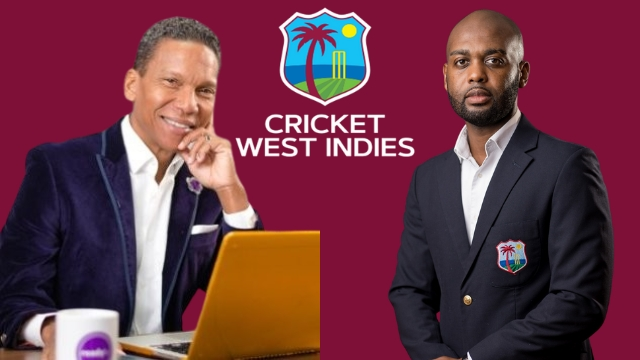
CWI CEO Chris Dehring and President Dr. Kishore Shallow presented a united front in articulating the urgent need for both internal modernization and global revenue reform. Their messaging, while focused on different aspects of the game, reinforces a single, strategic direction—one aimed at sustainable competitiveness and long-term relevance for West Indies cricket.
Dehring’s strategic blueprint: grassroots development, regional leadership, and commercial revitalisation
Dehring, in his first formal address since becoming CEO this year, emphasized the importance of nurturing local talent and reestablishing West Indies’ leadership in the broader Americas cricket landscape. His strategic vision is anchored in three core pillars: grassroots development, regional leadership expansion, and commercial revitalisation. “We must enhance the raw material that feeds our cricket. This means supporting the youth pipeline to ensure a continuous flow of emerging talent,” he said.
He also called attention to the sport’s growth in the wider region and the need for CWI to lead that expansion. “We’re talking about cricket in the Americas, where we are ostensibly the big brother of the region as the only full member country of the ICC and therefore we have to re-establish our role as cricket has grown tremendously in the Americas, quite almost under the radar in many of the countries,” he explained. “Everybody knows how much it has grown in countries like the United States and Canada, but even in South America, Latin America, it has started to really grow. And we need to make sure that we take advantage of that opportunity.”
Dehring stressed the importance of integrating modern practices to compete globally. “We do not operate in a vacuum. We are part of a global sporting industry, and we must employ every strategy to compete—especially on the commercial front. That means turning every department into a contributor to revenue generation,” he said.
Organizational overhaul
Dehring also announced a key organizational overhaul to support that vision. “To that point, one of the core underlying things that we’re going to undertake is an entire digital transformation project. And digital transformation is not just a fancy buzzword, it really is a whole resetting of the mindset of an organisation to make sure that we’re much more data-driven in our decision-making. But to be data-driven, you have to be able to generate the data, the kind of data that you need throughout the length and breadth of our organisation.”
Dehring further added, “It’s very easy for us to look at the output of West Indies cricket and critique it, but we need to understand the process and the data that’s going into that process, the data that’s available before you even understand the output.”
He reinforced the board’s broader mission: “We are committed to a West Indies cricket that is not only competitive on the field but also sustainable, respected, and vibrant across every aspect of its operation.”
International revenue sharing challenges
On the issue of international revenue sharing, Dehring pointed to long-standing concerns. “The division of world cricket revenues has always been a vexing issue for the Caribbean, ever since television came into the sport back in the 1990s,” said Dehring. “We saw what was happening then, and we could predict what would happen with our small economies. The chickens have come home to roost.”
He added, “We’re hoping we can continue the dialogue and debate to encourage a restructuring of world cricket’s finances. India can’t constantly play against Australia and England every year — that product will not be sustainable. The world needs a healthy West Indies product.”
Dehring also celebrated the region’s influence on modern formats. “The limited-overs form was created to encourage others to play the way West Indies naturally played. The celebration of cricket with music, culture and joy — born right here in Antigua and expanded across the region — is what evolved into the wonderful product we now call T20. Our contribution to the world game is indisputable.”
Shallow reinforces West Indies’ global relevance
President Dr. Kishore Shallow echoed Dehring’s emphasis on both internal progress and global reform. He highlighted the consequences of West Indies’ recent absence from key tournaments. “When we missed out on the ODI World Cup last year, that was a serious blow to the ICC and the tournament. I’m sure 10% of you didn’t even follow the Champions Trophy because West Indies wasn’t there,” said Shallow. “This is the case globally — everyone at ICC understands the relevance of West Indies cricket.”
Shallow pointed to the pace of the game’s growth as both a challenge and an opportunity. “One of the challenges we face is how rapidly the game is growing — both men’s and women’s cricket. Any other sport would see that as a positive,” he said. “We’ve started positioning ourselves to optimise these opportunities. We’ve held meetings with Canada, visited Peru, and are building partnerships across the Americas.”
He closed with a reminder of the region’s strategic imperative: “Ultimately, we must remain relevant in global cricket,” Shallow concluded. “That is what we can control, and that is where our focus will remain — while we continue pushing for a more equitable future.”
A pivotal moment for CWI leadership
Dehring was clear in calling for systemic financial reform at the international level. “The division of world cricket revenues has always been a vexing issue for the Caribbean, ever since television came into the sport back in the 1990s,” said Dehring. “We saw what was happening then, and we could predict what would happen with our small economies. The chickens have come home to roost.”
He continued, “We’re hoping we can continue the dialogue and debate to encourage a restructuring of world cricket’s finances. India can’t constantly play against Australia and England every year — that product will not be sustainable. The world needs a healthy West Indies product.”
The dual messaging—Dehring’s development strategy and Shallow’s global revenue advocacy—comes at a time when CWI is under the spotlight as a co-host of the ICC Men’s T20 World Cup. Their statements serve as a declaration of intent for what the future of West Indies cricket should look like: modern, competitive, inclusive, and fairly supported.
CWI’s leadership has made it clear that domestic transformation must be matched by reform on the international stage. They are aligning their internal agenda with a broader call for change in world cricket governance.
By connecting grassroots investment to commercial expansion, and pairing that with a global demand for fairer financial structures, CWI’s leadership is laying the groundwork for a more sustainable future. Their vision demands not only hard work within the Caribbean but also systemic fairness across the cricketing world.
With these public declarations, Dehring and Shallow have opened a new chapter—one that insists West Indies cricket should not only survive but thrive, with a seat at the global table that reflects its historic impact and future potential.