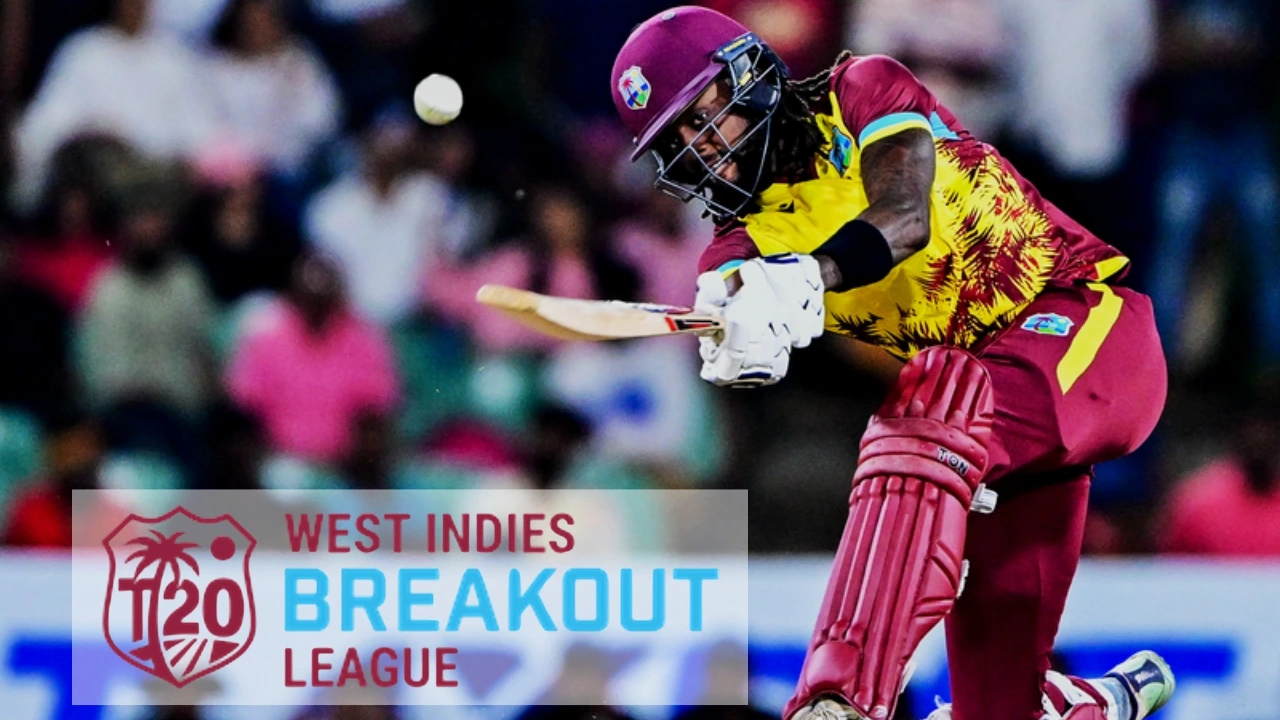
When Pete Russell helped launch the Caribbean Premier League (CPL) in 2013, he and the team weren’t just creating another T20 tournament. They were laying the foundation for a uniquely Caribbean cricketing ecosystem—one designed not just for international stardom, but for regional pride, player development, and economic sustainability. Now, more than a decade later, Russell and the CPL, in conjunction with Cricket West Indies (CWI) have introduced their boldest initiative yet: the Breakout League.

In an exclusive interview with cricexec, Russell unpacked the origins, vision, and early impact of the Breakout League—a new platform that’s as much about unearthing future stars as it is about securing the future of Caribbean cricket.
A league rooted in Caribbean culture
From the beginning, CPL’s strategy wasn’t about chasing global TV rights or mimicking other leagues. It was about the Caribbean, first and always.
“100% spot on,” Russell said, responding to whether CPL was built primarily for local fans. “It has to be about the Caribbean. We can never move away from that.”
This core belief led to CPL refusing to schedule games solely for international broadcast audiences: “Caribbean fans want evening cricket, and we built around that.”
That local-first ethos also helped CPL attract sponsors like Republic Bank, which benefit from pan-regional exposure. “We’re in their key markets across the Caribbean. It’s a good investment for them because they know they’re getting the eyeballs,” Russell said.

The Breakout League: spotlighting future stars
The Breakout League emerged from a joint vision between CPL and Cricket West Indies to address a growing gap: how to fairly evaluate emerging talent across the region.
“We always felt we needed to give a more high-profile platform to some of these younger players,” Russell said. “The Breakout League is a West Indies product. We’re just putting the shoulder to the wheel.”
In 2025, CPL took it a step further by putting up US$1.3 million to fund the tournament, making it the primary financial backer, while CWI, per its statements, invested US$1 million. Beyond money, CPL franchises contributed staff, infrastructure, and a commitment to draft from the league.
The inaugural tournament took place from April 25 to May 10 of this year, featuring 17 matches.
Russell emphasized that the Breakout League bridges the often-missing link between talent and opportunity.
“This is for players who might otherwise fall through the cracks,” he said. “Now, they have a clear path.”
The next phase, according to Russell, is perhaps the most exciting — and critical — step in this journey. A special draft will integrate the most impressive Breakout League performers directly into the CPL rosters.
“We now have a guarantee from all the teams that they will draft three Breakout players and play at least one Breakout League player in every match,” Russell said. “Hopefully two.”
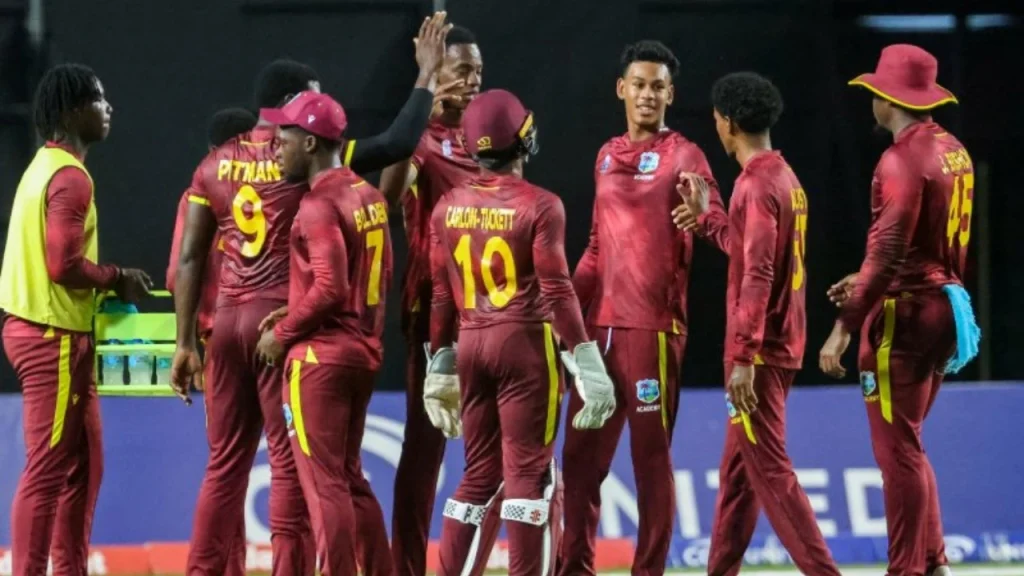
With 84 players participating and 18 making it into CPL squads via a dedicated draft to take place on June 18, the Breakout League is more than a talent showcase. It’s a structural intervention.
“If you look at how some of the players performed in the Breakout League, you wouldn’t be taking much of a risk,” he said.
“It’s no longer just a developmental list,” Russell explained. “These guys are now going to be playing live CPL matches, under lights, with international stars. That’s the exposure and pressure they need.”
The idea is to create not just visibility, but confidence and continuity for emerging players.
“Our hope is that this evolves — that there’s more trust, more familiarity,” he said. “And eventually, these young guys aren’t seen as ‘risks’ — they’re seen as the core.”
Performance, not politics
The league was also created to remove ambiguity and favoritism in selection.
“A lot of selection is not visible to the players,” Russell said. “Now no one can say, ‘I didn’t get a shot.’ The performances speak for themselves.”
This unique format opens the door to both rising teenagers and late bloomers.
“It’s not just for 18-year-olds. It’s also for the guy who’s been overlooked but still has it,” he said. “Everyone is watching now.”
Even the age limit—under 30—was carefully considered. “Players develop late,” Russell noted. “You didn’t want to exclude them. But going forward, 27 might be the sweet spot.”
Professionalism at every level
The Breakout League wasn’t just about players. It also doubled as a training ground for coaches, analysts, and operations staff.
“Everything was planned to the nth degree,” Russell said. “Kit, accommodations, analysts, coaching — the players were treated like professionals.”
He highlighted Cricket West Indies’ focus on developing analytics talent. “It’s so important,” he said. “Every CPL team now has multiple analysts. The more we invest in that, the better the cricket gets.”
A special focus on leg-spinners — implemented by CWI’s Miles Bascombe — also paid off. “The top-performing bowlers in the league were leg-spinners,” Russell noted. “And they got better as the tournament went on.”
“It wasn’t just random development,” he added. “There was a clear strategy behind every element.”
What stands out is how Breakout mimics the best aspects of global leagues without copying them.
“You want players to walk out and feel like they’re in the IPL or CPL,” Russell said. “From the kits to the analysts — we wanted it to feel real.”
Safeguarding Caribbean talent
The stakes are high. With MLC and other leagues offering attractive options abroad, Russell sees Breakout as a way to retain homegrown talent.
“It’s easy for a young West Indian player to get lured elsewhere,” he said. “Breakout is about giving them a reason to stay. It says, ‘You have a future here.’”
He added, “You don’t need many. Just two or three superstars — that’s enough to build a team around.”
Regional competition and opportunity
CPL may no longer be the only league in the hemisphere, but Russell isn’t worried.
“Our fans in the West Indies don’t really focus on what’s going on in MLC or The Hundred,” he said. “They care about whether Trinidad is playing Guyana.”
Still, he’s keen to see better global scheduling coordination. “We’re overlapping with The Hundred this year. That’s just poor planning.”
He hopes for a more rational, harmonized global calendar: “It’s not that hard. We just need people in a room.”
“I think we can get to a place where these leagues work together better,” he added. “There’s enough talent to go around.”
A vision 13 years in the making
Russell’s journey with CPL began in the Digicel days, as the company looked for ways to reinvest in regional cricket.
“We were saying, ‘Is there a way of redirecting the investment into something like the IPL?’” Russell said. “The Caribbean already had the players — Gayle, Pollard, Bravo.”
Launching the league across six countries was a massive gamble. “Our investors put $20 million in the first year,” he said. “There was no money to be made for a number of years.”
He remembers the anxiety of that first game vividly.
“By Friday afternoon, we hadn’t sold a single ticket,” he laughed. “We thought we got it wrong. But in classic Caribbean style, they all showed up — Kensington was rocking.”
Since then, the league has grown into a regional powerhouse — with robust sponsorship, packed stadiums, and now, a developmental pipeline.
“I always say, I want people to look at our games and say, ‘I need to be there,’” Russell said.
Toward a sustainable cricket economy
Russell believes the long-term future of cricket lies in building independent cricket economies.
“India have done a fantastic job. But if you haven’t fixed your local economy, you’re in trouble,” he said.
He sees the U.S. and Caribbean as fertile ground for that kind of development.
“I think our region could dominate in a few years,” he said. “We’ve got the players, the stadiums, the heritage. We just need the will.”
His relationship with Johnny Grave — former CEO of CWI and now CEO of Major League Cricket in the US — is a big part of that.
“Johnny’s an absolute gem,” Russell said. “We see the same opportunities. Between the two of us, we could do something really impactful.”
Russell is optimistic that this Caribbean–U.S. synergy will not only fuel development but also reshape perceptions.
“We can show the world that this region isn’t just about passion. It’s about professionalism and possibility.”
Looking ahead
As the CPL prepares for its 13th season, Russell and his team aren’t resting.
“It’s all very well to have a good season,” he said. “But really, we’ve got to get better. It always comes back to fan experience.”
For now, that experience includes a league built on joy, flair, and carnival — and a breakout initiative that just might be the future of West Indies cricket.