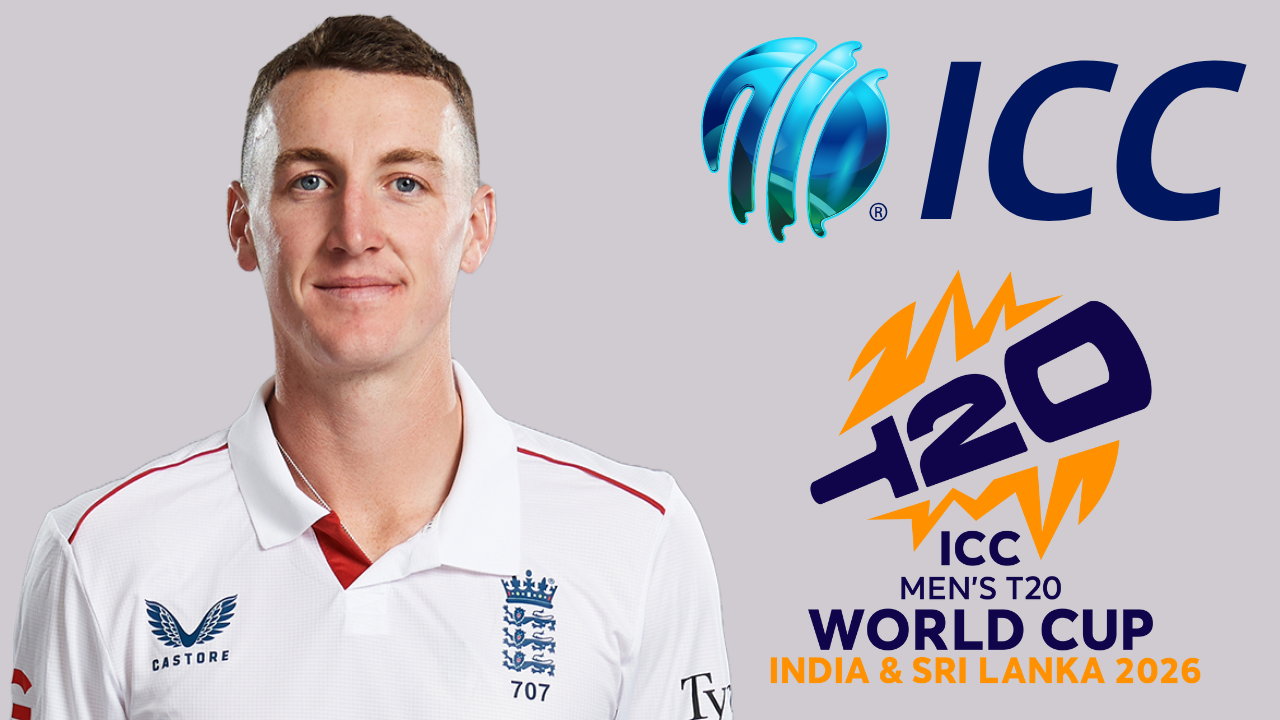
England’s build-up to the T20 World Cup has been overshadowed not by tactics or team selection, but by questions of leadership and responsibility—specifically surrounding new white-ball captain Harry Brook. What began as an off-field disciplinary issue has now spiralled into a wider debate about player accountability, media coverage, and how young leaders in elite sport are nurtured—or exposed.
The flashpoint came during England’s tour of New Zealand, when Brook was involved in an altercation with a nightclub bouncer on the eve of an ODI. The matter, initially downplayed, escalated after Brook’s original version of events was contradicted by evidence showing teammates Jacob Bethell and Josh Tongue were also present. What followed was a media firestorm, a second apology, and a swirl of criticism aimed not only at Brook, but also at the England team culture and management’s handling of the issue.
More recently, when Brook scored a match-winning century against Sri Lanka in Colombo, he celebrated by mimicking WWE star ‘Stone Cold’ Steve Austin’s beer smash—an act that reignited backlash and raised fresh concerns about his judgment.
Atherton calls for personal accountability
Former England captain Michael Atherton made clear that while mistakes are part of life, the way players confront them is crucial—particularly for a national captain. Reflecting on the Wellington incident and the ensuing fallout, he noted that deflecting attention onto communications missteps misses the point.
“It irritates me a little bit when players make mistakes, as Brook did in Wellington, but the focus then shifts away from that individual responsibility,” Atherton said on the Sky Sports Cricket podcast.
He dismissed the narrative that mishandled media strategy was the real failure in the episode. “This cliché that the cover up is worse than the crime is trotted out all the time. Give me a break. It’s ridiculous.”
The real issue, he argued, lies in a basic expectation of responsibility. “If he goes out on the eve of a game, has one too many, gets clocked by a bouncer, and people are saying the problem is in the comms and the PR. At some point, you have to take individual responsibility.”
Atherton also reflected on Brook’s celebration after his century, acknowledging its attempt at levity but questioning its timing. “I thought the celebration when he got the 100 in Sri Lanka was slightly… I mean, you don’t want to be po-faced about all this, you can have a bit of humour about it, but I just thought it was slightly inappropriate and didn’t suggest someone who had shown much contrition.”
Still, he advocated for growth and support, not condemnation. “But I agree that people make mistakes. You have to support them after that and help them grow and get better.”
Hussain demands higher standards for leadership
Sharing the same platform, Nasser Hussain was unequivocal in his assessment of Brook’s actions, especially in the context of his leadership role.
“One thing that is certain: it is totally unacceptable for an England cricket captain, the night before a game, to be going out, having too much to drink, and being clocked by a bouncer. That is just non negotiable,” said Hussain.
For Hussain, age and experience offer no exemption from this standard. “For any cricketer of whatever age—and this is a 26 year old who has been around for a while—that is just non negotiable as your cricket captain.”
But like Atherton, he believes redemption is possible. “But having said that, people do make mistakes in life, and you have to give them the chance to put those mistakes right.”
Reflecting on Brook’s character and track record, Hussain added, “Harry got it horribly wrong, as we all have done in our lives. The question is: does he look like someone who can put it right, and wants to put it right, off the field?”
Hussain also contextualised Brook’s case by referencing other cricketers who have turned their careers around after missteps. “He plays in a Test side with someone who made a huge mistake, and has made mistakes, in Ben Stokes, who has tried to put his off field life right. Ricky Ponting, one of the great captains and players to have ever played the game, had a similar incident growing up and put his life right.”
He acknowledged that scrutiny comes with the job. “There’s been so much noise about it in the last couple of weeks, and rightly so, because he’s an England cricket captain, and you’ve just got to get the certainties out.”
And as for the notion that Brook lacked ECB support, Hussain was clear: “I’ve read pieces saying he hasn’t been supported by the ECB and needed more support. For any cricketer of whatever age—and this is a 26 year old who has been around for a while—that is just non negotiable as your cricket captain.”
McCullum defends team amid culture criticism
Following England’s series win in Sri Lanka, head coach Brendon McCullum addressed the controversy in a measured but firm tone, defending both the player and the team environment from what he felt was excessive scrutiny.
“You have to be allowed to enjoy yourself as well,” McCullum said during the post-match press conference. “I don’t think the boys went overboard at all. In fact, I thought a lot of the pile-on for it was completely out of line.”
Acknowledging the age and pressure facing his players, he added, “We care about these guys and we understand that they are still young.”
McCullum emphasized that coaching is as much about personal development as cricketing skills. “And our job is to try and nurture them through it. It doesn’t mean we’re going to get everything right either. There’s going to be times where we make mistakes. I’ll make mistakes, they’ll make mistakes, the environment will make mistakes. But we are trying to look after them. In the end, they’re good at cricket, these lads. That’s what their gift is. They’re good at cricket. They’re not the finished articles as people yet.”
He continued, “They’ve got elements of maturity to still develop. That’s what we’re here to try and help them with.”
On the continued media fixation, McCullum was blunt. “To be honest, I find it quite annoying that we keep going on and on about it, because these are young men who are under immense pressure and they’ve put their hand up for something they’ve been disciplined for, and piling onto them is not helpful for anyone.”
He also addressed Brook’s initial attempt to protect teammates, saying, “Brooky obviously was trying to protect his other players when he made that comment, I wasn’t aware of that comment until I was told, because I don’t read the media personally.”
According to McCullum, Brook eventually came forward when it was clear the issue would become public. “I think he was quite keen to put his hand up when the information came that it was going to land in the media. He was hopeful that it had been dealt with internally, as we all were.”
Despite criticism, McCullum stood firmly behind Brook’s leadership credentials. “He is a strong leader, he’s a young man, but he’s got a very good head on his shoulders and I know people will say he’s not that clever. I couldn’t disagree with that more. He wears his intelligence lightly and he’s a very strong leader, and he’s someone that they play for in their dressing-room as well, and our job is to just keep looking after him because he is still young.“
He also reflected on the values he introduced when he took over the role. “If you go back to the day that I walked into the job, the first thing I said to these boys is, ‘Don’t do anything that lands you on the front page of the paper and nothing good ever happens after midnight’.”
Responding to perceptions of a lax culture under his leadership, McCullum said, “I think the misconception out there is that I run this loose ship where I want everyone out on the p*** all the time and don’t give a hoot about cricket.”
That notion, he said, couldn’t be further from the truth. “It couldn’t be further from the truth. I’m fiercely determined, I’m fiercely competitive. We’re going to have a good time, we’re going to grow, we’re going to enjoy ourselves.”
And above all, his goal remains unchanged: “I want the best for these guys. I want to make sure that we look after them.”
Redemption on the horizon
England’s World Cup opener against Nepal in Mumbai is just days away. While the focus will soon return to runs, wickets and strategy, the off-field episodes surrounding Harry Brook have revealed something deeper about cricket’s modern pressures, public scrutiny, and the evolving responsibilities of young leaders.
For now, Brook remains at the heart of England’s white-ball future — not just for his batting, but for how he learns, grows, and leads under the spotlight.