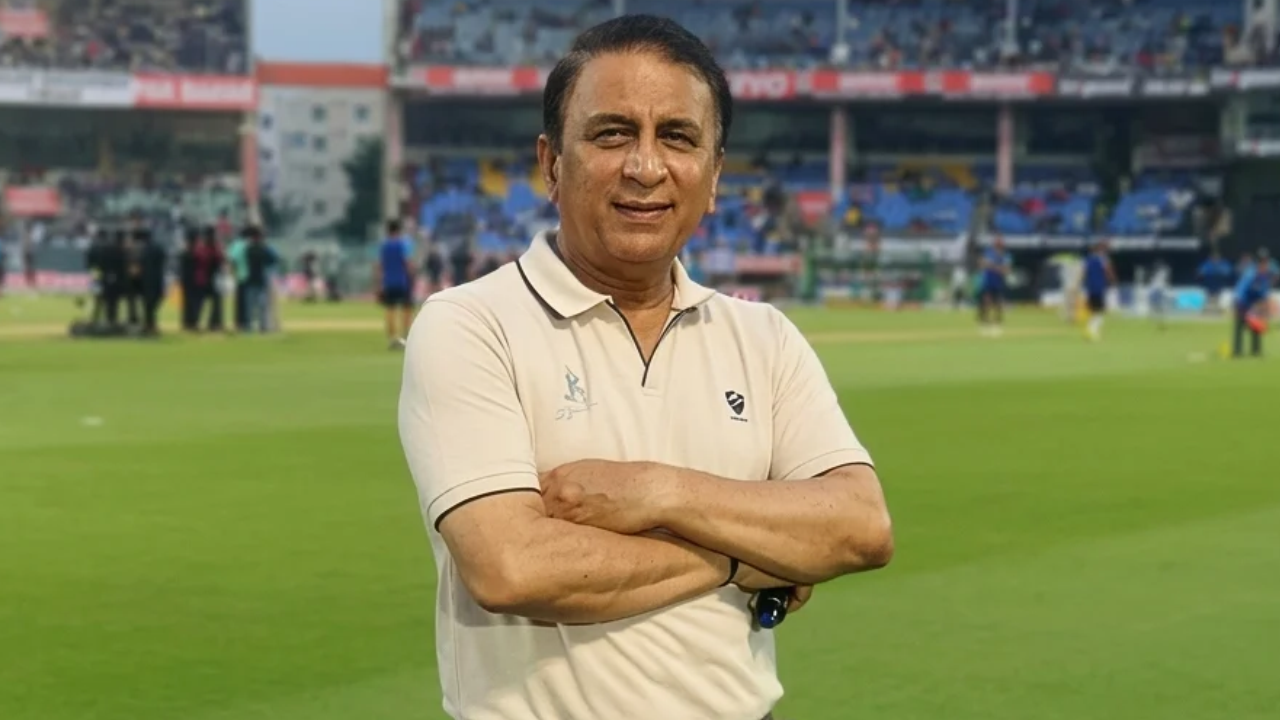
Former India Captain Sunil Gavaskar has proposed introducing football-style divisions in international cricket to distinguish records achieved at different levels of competition, raising concerns about how statistics from heavily mismatched T20 Internationals are recognised alongside performances against stronger opposition.
Gavaskar believes cricket should consider classifying international matches according to competitive standards, drawing inspiration from football’s divisional structure and its system of promotion and relegation.
Writing in his column for Mid-Day, Gavaskar explained: “In the football leagues there are divisions where there’s a promotion and relegation at the end of a season. So whatever records are set they are mentioned as being in the Divisions, in which they have been achieved in. Maybe something similar should be thought of where depending on the division in which countries are playing the differentiation is clear to everybody. So even while full member countries and those Associate member countries, who qualify for the ICC World cup, can be called internationals when they play against each other, maybe for the others it can be called Division A international or Division B international. This way even the casual follower of the game knows what is happening.”
Mongolia’s low totals raise questions over T20I records
Gavaskar’s proposal follows a series of exceptionally low scores in men’s T20 Internationals involving emerging cricket nations.
In a T20 World Cup Sub-Regional Asia Qualifier A fixture, Mongolia were dismissed for 13 while chasing Thailand’s 192/2. The result added to concerns about the competitive gap between teams whose performances are recorded under the same international classification.
Gavaskar highlighted other examples of extreme mismatches, stating: “That, of course, is not the lowest score in this format. That dubious record belongs to Ivory coast who were bowled out for just 7 runs against Nigeria. Mongolia in 2024 had got only 10 runs against Singapore in another T20 international.”
Although these fixtures involve national teams and therefore qualify as internationals, Gavaskar questioned whether that designation alone should determine how their statistics are assessed.
He wrote: “Yes, these games are called internationals since one country’s team is playing against another country’s team. The question is not whether they should be called internationals but whether there should be some sort of minimum standard before stats from these mismatched games are considered for records.”
The former India Captain also challenged the practice of comparing bowling performances across vastly different standards of opposition.
Gavaskar noted: “When a team is dismissed for such paltry scores, the bowler’s stats can only be bettered when the emerging ICC Associate member countries play against each other. To equate it with the stats when full member country teams play against each other is simply not fair. The glaring difference in standards means that records will belong to players who most of the cricketing world has never heard of before and perhaps likely to never hear of again.”
Yuvraj Singh and Dipendra Singh Airee illustrate the records debate
One of Gavaskar’s examples concerns the fastest half-century in men’s T20 Internationals, a record previously held by Yuvraj Singh.
Yuvraj reached fifty in 12 balls against England during the 2007 T20 World Cup, an innings that included six consecutive sixes off Stuart Broad. Nepal’s Dipendra Singh Airee subsequently surpassed that mark with a nine-ball half-century against Mongolia.
Gavaskar drew attention to the contrasting opposition faced by the two batters, while acknowledging Nepal’s progress as an international cricket team.
He wrote: “Yuvraj Singh held the record for scoring the fastest T20 half-century when he got it in 12 deliveries against England in the 2007 ICC T20 World Cup. That record was erased when Nepal’s Dipendra Singh Airee got to his half-century in just 9 balls against guess who ? Yes, Mongolia. Make no mistake, Nepal is making rapid strides as we saw in the T20 World Cup in India earlier in the year when they almost beat England. So, it’s no surprise when its batters and bowlers pulverise the other Associate country teams. But should that count for a record ?”
Gavaskar raises similar concerns over Ranji Trophy divisions
Gavaskar extended his argument to Indian domestic cricket, where the Ranji Trophy already has Elite and Plate divisions but performances across those competitions are still recorded under the same tournament.
He linked the disparity in standards to the expansion of the competition following recommendations from the Lodha panel to include all states and Union Territories, arguing that some newer teams lacked the infrastructure and playing depth of established domestic sides.
Gavaskar added: “Even in the Ranji Trophy, in the Plate Division there are records being broken and new marks set at both batting and bowling. When the Lodha panel recommended that all states and Union Territories should be included in the Ranji Trophy, it just meant that the standard got lowered. Most of the new state teams did not even have proper infrastructure and so hired players from other states who couldn’t find a place in their home state teams. These players were good but unable to break through into their home state teams and so went to the state teams in the Plate Division. When most, if not all, played against teams from the Elite division, they were found wanting and it just exposed the yawning gap in the standard between the divisions. Yet the records set are still called records because they are playing in the Ranji Trophy.”
Gavaskar’s wider discussion also acknowledged that standards within the Elite division have become more competitive, with previously less successful teams going on to win the Ranji Trophy.
His proposal for international cricket centres on making the level of competition visible when records are presented, rather than removing international status from matches between emerging nations.