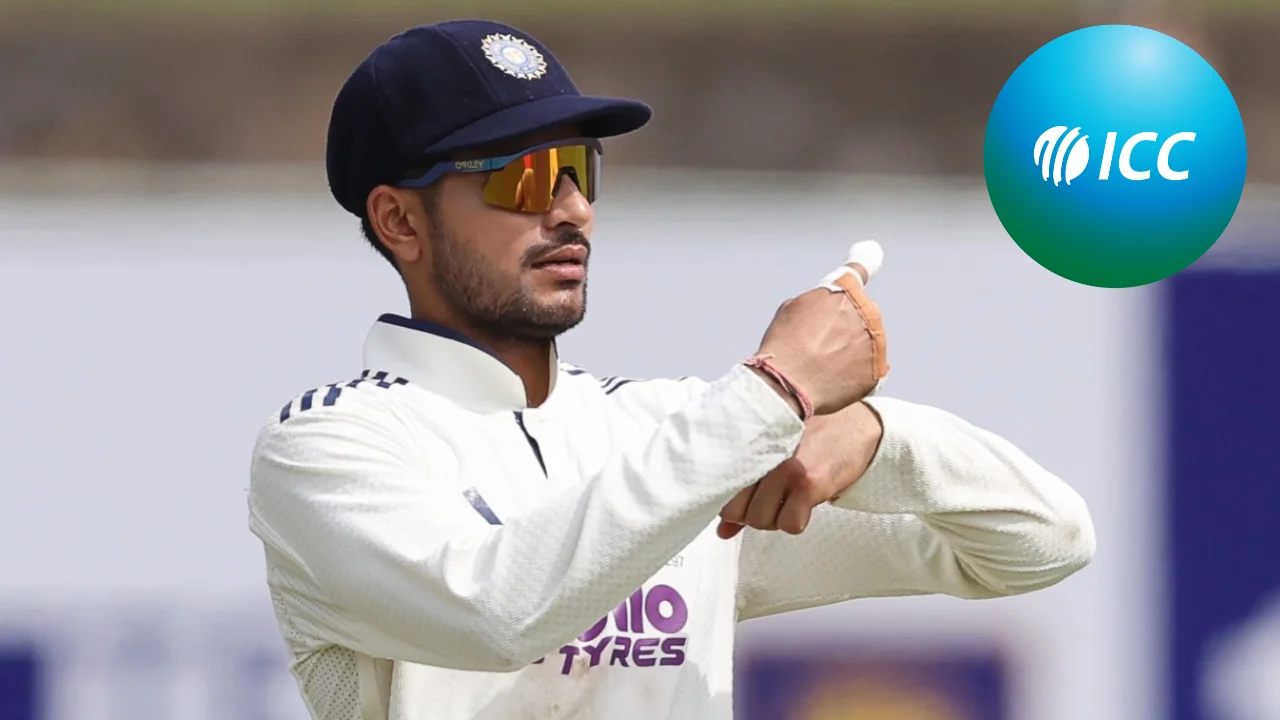
The International Cricket Council (ICC) is not planning to reconsider its ban on the use of saliva to shine the cricket ball, despite renewed pressure from India Captain Shubman Gill, reigniting a debate over the balance between batting and bowling in international cricket.
According to reports from PTI, AFP and India Today, the global governing body remains committed to the restriction on both health and cricketing grounds, with no immediate plans to amend its playing conditions.
Gill’s intervention following India’s drawn opening Test against New Zealand in Wellington has brought renewed attention to a regulation that was initially introduced as a temporary pandemic-era precaution before becoming a permanent feature of international cricket.
The ICC’s position also highlights a growing regulatory divergence between international cricket and domestic competitions such as the Indian Premier League (IPL), which has already abandoned the restriction.
Why the ICC is sticking with the saliva ban
While the restriction was originally introduced in response to COVID-19 in 2020, the ICC’s rationale for retaining it extends beyond public health considerations.
The governing body is understood to have concerns about the integrity of ball maintenance practices and the practical challenges match officials would face in regulating the use of saliva.
When combined with substances such as chewing gum, sweets and mints, saliva can significantly affect the condition of the ball, making it more difficult for officials to distinguish legitimate ball maintenance from unfair manipulation.
The ICC made the prohibition permanent in 2022, bringing its playing conditions into alignment with the Marylebone Cricket Club (MCC) Laws of Cricket, which classify the application of saliva as an unfair method of altering the ball’s condition.
Health considerations also remain part of the governing body’s position, with concerns over potential risks to both players and match officials. The European Centre for Disease Prevention and Control has highlighted the continuing health risks associated with emerging SARS-CoV-2 variants.
How the ICC could change its playing conditions
Despite Gill’s public appeal, there appears to be no formal momentum behind a potential reversal of the ban at the international level.
The issue was reportedly not discussed during the ICC meetings in Bali earlier in November.
Any proposed amendment would need to be initiated by an ICC member and submitted to the relevant ICC committee for consideration. The ICC Board would ultimately be responsible for deciding whether to approve a change to the playing conditions.
The governance process means that calls from prominent international players would need to translate into a formal proposal from a member before a regulatory change could be considered.
Shubman Gill questions impact of saliva ban on Test cricket
Gill renewed the debate after India’s bowlers struggled to make breakthroughs on an unresponsive surface at the Basin Reserve in Wellington.
India had declared their first innings at 720-9, but New Zealand negotiated 120 overs to finish at 239-5, securing a draw and denying the visitors an opportunity to collect valuable World Test Championship points.
The Indian Captain raised concerns about the Kookaburra ball losing its hardness prematurely, arguing that restoring the use of saliva could give bowlers an additional means of generating movement in batting-friendly conditions.
“I don’t understand why we haven’t been allowed to shine the ball yet — we are way past Covid times,” Gill said after the draw.
“There was a rule that you can’t put saliva on the ball to make it shine. It’s been seven-eight years, and I still don’t understand why they are not allowing it.
“I think this is also a big factor (in bowlers struggling to get wickets).”
Traditionally, fast bowlers have used saliva to polish one side of an ageing cricket ball while allowing the other side to deteriorate, helping generate reverse swing.
Gill’s comments have placed the effectiveness of existing ball maintenance regulations under renewed scrutiny, particularly in Test matches where flat pitches and deteriorating balls can limit wicket-taking opportunities.
IPL’s rule change highlights regulatory divide
The ICC’s reluctance to revisit the prohibition contrasts with the approach taken by the Indian Premier League (IPL), which lifted its saliva ban ahead of the 2025 season.
The domestic franchise competition’s decision restored a traditional ball maintenance technique for bowlers, but it has not prompted a corresponding change at the international level.
The contrasting approaches underline the regulatory flexibility available to domestic competitions and the broader considerations facing the ICC when establishing uniform playing conditions for international cricket.
For now, the ICC appears to be prioritising enforceability, competitive integrity and health considerations over the potential bowling advantages associated with restoring the practice.
Unless an ICC member formally initiates a review, international cricket looks set to retain the restriction that has been in place since 2020.