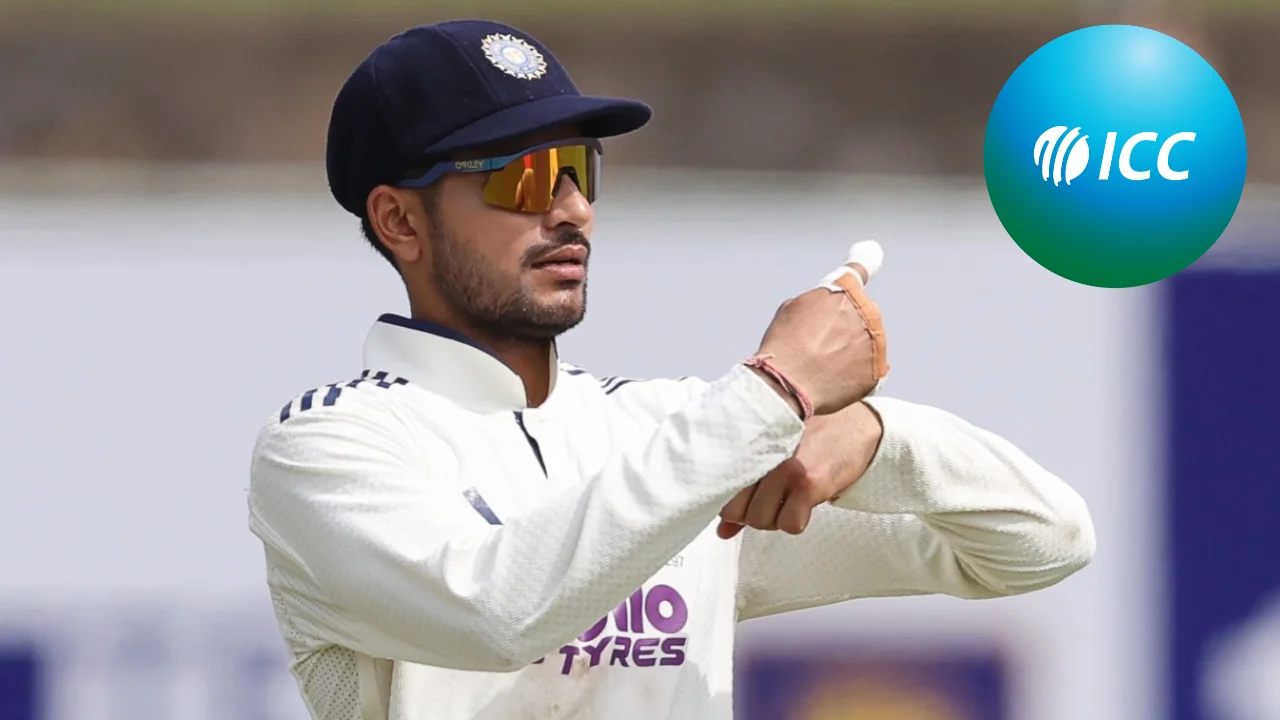
India Captain Shubman Gill has called for the International Cricket Council (ICC) to reverse its ban on using saliva to shine the cricket ball, questioning why a restriction originally introduced during the COVID-19 pandemic remains in place more than six years later.
Gill’s comments followed India’s frustrating draw against New Zealand in the first Test at Wellington, where the visitors were unable to secure victory despite declaring on 720 for 9 — the highest Test innings total recorded by any team in New Zealand.
The Indian Captain also raised concerns about the quality and durability of cricket balls, highlighting a broader issue surrounding the competitive balance between bat and ball in Test cricket.
Gill questions ICC’s pandemic-era saliva ban
The ICC introduced restrictions on the use of saliva in 2020 as a health precaution to limit the transmission of COVID-19. Initially implemented as a temporary measure, the ban was made permanent in 2022, fundamentally changing a long-established practice in international cricket.
Players remain permitted to use sweat to polish the ball, but Gill believes the original justification for prohibiting saliva warrants reconsideration.
“I don’t understand one thing: it’s been so long since COVID, why hasn’t the ball been allowed to be shined with saliva yet? We are way past COVID times. I do believe teams should be allowed to use saliva,” Gill said at his post-match press conference, as quoted by Cricbuzz.
Before the ban, saliva was widely used by fielding teams to maintain the shine on one side of the ball, helping bowlers generate swing and reverse swing as the ball deteriorated.
Restoring the practice could give bowlers an additional legitimate means of generating movement, particularly on batting-friendly surfaces where conventional bowling strategies become increasingly ineffective.
Gill’s intervention raises the question of whether the ICC Cricket Committee should revisit a regulation introduced under exceptional public health circumstances.
Cricket ball quality comes under scrutiny
Beyond the saliva ban, Gill identified the premature deterioration of cricket balls as another significant concern for international cricket.
The India Captain revealed that the Kookaburra ball used in Wellington had lost much of its hardness within 25 to 30 overs, considerably earlier than he would ordinarily expect.
He also highlighted similar experiences with the Dukes ball during India’s 2025 Test tour of England, suggesting that the problem was not necessarily confined to one manufacturer or playing environment.
“We saw this in England as well. In the first three or four matches, the ball became soft very quickly. After 50 overs, the ball obviously will go soft, but if it is happening after 25-30 overs, it makes the job of the bowlers very difficult.
“If the wicket doesn’t help and the ball also becomes soft, it becomes very difficult for the bowlers to take wickets. They don’t carry the edges. If there isn’t much movement in the pitch, it becomes difficult to get batters out through LBWs as well. The ball definitely plays a big role,” Gill said.
Gill also indicated that New Zealand had raised concerns about the condition of the ball during the Wellington Test.
His observations bring renewed attention to equipment standards in international cricket, particularly in the Test format, where maintaining the effectiveness of the ball over extended periods is central to the contest.
Wellington pitch raises questions over competitive balance
The conditions at the Basin Reserve compounded India’s difficulties with the ball.
Despite establishing a commanding first-innings lead of 352 runs, India managed only five wickets in New Zealand’s second innings, with the hosts surviving 120 overs to secure a draw.
New Zealand had earlier recovered from 70 for 5 to post 368 in their first innings, before India amassed a record-breaking 720 for 9 declared.
Gill said the pitch had deteriorated far less than anticipated, becoming slower rather than offering greater assistance to bowlers as the match progressed.
“When we started playing the Test match, we thought there would be a lot more in the wicket. Days three, four and five just got flatter and flatter. There was no impact of the overs being bowled on the wicket, or even the days being played. The wicket just got slower. Having seen that, I think it wasn’t a great Test wicket, especially if you want results,” he said.
Daryl Mitchell and Glenn Phillips frustrated India with an unbeaten sixth-wicket partnership spanning 43 overs, prompting the teams to agree to a draw with an hour of play remaining.
Both teams collected four World Test Championship (WTC) points, with New Zealand occupying third place in the standings and India fourth, behind South Africa and Australia.
Should the ICC reconsider its saliva regulations?
Gill’s comments come amid renewed discussion about ball maintenance and the boundaries between legitimate polishing techniques and illegal ball-tampering, with Australia’s 2018 Sandpapergate scandal recently returning to public attention.
While the two issues are distinct, both highlight the importance of clearly defined regulations governing how players can maintain the condition of the cricket ball.
For the ICC, the question extends beyond whether the public health rationale behind the saliva ban remains relevant. It also concerns whether existing playing conditions provide bowlers with sufficient legitimate tools to remain competitive, particularly on increasingly unresponsive surfaces.
With the Captain of one of international cricket’s most influential teams publicly questioning both ball quality and the continued prohibition of saliva, the debate could provide an impetus for the ICC to reassess its regulations.
Any such review would have implications not only for ball maintenance but also for the wider balance between bat and ball and the ability of Test cricket to consistently produce competitive, result-oriented matches.