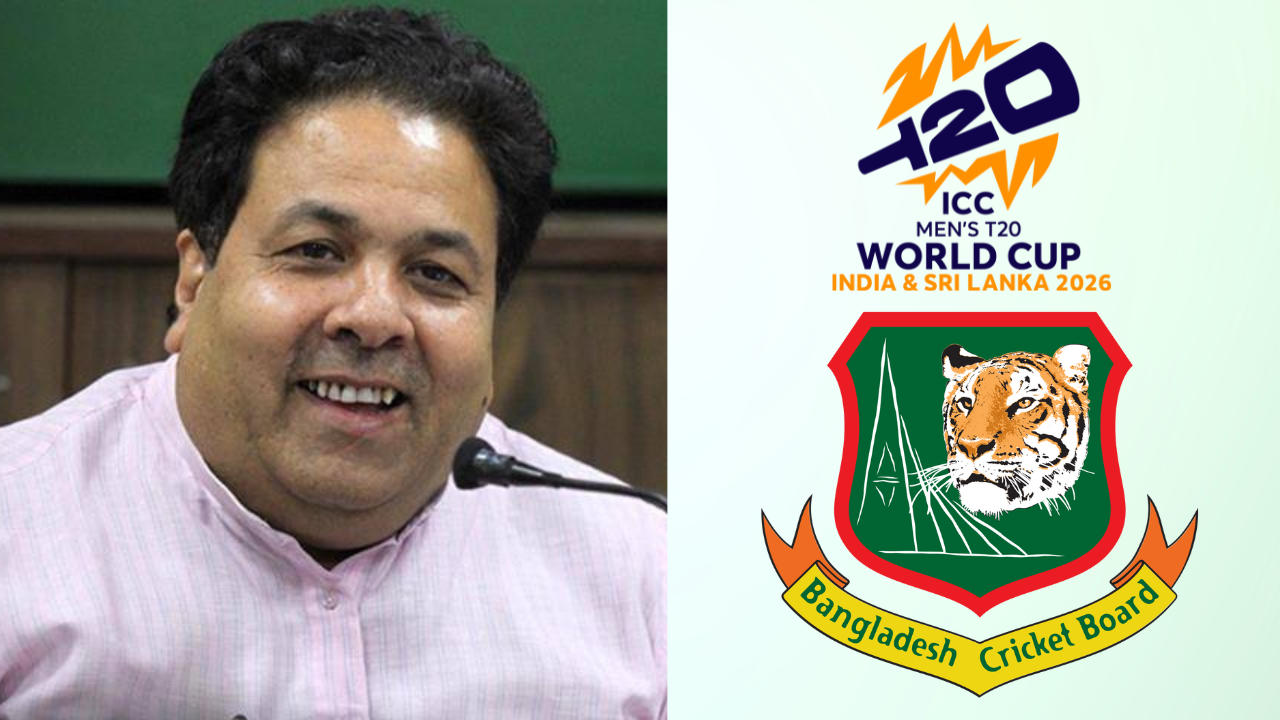
Bangladesh’s exit and India’s unheeded assurance
Despite India’s assurances of full security for the Bangladesh cricket team, the country pulled out of the ICC Men’s T20 World Cup 2026 — a decision that triggered diplomatic tensions, ICC intervention, and a public accusation of interference by Pakistan. According to a report by ANI, the Board of Control for Cricket in India (BCCI) had communicated its commitment to safety at every level, but Bangladesh ultimately declined to travel, prompting the ICC to replace them with Scotland.
“We wanted Bangladesh to play, and we also assured full security, but since they have made this decision, it is very difficult to change the entire schedule at the last moment. This is why Scotland was brought in,” Rajeev Shukla told ANI.
Even with that commitment in place, doubts escalated in Dhaka when the Kolkata Knight Riders were reportedly instructed to release Bangladesh pacer Mustafizur Rahman ahead of the IPL 2026 season. The directive, citing vague “developments all around,” was interpreted by BCB officials as a potential signal that Indian authorities might not be able to guarantee the safety of Bangladeshi nationals.
The ICC, which had engaged in weeks of dialogue with the BCB, had issued a 24-hour deadline for Bangladesh to confirm their participation after conducting multiple rounds of security assessments and consultations. When no response arrived within the stipulated window, the governing body moved ahead with its contingency plan, naming Scotland—currently ranked 14th in T20Is and the highest-ranked team not previously qualified—as the replacement.
ICC’s response and security assessment
In response to these concerns, the ICC launched a detailed and multi-pronged assessment. Over more than three weeks, it engaged with BCB through virtual and in-person meetings, sharing internal and third-party security reviews and outlining operational protocols in both federal and state jurisdictions.
Despite this transparency and collaboration, the ICC found no verifiable threat to Bangladesh’s team, staff, or supporters. It reiterated its position during various levels of the dialogue, including high-level discussions at the ICC Business Corporation (IBC) Board. Emphasizing the importance of protecting the tournament’s integrity and neutrality, the ICC ruled out rescheduling or venue reassignment.
The final decision to drop Bangladesh and bring in Scotland adhered to ICC’s qualification policy, closing a turbulent chapter—but not without political aftershocks.
Accusations of external interference
As the dust settled on Bangladesh’s exit, the conversation shifted toward Pakistan. Shukla, speaking to ANI, accused Pakistan of playing a disruptive role in the controversy. “Pakistan is intervening in the matter without any reason and provoking Bangladesh. Everyone knows the brutality done by Pakistan on the Bangladeshis, and now they are trying to mislead them, which is completely wrong,” he said, alluding to Bangladesh’s war of independence in 1971.
The allegation came amid a swirl of uncertainty around Pakistan’s own World Cup participation. In a move seen as politically charged, the Pakistan Cricket Board (PCB) delayed its final decision on playing in the tournament, citing Bangladesh’s pullout as a point of reference.
At an ICC Board meeting, Pakistan backed Bangladesh’s security concerns, referencing India’s participation in the Champions Trophy hosted in the UAE instead of Pakistan the previous year. However, the ICC remained unmoved, maintaining that the circumstances and security contexts differed.
Pakistan’s decision and political overtones
Interior Minister and PCB Chairman Mohsin Naqvi fueled speculation further by hinting that Pakistan could reconsider its involvement. After a meeting with Prime Minister Shahbaz Sharif, he stated, “Had a productive meeting with the Prime Minister Mian Muhammad Shahbaz Sharif. Briefed him on the ICC matter, and he directed that we resolve it while keeping all options on the table. It was agreed that the final decision will be taken either on Friday or next Monday,” he wrote on X.
Had a productive meeting with the Prime Minister Mian Muhammad Shahbaz Sharif. Briefed him on the ICC matter, and he directed that we resolve it while keeping all options on the table. It was agreed that the final decision will be taken either on Friday or next Monday. pic.twitter.com/6SOvNdLceW
— Mohsin Naqvi (@MohsinnaqviC42) January 26, 2026
Despite the hesitation, Pakistan went ahead and named a 15-member squad for the tournament, though reports indicated it was still mulling a potential boycott of its high-voltage clash with India scheduled for February 15, due to mounting political tensions.
A tournament overshadowed
While the ICC gears up for a tournament co-hosted by India and Sri Lanka from February 7, the shadow of geopolitics looms large. The episode has raised questions not just about security protocols, but about the role of regional influence in cricketing decisions.
The replacement of a full-member nation with an associate team weeks before a major ICC event highlights not only logistical complications, but also the fragile intersection between sport and statecraft in South Asia.