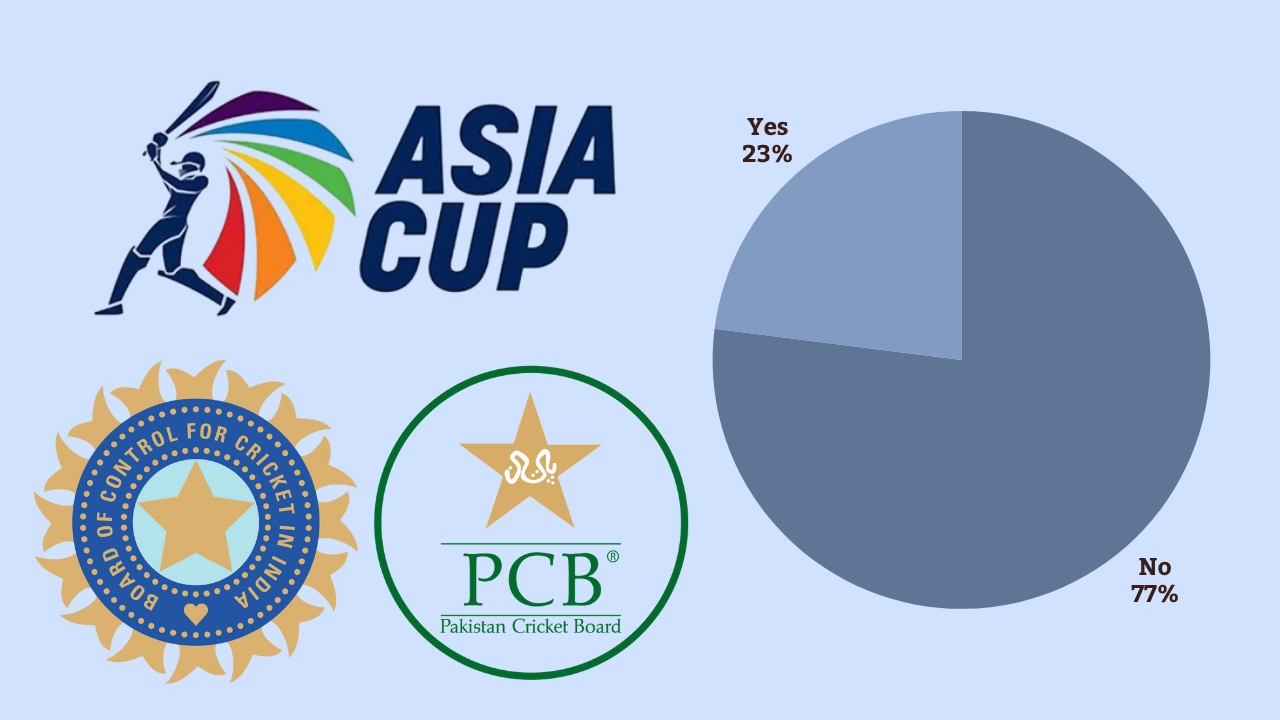
A new cricexec poll of global cricket executives has delivered a clear verdict on one of the most controversial flashpoints in recent India–Pakistan cricket. Asked whether they agreed with India’s decision to refuse receiving the Asia Cup trophy from Asian Cricket Council (ACC) president and Pakistan Cricket Board (PCB) chief Mohsin Naqvi, only 23% said yes, while 77% said no.
The poll highlights that while India’s players and administrators may have felt they stood firm on principle, much of the cricket industry sees the act as damaging to the game’s image, with fears that political theatre is overwhelming sporting traditions.
India’s stance: “We cannot accept a trophy from him”
The controversy erupted after India’s five-wicket win over Pakistan in the Asia Cup final in Dubai, their ninth tournament title. When Naqvi arrived on stage to hand over the trophy, India refused to receive it. Commentator Simon Doull told television viewers: “I have been informed by the Asian Cricket Council that the Indian cricket team will not be collecting their awards tonight.”
India captain Suryakumar Yadav called the moment unprecedented:
“I think this is one thing which I have never seen since I started playing cricket. A champion team is denied a trophy, that too a hard-earned one. I feel we deserved it.”
BCCI secretary Devajit Saikia defended the team’s position:
“India is fighting a war with a country, and a leader belonging to that country was supposed to hand over the trophy to us. We cannot accept a trophy from a person who represents a country that is waging a war against our country.”
Saikia called Naqvi’s conduct “totally unexpected” and confirmed India would lodge a protest with the ICC.
Pakistan’s counterattack: “Disrespectful to cricket”
Pakistan captain Salman Ali Agha criticised India’s actions:
“If the ACC president is there, he will give away the trophy. If you don’t want to take the trophy from him, then how will you get the trophy? What they did today, a good team will never behave this way. They are being disrespectful to the game.”
Former Pakistan captain Shoaib Malik argued that India would regret the choice:
“They may be celebrating this decision in their own way, but down the line, after a few years, this will haunt them. At the end of the day, they are athletes. A sportsman’s job is to come on the field, give your best shot, and that’s it. Not collecting the trophy means missing out on a massive moment.”
PCB chairman Naqvi doubled down, rejecting suggestions he mishandled the moment:
“Indian media thrives on lies, not facts. I have done nothing wrong and I have never apologised to the BCCI nor will I ever do so… Unfortunately, India continues to drag politics into cricket, damaging the very spirit of the game.”
Global voices: “Politics should stay aside”
South African legend AB de Villiers delivered one of the most striking reactions, framing the controversy as both avoidable and harmful to the game’s spirit. Speaking on his weekly #360 show, de Villiers said:
“Team India sort of weren’t happy with who was handing out the trophy. I don’t feel that belongs in sport. Politics should stay aside. Sport is one thing and it should be celebrated for what it is.”
He admitted watching the chaotic scenes was “quite sad” and “awkward,” adding:
“It does put the sport, the players, the cricketers in a very tough position, and that’s what I hate to see.”
De Villiers’ remarks captured the unease of neutral observers: that players were trapped in a geopolitical standoff not of their making, yet forced to carry its symbolism on the sport’s biggest stages.
For de Villiers, the message was clear: let the cricket shine, not the politics.
A governance crisis
The fallout has spiraled beyond ceremony into governance battles. Reports suggest the BCCI will push for Naqvi’s impeachment as ACC president, citing a breach of neutrality and an erosion of trust. Indian officials at the latest ACC meeting accused Naqvi of acting in bad faith by taking the trophy and medals away after the final, while Naqvi insisted he would only hand them over personally to India’s captain.
“Naqvi’s days in the ACC are numbered,” one senior Indian official told News18. “We will launch a campaign to remove him. Such a person should not be allowed a place in the top institutions of international cricket.”
Cricket caught in the crossfire
The cricexec poll result — 77% against India’s refusal — suggests that while political realities weigh heavily on administrators, the wider cricket industry is deeply uncomfortable with symbolic protests eclipsing the game.
As de Villiers warned, when politics takes centre stage, players are left in an impossible bind — vilified if they comply, condemned if they resist. His plea to “let sport be celebrated for what it is” sums up the industry’s wider sentiment: that cricket risks being remembered not for its champions, but for the controversies that clouded their triumph.
What should have been remembered for Tilak Varma’s match-winning 69* and India’s dominance over Pakistan now risks going down as the “trophy final” — a night when the silverware went missing, and cricket itself became collateral damage in a geopolitical rivalry.