Europe’s cricketing moment
For decades, cricket in Europe has been defined by flashes of brilliance rather than enduring structure — Ireland’s shock win over Pakistan at the 2007 Men’s World Cup, the Netherlands stunning England in T20 internationals on multiple occasions, and Scotland beating Bangladesh in the 2021 T20 Men’s World Cup. They made headlines, but never left behind a permanent professional platform.
Now that may be about to change. The European T20 Premier League (ETPL), scheduled to launch in August 2026 in the window following The Hundred, will be the first ICC-sanctioned, multi-nation franchise competition on the continent. Designed as a 33-match tournament compressed into three weeks, it will feature six franchises across Dublin, Belfast, Edinburgh, Glasgow, Amsterdam, and Rotterdam, each roster built around seven local players and four marquee internationals.
The ambition is clear: more than 200,000 spectators are projected in season one, with the ETPL positioned as Europe’s first professional cricket league — a sporting carnival of cricket, music, food, and festivals.
The timing feels right. Italy’s qualification for the 2026 T20 World Cup signals momentum on the field. The Olympics at LA28 promise to lift cricket into mainstream global sport. Diaspora communities across Europe already pack stands whenever India, Pakistan, or West Indies tour. The ETPL wants to convert those spikes of energy into a sustainable commercial product.
For Warren Deutrom, the long-time CEO of Cricket Ireland who helped conceive of the league back in 2017, the case was obvious, and the key was collaboration. “We knew we didn’t have the financial firepower or playing depth to create an Irish Premier League on our own,” he recalled. “But if we came together with Scotland and the Netherlands, we could do something bigger—something genuinely European. We could have the best of the best players, and at the same time, we could genuinely contribute to growing cricket on the continent.”
Rules X and the founding team
At the heart of the current ETPL push is Rules X, the company that won Cricket Ireland’s renewed 2023 tender to develop the league. Its co-founders are Saurav Banerjee, Priyanka Kaul, and Dhiraj Malhotra, who bring together financial, media, and operational expertise, and Abhishek Bachchan who gives the project both celebrity power and sporting credibility.
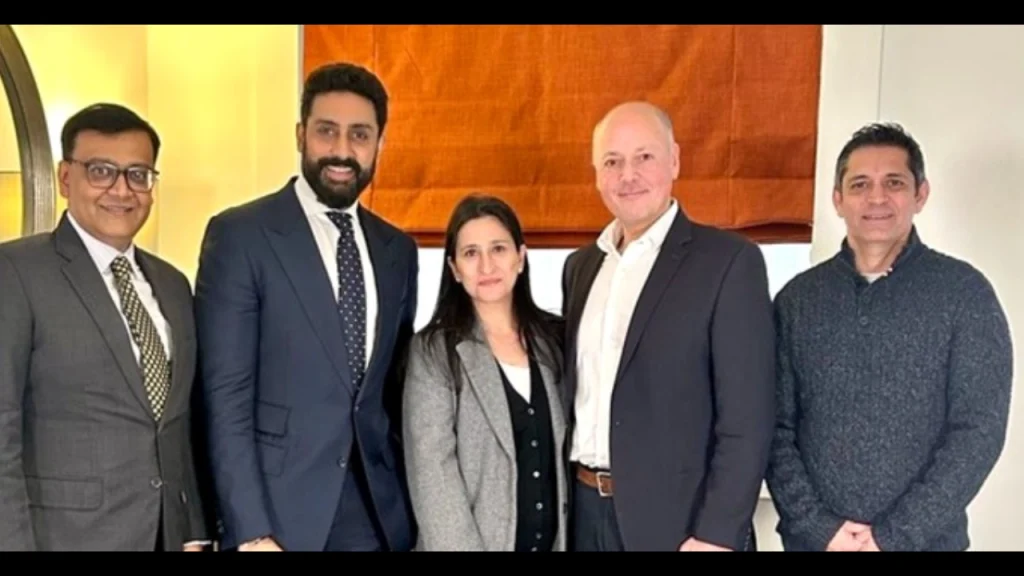
Saurav Banerjee: structuring the deal
Banerjee’s career has spanned senior roles in finance and media: including over 13 years as CFO of NDTV and two years as Co-CEO, followed by time as a venture capitalist with Kalaari, an early investor in Dream11. That experience of structuring deals was central to ETPL’s foundation.
“Cricket Ireland had come out with a tender inviting bids for ETPL — the European T20 Premier League,” said Banerjee, who quickly saw the scale of the opportunity. “34 of the ICC’s 108 members are actually from Europe — more than 30%. Yet there is no major professional league here. That is why we believe Europe is the most exciting new market for cricket.” After winning the tender and reaching agreements with the boards, Banerjee said, “we got the ICC sanction at the end of 2024.”
Priyanka Kaul: building a fan-first product
Priyanka Kaul comes from a media and brand building background, having served as Chief Revenue and Marketing Officer at NDTV, where she and Banerjee were colleagues, and later CEO of Forbes India. She also has experience with cricket, co-producing India’s first University Cricket Championship (UCC).
“Many years ago, I launched the UCC in India along with Dhiraj – who was the IPL’s first Tournament Director and later GM of the BCCI and CEO of the Delhi Capitals – when very few people believed a university tournament could succeed. That experience gave me the confidence that sports can be developed in unconventional ways.”
She saw in ETPL the chance to combine strengths. “Dhiraj, Saurav and I had worked in different areas of media and sport, and we felt our strengths were complementary. Saurav brought the finance and investment strength, Dhiraj is a legend in cricket operations, and I had worked enough in media and revenue. We knew we needed to pool those strengths.”
Her vision is broad: “I would love to see it, apart from being a world-class league, also as a self-sustainable league for this region, but not limited to this region. If there’s a really good player from Nepal, for example, he should want to come here and play. This league can become a pipeline for new talent — not just restricted to Europe but coming out of Europe and inspiring new stars.”
Abhishek Bachchan: global star and successful sports owner
Adding Abhishek Bachchan gave the league a global face — and credibility with Indian broadcasters and sponsors. Beyond celebrity, he brings experience from owning two title-winning franchises in other Indian sports leagues.
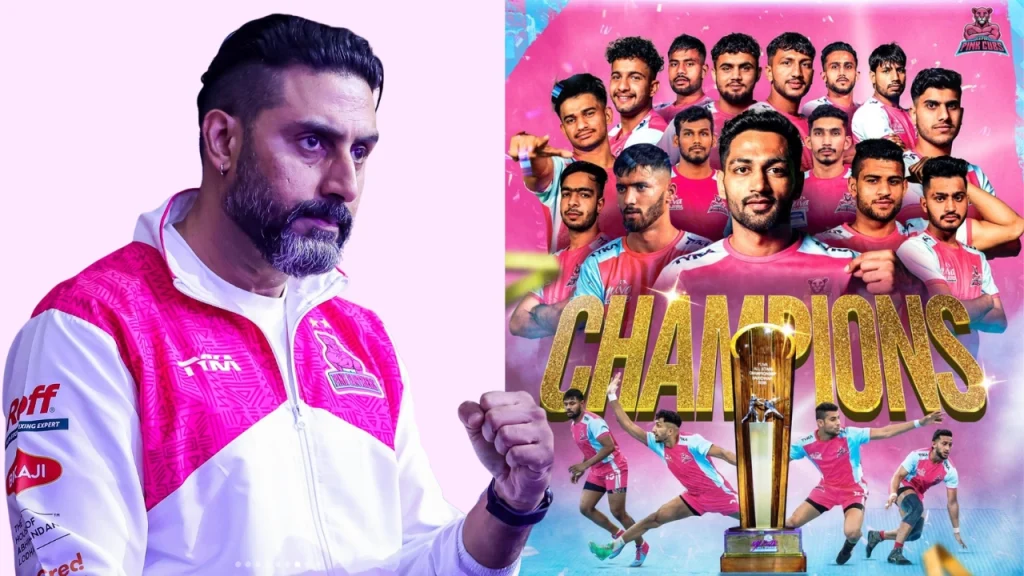
As Banerjee says: “Abhishek has great sports investments in India — Jaipur Pink Panthers in the Pro Kabaddi League and Chennaiyin FC in the Indian Super League. He is not a stranger to the sporting world, and his successful sports entrepreneurship and team ownership is there for everybody to see.”
Kaul pointed out that Bachchan is not just a star lending his name to sports ventures – rather he’s very deeply and directly involved: “He’s somebody who will just roll up his sleeves and work.”
Bachchan’s intentions are serious: “I feel we can do something here. We can make a difference, and that’s why I chose this as my foray into proper cricket. Here are three markets which I really feel are screaming for a professional T20 League of their own.”
He also emphasised his goal of launching local talent: “Here’s an opportunity where you can start a proper T20 professional league and allow some local talent to get the opportunity like a Yashasvi Jaiswal, come up through the ranks and burst on the world stage. It’s just the platform that they need, and I think the European T20 league will provide that platform.”
Banerjee also emphasised Bachchan’s connection to Europe: “What excited Abhishek most was that Europe was really untapped in terms of professional cricket. These markets understand cricket, play cricket at school and college level, yet there is no big Premier League out there. Having grown up partly in Europe, Abhishek understands the market, and he saw the potential immediately.”
Warren Deutrom: the catalyst
Warren Deutrom announced this past July that he would step down as CEO of Cricket Ireland after 18 years. In September, Deutrom officially joined the ETPL full-time as Chair of Rules X and a Director of ETPL. It is a significant step for one of cricket’s most respected administrators, and a signal of intent.
When asked why he felt now was the right time to focus full-time on the ETPL, eight years after first exploring the concept, Deutrom first pointed to the data: “The ICC digital data is showing Europe beginning to index very strongly. That reinforced for me that now is the right time,” he said.
Anecdotally as well, he said, Europe seems to be on the rise: “Italy have just qualified for the 2026 T20 Men’s World Cup, showing a genuine growth in European cricket even outside of the traditional strengths of England, Ireland, Netherlands and Scotland.”
To top it off, says Deutrom, the Olympic factor is a game-changer: “in the last 12 to 18 months, the Olympics has come along. That has suddenly provided the European ICC members with the opportunity to go to their governments, many of whose sporting councils are articulated through Olympic federations, and say: ‘cricket’s now a sport you need to take seriously.’ So there are a large number of European governments now investing in and recognizing cricket.”
Indeed for all these reasons, now felt like the perfect time, according to Deutrom, “to bring the world’s second biggest sport into the world’s second biggest sport market.”
The boards’ support: Ireland, Scotland, and the Netherlands align
No new franchise league can succeed without the credibility and support of national board backing. For the ETPL, that legitimacy comes from the direct involvement of Cricket Ireland, Cricket Scotland, and the KNCB, all of which have signed on as founding partners.

The leaders of all three of these boards spoke exclusively with cricexec about the venture. For some of them this was the first time speaking on the record about ETPL.
At the centre of national board involvement is Brian MacNeice, Chair of Cricket Ireland and now Chair of the ETPL Board. A corporate strategist by background, and a sports governance expert as well (not to mention a former first class cricketer and international rugby referee), MacNeice has been clear that the league serves multiple imperatives.
“The first one is a purity of cricketing reason,” he explained. “We want our players to have exposure to playing against the best players in the world as often as possible, so that they can be prepared for big ICC events. We’re building up our domestic program, but we also want them to test their skills in franchise cricket against overseas players.”
That, he added, ties into livelihoods. “We want to be able to provide a proper career for our players, to make a living out of the game. Their ability to play in a franchise league and top up their central contracts gives them that opportunity.”
MacNeice also sees a strategic rationale: “I fundamentally believe in Europe as an area that has massive potential for growth from a cricketing point of view. A European league provides a platform to showcase cricket across Europe and to really invigorate the game.”
And, of course, there is a financial dimension. “From a Cricket Ireland point of view, there’s also a commercial payoff. A successful franchise league brings new revenues that can flow back into the grassroots.”
Andrew May, Cricket Ireland’s CFO, also serves on ETPL’s board, reinforcing the priority that the ETPL is for Ireland.
In Scotland, Cricket Scotland CEO Trudy Lindblade feels that the league can help grow the game locally. “One of the reasons I took the job at Cricket Scotland is I think people underestimate the amount of interest in cricket here. That gives us an opportunity for participation growth. The ETPL is part of that opportunity.”
She pointed to Europe’s scale: “To have a franchise event of size and scale within the European market fills a gap. If you look at the size of the sports market in Europe, there are untapped opportunities. For Cricket Scotland, it’s about more than just outcomes on the field. It’s about being part of something bigger — helping to grow cricket not only in Scotland but as a leading ICC Europe Associate Member, across the continent.”
In the Netherlands, Guido Landheer, Chair of the KNCB, sees ETPL as a chance to monetise the game at home. “With the new ownership group, we see a real opportunity to make this league happen across multiple countries. We see possible investors contacting us, and that means we can keep a strong base in high performance and cricket development.”
KNCB Interim CEO Lucas Hendrikse echoed that rationale: “To have our own franchise league in the Netherlands – we are too small for that. But we joined the ETPL project because we believe it will create a lot of potential exposure for the sport. With the ETPL, our players can play more competitive international cricket at the highest level. For fans, it’s a spectacular format of cricket, and through broadcasting it can reach new audiences.”
Together, the three boards provide more than sanction. They bring venues, players, and governance credibility — assets that have eluded past attempts to put professional cricket on European soil.
The European stage: six cities, endless potential
The ETPL’s opening season will be staged across six host cities, each chosen for its mix of cricket heritage, tourism appeal, and market reach. Between them, the six venues are projected to draw more than 200,000 live spectators in 2026:
- Dublin (Malahide Cricket Ground) – Ireland’s most recognisable venue, famous for sellout crowds against England and Pakistan, combines tradition with proximity to a buzzing capital city.
- Belfast (Stormont) – a historic setting that can extend Ireland’s footprint north, offering a fresh audience and the chance to deepen the game’s roots in Northern Ireland.
- Edinburgh (The Grange Club) – etched into memory after Scotland’s 2018 win over England, and embedded in one of Europe’s great festival cities.
- Glasgow – Scotland’s sporting capital, known for its fierce football loyalties, has the infrastructure and fan culture to embrace franchise cricket.
- Amsterdam (VRA Ground) – a picturesque venue in the heart of Dutch cricket, synonymous with World Cup upsets, well-placed to anchor a professional franchise.
- Rotterdam – a cosmopolitan hub with global connectivity and a growing cricket base, ready to host marquee games and broaden Dutch reach.
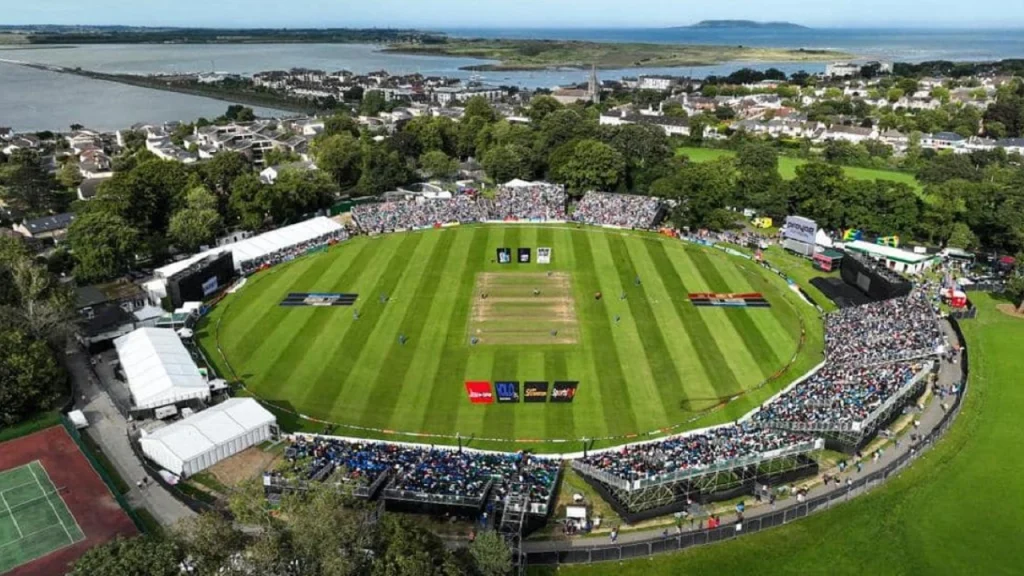
As Kaul put it: “The three countries and these six cities are what makes this project so exciting. When we have a league that’s done right, with a good product, good quality players, good marketing, good governance and with a platform to create new stars, you’ll see how fast it will grow in these markets and how it will surprise everybody.”
For Banerjee, the impact goes beyond sport. “These are small countries compared to India, but look at what can happen. Whether it’s tourism, infrastructure, airports, stadiums, hospitality, or hotels — everything changes if you create a successful format,” he said. To illustrate, he drew on cinema: “In India, Yash Chopra’s films made Switzerland the dream destination for millions. That single cultural connection transformed how Indians thought about the country. Cricket can do the same for Europe.”
The ETPL is being pitched not only as a tournament, but as a showcase for these cities — a way to put Dublin, Edinburgh, Amsterdam, or Rotterdam on the cricketing map in the same way Bollywood once put the Alps on the tourist map.
And once that’s accomplished there is the potential and vision to expand into other popular European cities over time, such as Paris, Milan, Madrid, and Berlin.
Oakvale Capital and the investment case
That said, no league can succeed on passion and vision alone. To meet its ambitions, the ETPL projects league revenues rising from $11.2m in 2026 to $16.8m by 2030, and franchise revenues growing from $2.4m to $5m in the same period. Ensuring those numbers are achieved requires discipline, but also the right partners and investors.
That is why Rules X retained Oakvale Capital, one of London’s top boutique sports investment banks, to lead the process of securing investors and owners for the six franchises. Banerjee explained: “The next step is to raise capital at the league level to ensure that we are able to invest in the right areas — whether it’s infrastructure or whether it’s players. Oakvale’s experience in emerging leagues is amazing, and we felt they were the right partner for us.”
But the representation was not a given. For Oakvale, selectivity and quality is everything. Sandford Loudon, the firm’s partner handling the ETPL process, spent several years at bulge bracket investment banks like Merrill Lynch, and the past 14 years at Oakvale cultivating a robust sports practice, which now accounts for about half of the firm’s volume.
Oakvale has experience in the cricket space, including as an advisor to Middlesex County Cricket Club. It also knows how to transact: over the last four years Oakvale has advised on about $25 billion worth of deals including selling Snaitech for Playtech for EUR 2.6 billion to Flutter, and selling IMG Arena for Endeavor to SportRadar, as well as leading the sale of multiple football clubs.
Loudon explained the need to choose clients carefully: “There are so many new leagues, new sports, sports within sports — into the hundreds, if not thousands. We get so much inbound interest from new sports and leagues. So we’re very selective about which projects we take on.”
What persuaded Oakvale to take on the ETPL as a client? “ETPL is different because it’s ICC-sanctioned, multi-nation, and built on governance. That makes it investable,” Loudon said.
“When I met with Saurav and the team, I really liked their approach to building a tech-enabled T20 in Europe. This league will attract some of the best talent globally, but it will also foster local talent. They got the sanction and they had a really bulletproof plan in place.”
Loudon is keen on bringing in the right type of investors: “When you build these leagues, you need real alignment between the league and the teams. At the TopCo level, you need investors who have experience growing leagues from an early stage, who understand governance, and who know how to build stories so you get people through the doors and bums on seats.”
So who are the ideal target franchise owners for the ETPL?
According to Loudon: “The pools of capital that would be both interested and additive come from some of the big cricketing nations such as Australia, India and to a lesser degree South Africa and then some of the new world cricketing nations such as in North America. Obviously strategics such as IPL owners that understand cricket and investors in the world of sports that have done it before in different leagues are helpful, including sovereign wealth funds – these types of investors can add value.”
Inclusivity on and off the pitch
The ETPL’s vision balances star power with sustainability, but also inclusivity.
That starts with getting women on the pitch. Kaul says the team is committed to this. “It’s incomplete without getting the women’s teams to participate. I am very passionate about it. Trudy is very passionate about it. Warren keeps talking about it all the time, and Dhiraj is all for women’s sports. Because the team feels so strongly, if not in year one, then by year two we should have something going.”
But inclusivity to the RulesX team is also about the fan experience: having something for everyone to enjoy. Unlike earlier associate tournaments that fizzled, the ETPL is being packaged as more than cricket. The founders describe it as a “sporting carnival” — blending cricket with concerts, food, and city festivals. The aim is to attract not just traditional fans but families, tourists, and casual sportsgoers.
Kaul sees that broad attraction as essential: “We want families, we want women, we want kids. The ETPL has to be more than entertainment — it has to be community.”
Bachchan emphasises the importance of: “bringing world-class entertainment to fans. I believe the ETPL will not only showcase the best of European cricket but also create a vibrant cultural experience for families and communities.”
Challenges and realities
For all its promise, the ETPL will only succeed if it can deliver on execution. Franchise sales, player signings, and broadcast partnerships must prove the league can compete for attention in Europe’s (and cricket’s) crowded sports calendars.
Loudon was clear about the importance of addressing investor caution by structuring the ETPL to provide downside protection: “Family offices and sports investors are inundated with opportunities. The concern is always — are we building a LIV Golf of cricket? But the way the ETPL is designed, it won’t require overpaying for talent or losing money endlessly.”
MacNeice put it in different terms: “I think there’s a lot of excitement. There’s also a degree of skepticism, because it hasn’t happened up to now. But as people start to see the structure around the organisation of the league, announcements on investment, on player signings — all of that will make it tangible and real. Once people see that it’s really going to happen, the buzz will follow.”
The skepticism MacNeice cites is the reaction to the league’s launch repeatedly being paused. The first incarnation in 2019 stalled due to COVID.
More recently, after receiving the ICC sanction in late 2024, the Rules X team had originally planned to launch the tournament in the summer of 2025. However, earlier this year, they delayed the launch to 2026.
Analysts pointed to the delays in The Hundred’s franchise sales process as the reason. Some investors interested in the ETPL were deeply engrossed and focused on negotiations for Hundred stakes, a process that took several months more than expected.
According to multiple insiders in English and European cricket who spoke to cricexec, that one year delay was, in retrospect, a “very smart move.” It has allowed for more planning, bringing on partners such as Oakvale and the momentum seems to be growing.
In fact even as the ETPL’s investment process is just starting, sponsorship interest in the league has already emerged. Cricexec has independently spoken to sponsors in talks with ETPL who confirmed their serious interest – meaning the vision is starting to gain traction.
A new frontier for cricket
The European T20 Premier League represents something cricket has never had before: a professional, ICC-sanctioned competition spanning multiple nations on the continent. Unlike past experiments, it combines governance credibility, financial discipline, and celebrity star power into one package.
For the boards of Ireland, Scotland, and the Netherlands, it offers more than matchdays — it provides player exposure, viable career pathways, and grassroots funding. For investors, Oakvale’s involvement signals a league designed with growth and discipline. And for fans, it promises an experience that blends cricket with culture and community, set against Europe’s most iconic city backdrops.
The message is clear: cricket’s next great story may not be written in Mumbai or Melbourne, but in Dublin, Belfast, Edinburgh, Glasgow, Amsterdam, and Rotterdam.