
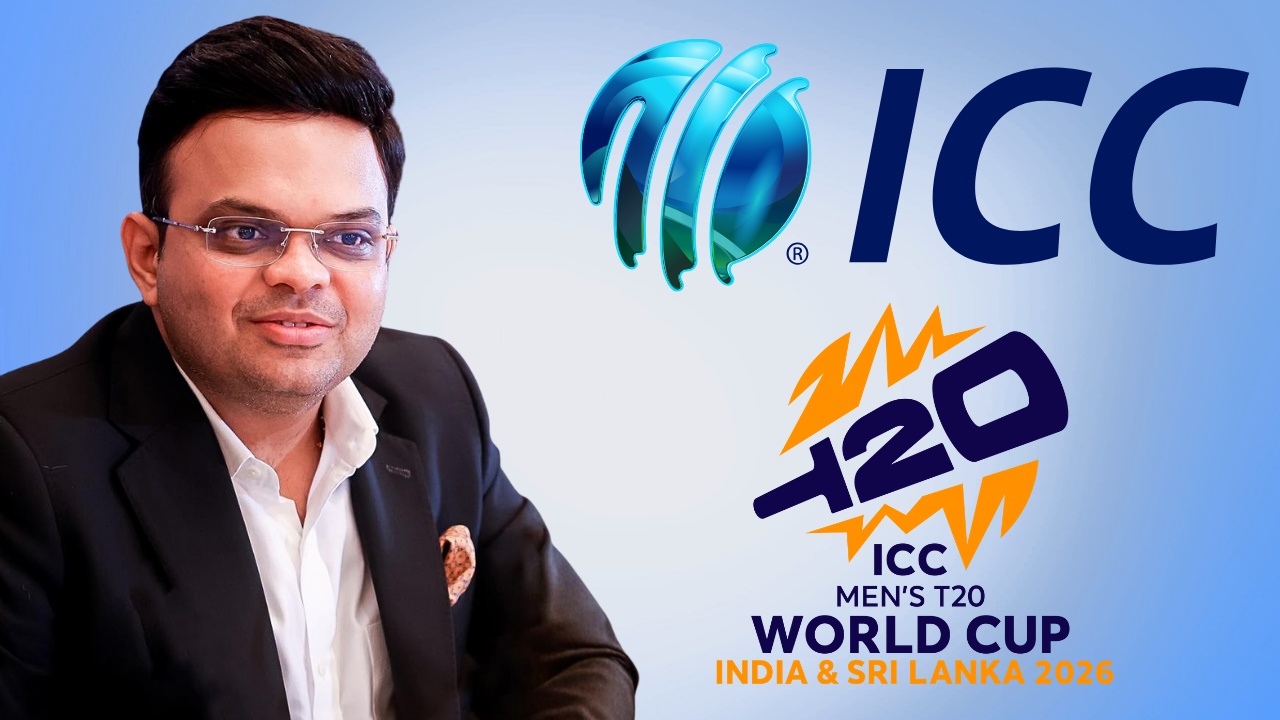
A global tournament that began under a cloud of uncertainty ultimately ended with record-breaking numbers and renewed debate about cricket’s governance structure.
Speaking publicly for the first time about the controversy surrounding the T20 World Cup, ICC Chairman Jay Shah addressed the tensions that erupted before the tournament — including Bangladesh’s withdrawal and Pakistan’s threat to boycott their match against India — while speaking at the International Business Leaders Association Awards in Mumbai.
🚨 JAY SHAH TAKES A BRUTAL DIG AT BANGLADESH AND PAKISTAN OVER T20 WC FIASCO
Jay Shah 🗣️:
• Bangladesh chose to listen to others and boycott the World Cup, but in doing so they only hurt themselves financially.
• Many claimed the tournament wouldn’t succeed if one team… pic.twitter.com/75HLN2YLLw
— Brutal Truth (@sarkarstix) March 15, 2026
ICC Chief responds to pre-World Cup boycott controversy
In the weeks leading up to the T20 World Cup, uncertainty loomed over the tournament after Bangladesh opted not to travel to India citing security concerns. Their exit from the competition triggered a chain reaction, with Pakistan initially threatening to boycott its group-stage fixture against India in protest.
The situation created widespread debate about whether the tournament could proceed smoothly, but the ICC moved ahead with the event after replacing Bangladesh with Scotland in the competition.
Addressing the controversy, Shah emphasised the collective nature of cricket’s global governing structure.
“This ICC World Cup was very important because there was a lot of chatter before the start of the tournament about whether certain teams would participate and how the World Cup would go ahead. As ICC Chairman, I can say that no team is bigger than the organisation and no single team makes an organisation. An organisation is a combination of all teams,” Jay Shah said while speaking at the Indian Business Leader Awards in Mumbai.
Pakistan eventually reversed its stance and participated in the tournament as scheduled, allowing the event to proceed without further disruption.
Tournament delivers record viewership worldwide
Despite the dramatic build-up, the competition itself delivered historic viewership numbers and produced several results that underscored the growing competitiveness of the global game.
According to Shah, the tournament reached unprecedented digital engagement levels while also highlighting the rise of associate nations competing strongly against established cricket powers.
“The World Cup has shattered all viewership records. For the first time in history, we recorded 7.2 million (crore) concurrent viewers. All records were broken in overall viewership. If you see, the USA gave India a hard time, the Netherlands troubled Pakistan, Zimbabwe beat Australia, and Nepal gave England a scare. I congratulate all the associate teams; they have done very well against the full members,” he added.
The performances of emerging teams throughout the competition reinforced the ICC’s broader push to expand cricket’s global footprint.
Message for India’s leadership after World Cup success
Shah also used the Mumbai event to deliver a forward-looking message to India’s current leadership group following their successful T20 World Cup campaign.
Addressing India captain Suryakumar Yadav and Head Coach Gautam Gambhir, Shah stressed the importance of sustained planning and long-term preparation for the future of Indian cricket.
“I have a message for Surya and Gautam Bhai: slipping from the top to the bottom takes only months, while climbing from the bottom to the top takes years. Keep working hard and keep winning awards. When I was on the Board of Control for Cricket in India (BCCI), I had planned till the 2028 Olympics. Now I am in the ICC, and others are in charge at the BCCI. All of you should prepare for 2030, 2031 and even 2036,” he said.
Before taking over as ICC Chairman, Shah served as Secretary of the Board of Control for Cricket in India from 2019 to 2024.


