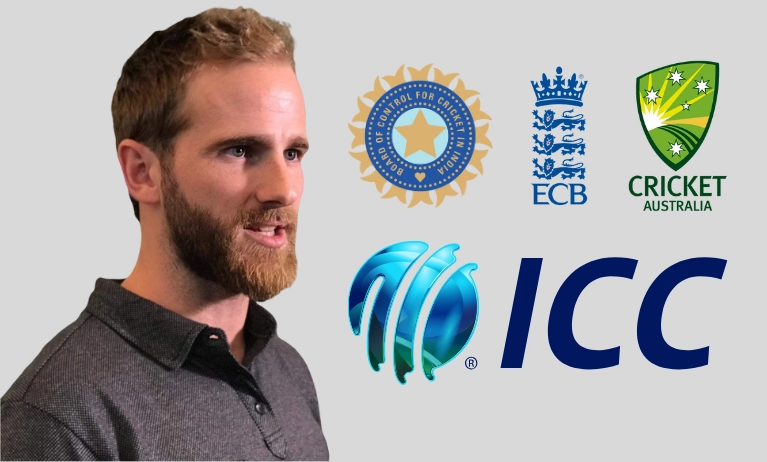
As Test cricket grapples with shrinking viewership and rising competition from shorter formats like T20s and franchise leagues, concerns about its future have intensified. Once the heartbeat of international cricket, the format now faces existential questions. Amid this shifting landscape, voices from across the cricketing world have stepped forward to reflect on the challenges and offer possible ways forward — including two stalwarts of the game, Kane Williamson and Brian Lara.
Limited global participation threatens Test cricket
Kane Williamson, former New Zealand captain and winner of the inaugural World Test Championship, has issued a stark warning about the format’s future. Speaking at the CEAT Cricket Awards, Williamson emphasised that Test cricket risks extinction if it remains confined to contests between the so-called Big Three.
“If only three teams are playing the format, it will struggle to survive. While we enjoy watching those series, they don’t fully support Test cricket’s growth. It’s a major challenge, with numerous conversations ongoing to find solutions if sustaining the format is the goal. Meanwhile, the game is under strain in many countries. There’s been a lot of discussion about the Test game and how to keep breathing life into it, especially in countries where it’s facing greater challenges.”
His comments arrive amid reports that the ICC is exploring a two-tier system, allowing more frequent clashes between India, Australia, and England. However, Williamson cautioned against a system that further marginalises developing cricketing nations.
“The concern with a potential two-tier system is how teams in the second tier can continue to improve and work their way up to the top division. The Test format needs greater importance placed on it by all playing nations, along with additional resources to support its growth. As a passionate supporter of Test cricket, I would love to see it thrive.”
Williamson reflects on his future and changing priorities
Apart from the future of Test cricket, Williamson also reflected on his own evolution as a player and father. Now on a flexible “casual contract” with New Zealand Cricket, his decisions are increasingly shaped by life outside the boundary ropes.
“My life situation, like everyone’s, changes over time. With a young family, my decisions aren’t solely about cricket — they involve much broader considerations. These decisions are made in close consultation with New Zealand Cricket. It’s not about having a fixed long-term plan but working together and addressing challenges as they arise.”
“Life is like that — you make decisions based on your priorities, and others also make choices that can impact your career.”
Despite the uncertainty, Williamson takes pride in his long-standing role within the team.
“These situations will always arise, and being part of those conversations, even if sometimes frustrating, shows you’ve been involved in the game for a significant time, which is a privilege.”
On knowing when to walk away
The veteran batter admitted that he remains committed to representing New Zealand — but only as long as he can make a meaningful contribution.
“For me, it’s always about wanting to be in a position to make a difference and help the team progress as a group. When that’s no longer the case, it might be time to move on, and that’s okay.”
His remarks suggest a selective future schedule, with priorities firmly divided between the game and home.
“While I have the desire to keep improving and represent New Zealand, it’s not about playing every game; decisions require balancing life priorities.”
“Being a dad and husband while continuing to pursue cricket after so many years is a challenging but rewarding balance.”
A plea to protect the soul of cricket
Williamson’s comments serve as a clarion call to governing bodies, broadcasters, and fans: unless urgent steps are taken to make Test cricket more inclusive and sustainable, it risks fading into a relic of the past.