
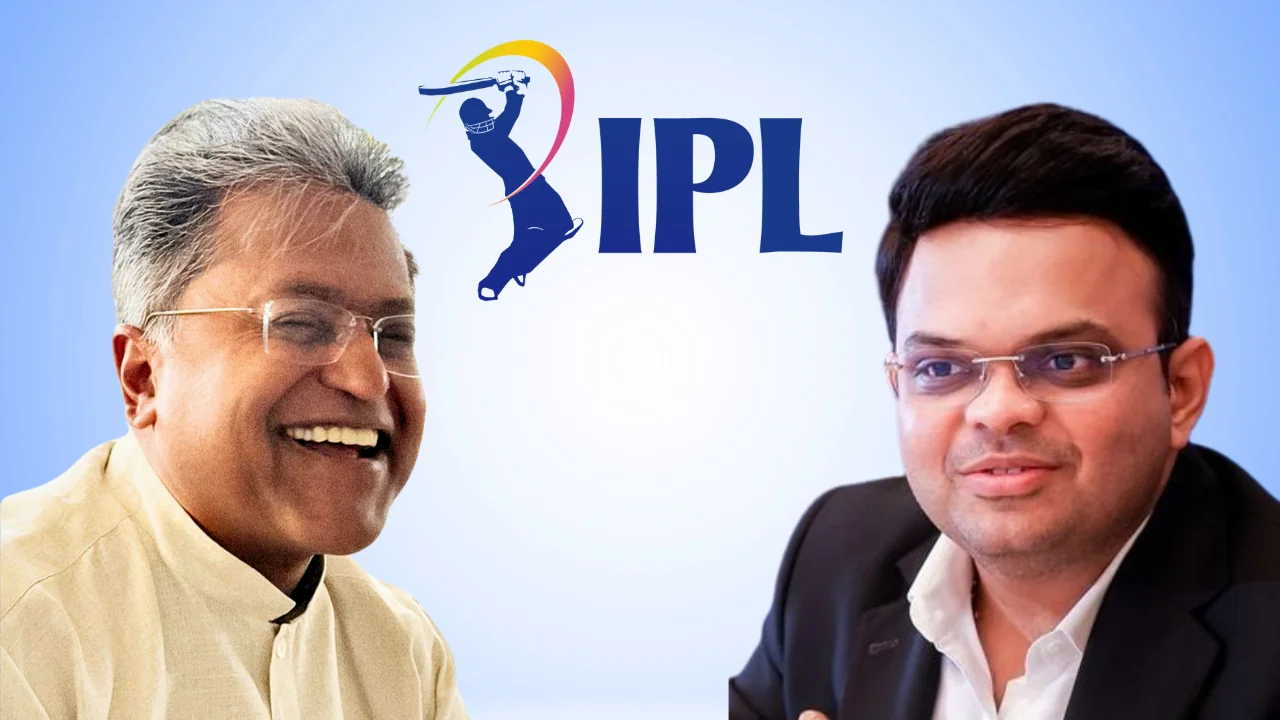
IPL Founder Lalit Modi has proposed expanding the Indian Premier League to 94 matches and bringing forward its start to January, calling on ICC Chair Jay Shah to help secure an international calendar that could accommodate a significantly longer tournament.
The proposal, outlined in a post on X, would introduce a complete home-and-away league format for the IPL’s ten franchises while using the upcoming Future Tours Programme (FTP) negotiations to reconsider how franchise and international cricket share the calendar.
Modi has positioned the expansion as part of a wider commercial strategy for Indian cricket, with the IPL’s next media rights cycle after 2027 providing a potential opportunity to implement changes without disrupting existing contractual commitments.
JAY SHAH’S DEFINING OPPORTUNITY: IPL FROM JANUARY
A fixture list is also a business plan.
As the next Future Tours Programme takes shape, Jay Shah has an opportunity to secure cricket’s next chapter: use his good offices as ICC Chair to facilitate an expanded IPL season beginning in January.
His record gives him credibility. During his tenure as BCCI secretary, the board secured IPL media-rights bids worth more than ₹48,390 crore for 2023–27. He understands how ambition becomes a valuable sporting property.
Now he can help secure the calendar for its next phase.
My assessment is that bilateral and ICC rights income faces downward pressure in the coming cycle. BCCI should prepare now.
The IPL is its principal commercial engine and, in my view, the lifeline for its next phase of growth. Strengthening it helps sustain investment in grounds, coaching, domestic cricket and future players.
I have argued for years that franchise cricket would reshape the sport’s economics. A January start is a practical next step towards the longer season I have advocated.
With ten teams, a full home-and-away format means 90 league matches. Add four playoffs: 94 matches. Every team faces every opponent twice. Every supporter gets to see every opponent at home.
An earlier start would spread fixtures across more weeks, allowing a clearer weekly rhythm, proper breaks and better preparation. Greater use of India’s winter season deserves serious examination, with conditions assessed venue by venue.
More matches alone do not guarantee more value. Quality, audiences, player availability and sensible costs must drive the model.
January is already occupied by other boards and leagues. Their contracts and interests must be addressed. Negotiating that agreement is precisely where Shah’s leadership can make the difference.
The settlement should protect international tours, ICC events, the WPL and domestic pathways. Players need genuine rest. Boards developing overseas talent should have a reason to support the change, through fair, negotiated release and development arrangements.
BCCI and the IPL Governing Council should develop the model. Shah can help build international consensus, respecting his responsibility to the whole game.
Put the January proposal into the current FTP discussions. Use the next IPL rights cycle after 2027 as a planning opportunity, with an agreed transition that honours existing commitments.
As Founder IPL, I want the league to keep strengthening Indian cricket and creating opportunity across the sport.
Jay Shah has already helped the IPL reach a new level of commercial success.
Securing its next chapter through a fair international calendar could become a defining achievement of his chairmanship.
@JayShah @IPL @ICC— Lalit Kumar Modi (@LalitKModi) November 1, 2026
Modi calls on Jay Shah to facilitate IPL expansion
Modi wants the BCCI and IPL Governing Council to develop the proposed competition structure, with Shah helping negotiate an arrangement acceptable to other cricket boards in his capacity as ICC Chair.
IPL Founder Lalit Modi wrote on X: “As the next Future Tours Programme takes shape, Jay Shah has an opportunity to secure cricket’s next chapter: use his good offices as ICC Chair to facilitate an expanded IPL season beginning in January.”
Modi pointed to Shah’s record as BCCI Secretary, during which the IPL secured media rights bids exceeding INR 48,390 crore (approx. USD 5.1 billion) for the 2023–27 cycle.
He also expressed concern that revenue from bilateral international cricket and ICC broadcasting rights could face pressure in the next cycle, making the IPL increasingly important to the BCCI’s finances and its investment in cricket infrastructure, coaching and player development.
Modi added: “I have argued for years that franchise cricket would reshape the sport’s economics. A January start is a practical next step towards the longer season I have advocated.”
Modi believes negotiating a balanced international calendar that enables the IPL’s expansion could become one of the defining achievements of Shah’s tenure as ICC Chair.
A longer IPL season built around home-and-away fixtures
The proposed expansion would establish a league format in which each franchise plays nine opponents twice, producing 90 regular-season fixtures before four playoff matches.
That would increase the competition’s total to 94 matches, compared with the 74-match format currently scheduled, and allow every franchise to host each of its nine opponents.
Explaining the structure, Modi wrote: “With ten teams, a full home-and-away format means 90 league matches. Add four playoffs: 94 matches. Every team faces every opponent twice. Every supporter gets to see every opponent at home.”
Rather than concentrating additional fixtures within the existing tournament period, Modi favours distributing matches across a longer season, with more predictable weekly scheduling and greater intervals between games.
In a subsequent exclusive interview with Cricbuzz, he clarified that January was not intended to be the only possible starting point. Modi explained: “My broader position is that we should identify the best window from October to the end of April. January is a concrete starting proposal within that range. I am not asking for seven uninterrupted months of exclusive IPL cricket.”
He also drew on the structure of football competitions, where regular fixtures and home-and-away rivalries allow supporters to follow clubs over an extended season.
International cricket and player availability remain central challenges
Moving the IPL into January would require negotiations with cricket boards and existing franchise competitions already operating during that period.
Any revised calendar would also need to accommodate international tours, ICC tournaments, the Women’s Premier League (WPL) and India’s domestic competitions, alongside player preparation and recovery periods.
Modi acknowledged those competing commitments in his X post: “January is already occupied by other boards and leagues. Their contracts and interests must be addressed. Negotiating that agreement is precisely where Shah’s leadership can make the difference.”
His proposal envisages arrangements with overseas boards covering player availability, release agreements and development opportunities, rather than an expansion imposed without international consultation.
The BCCI would retain responsibility for designing the IPL’s revised format, while Shah’s involvement would centre on building agreement across the international game.
Modi also wants the proposed changes examined during the current FTP discussions, with implementation aligned to the commercial cycle beginning after the existing IPL rights agreement expires.
Commercial returns and broadcasting strategy
The financial case for a larger IPL is another central element of Modi’s proposal, although he has not presented additional fixtures as a guarantee of increased broadcasting revenue.
His argument places particular importance on the quality of the competition, the availability of leading players, audience engagement and the cost of delivering a longer tournament.
Modi wrote on X: “More matches alone do not guarantee more value. Quality, audiences, player availability and sensible costs must drive the model.”
In his Cricbuzz interview, he expanded on the commercial considerations surrounding the next rights sale, including the importance of creating competitive bidding conditions and assessing how broadcasting packages are structured.
He stated: “Broadcasters need a credible opportunity to make money. A longer window by itself will not produce a bigger cheque. It must improve what we are offering.”
The IPL’s existing media rights agreement covers the 2023–27 period, making the subsequent cycle a potential planning milestone for any significant change to the league’s duration or format.
Modi also believes the economics of international cricket should be assessed alongside the potential returns from an expanded IPL, rather than treating the existing allocation of fixtures as permanent.
Weather and spectator experience enter the debate
Beyond broadcasting and scheduling, Modi has raised concerns about the conditions in which IPL matches are played during the warmer months.
He argues that the effects of high temperatures extend beyond players to spectators, stadium employees, security personnel and production teams, including those working before evening matches begin.
Addressing those concerns in his Cricbuzz interview, Modi said: “Sunset is not an air-conditioning switch. Heat and humidity do not disappear when the floodlights come on.”
He has advocated assessing conditions at individual venues when determining the most suitable dates, taking account of temperature, humidity, rain, fog, air quality and dew.
A shift towards the cooler months would introduce its own playing-condition considerations, particularly the potential influence of dew on matches.
Modi acknowledged: “Dew is a legitimate concern. It should be examined properly. But dew already affects the IPL in its existing window.”
His broader proposal therefore involves evaluating venue suitability and match timings rather than applying a single scheduling approach across India.
Modi backs IPL growth through mobile and streaming audiences
In a separate post on X, responding to Ani Nair, Modi also expressed confidence in the IPL’s long-term audience potential as India’s digital connectivity continues to expand.
He linked that outlook to greater smartphone access, emerging satellite connectivity services and the growing role of direct-to-consumer streaming in sports broadcasting.
Modi also sees India’s population of approximately 1.4 billion as a major driver of future growth, with expanding digital access creating opportunities for cricket and the wider sports and entertainment industries.
I agree. It’s just a start. India’s 1.4 billion will power the growth of all sports and entertainment and making a global power house. @narendramodi vision for @Olympics in India is another Example of The vision of The Government. Which undoubtedly will see @IPL THE PREMIER Sporting League only break every record there is to Break. I said it way back in April 2010 that IPL is recession proof. Mark these words when some say there is fatigue factor. There is no such factor As India gets connected and more and more of the population has access to Data and mobile SMART PHONES WILL break all barriers to getting access to ipl matches right on their phones without telecom providers- direct from low orbit satellite services. Terrestrial signal, cable, DTH, broadband data services in the near future will be obsolete like a vcr or tape recorder. OTT will make all kinds of entertainment and Sports and news direct to Phones the new way to watch them. @Starlink type systems are already in the pipeline. See many such systems launch globally. Old way of watching on tv will be a thing of the past. It will be just another screen which one will be able to mirror or simulcast if one wants a bigger screen.
— Lalit Kumar Modi (@LalitKModi) November 2, 2026
Modi wrote: “I said it way back in April 2010 that IPL is recession proof. Mark these words when some say there is fatigue factor.”
He also predicted a further shift in how audiences access live sport, adding: “OTT will make all kinds of entertainment and Sports and news direct to Phones the new way to watch them.”
The comments reflect Modi’s expectation that expanding distribution through digital platforms could support the IPL’s audience growth, although his proposed longer season would still need to demonstrate sufficient commercial demand.
Next FTP discussions could determine proposal’s future
Modi’s proposal remains a call for the BCCI, IPL Governing Council and international cricket stakeholders to examine a revised competition structure, rather than an announced change to the tournament calendar.
The next FTP negotiations provide the forum in which the competing requirements of international fixtures, franchise competitions and player commitments could be considered.
Modi wrote on X: “Put the January proposal into the current FTP discussions. Use the next IPL rights cycle after 2027 as a planning opportunity, with an agreed transition that honours existing commitments.”
The proposal’s next step, as outlined by Modi, is therefore for cricket’s governing bodies to assess the feasibility of an expanded IPL within the forthcoming international calendar discussions.


