
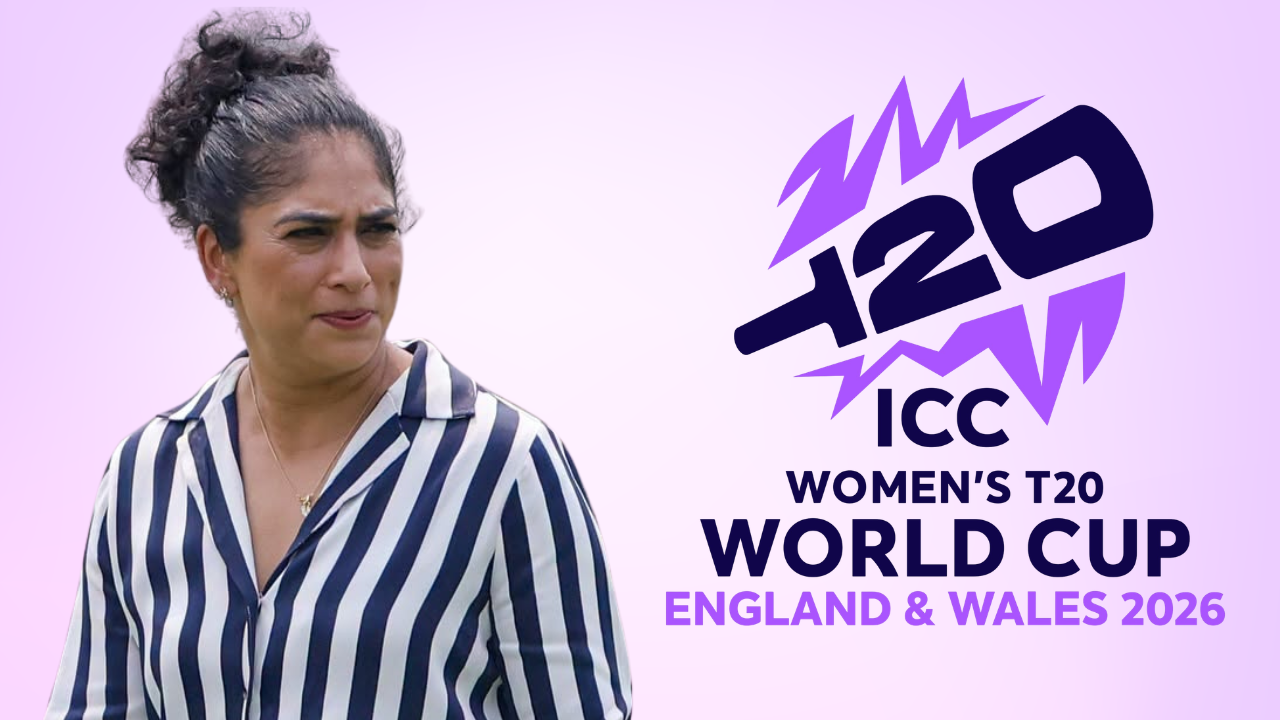
Former Australia star-turned-Broadcaster Lisa Sthalekar believes women’s cricket still faces difficult decisions over balancing commercial priorities with long-term audience growth, arguing that the sport cannot always maximise broadcast value and create the ideal in-stadium experience at the same time.
Speaking on the Wisden Women’s Cricket Weekly podcast ahead of the Women’s T20 World Cup semi-finals, Sthalekar reflected on the commercial realities behind tournament scheduling while assessing how the women’s game can continue building momentum with fans around the world.
Tournament continues to break attendance records
Sthalekar’s comments come during a landmark Women’s T20 World Cup that has already become the highest-selling edition in the tournament’s history. More than 125,000 spectators have attended matches across England and Wales, according to the ICC, while the competition has also delivered record broadcast and digital engagement alongside its strongest-ever ticket sales.
The tournament has produced several attendance milestones, including a record-breaking opening weekend and new Women’s T20 World Cup group-stage attendance records. More than 21,000 fans watched England face New Zealand at The Oval before over 27,000 attended India’s meeting with Australia at Lord’s, while strong crowds were also recorded at Headingley and Old Trafford.
Even so, attendances varied across venues, with several neutral fixtures attracting significantly smaller crowds despite the tournament’s overall commercial success.
Broadcast value versus fan experience
Sthalekar acknowledged the financial considerations behind scheduling decisions, including match timings designed to maximise television audiences in key markets.
Former Australia Player-turned-Broadcaster Lisa Sthalekar said on the Wisden Women’s Cricket Weekly podcast: “At the end of the day, the sport has to survive and it needs money to come in, so you’re trying to maximise your broadcast rights, which is what the ICC has done, hence why we knew [when] India were playing if they got through to the semi-final because of the better time zone.”
She also argued that creating memorable matchday experiences remains an equally important part of expanding the women’s game.
“However, I think there is an element of, if you can – and I speak to my broadcasters back home – if we can play at venues where there’s a great atmosphere, and it’s pumping and there’s a great vibe, the commentators feed off that, the players feed off that, there’s great shots of people enjoying themselves. That’s going to sell the game to be able to get more people there,” she added.
Finding the right balance
While the ICC has invested heavily in expanding the commercial profile of women’s cricket through increased visibility, broadcast reach and growing attendances, Sthalekar suggested tournament organisers must continue weighing those objectives against creating consistently vibrant atmospheres inside stadiums.
“But when you’re shooting to a blank stadium, it’s really hard to create the buzz, as much as the ground announcer and the DJ thumps out the music. It doesn’t quite match up. So there’s a balance I think. As a pure fan, you want to make sure it’s peak time and everyone can come, but as an administrator you’ve got to go, ‘we’ve got to earn money too, so how do we do that?’.”
The ICC has continued to expand its investment in the women’s game beyond major events, increasing participating teams, raising prize money, introducing initiatives such as its post-pregnancy return-to-play framework and expanding grassroots participation programmes as part of its long-term growth strategy.
“Is it about money, or is it about growing the game? We can’t always do both. I think things will keep improving, and I think the commercial value of the women’s game is going up, so people are taking a lot more notice. We’re not front of mind yet, but we’re getting there.”
Since Sthalekar made those comments, Australia have secured their place in the Women’s T20 World Cup final after defeating West Indies in the first semi-final, while England and South Africa are set to meet in Thursday’s second semi-final to decide the remaining finalist.


