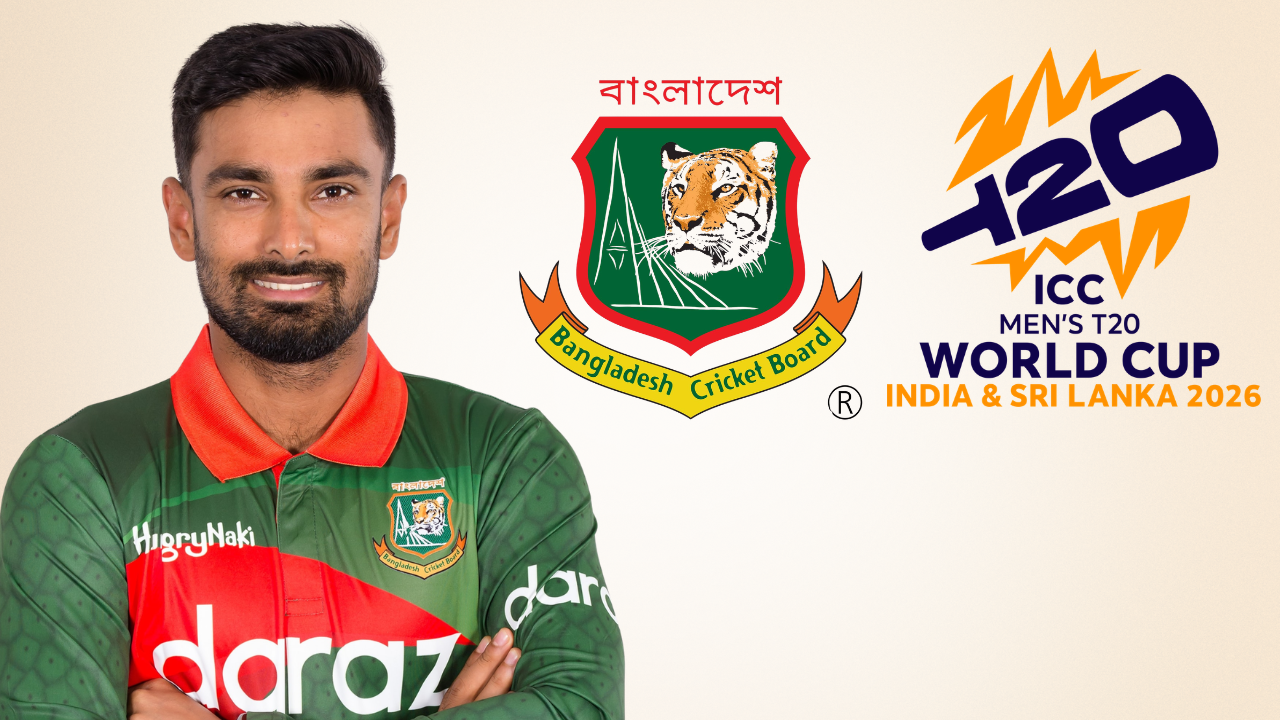
Months after Bangladesh’s controversial withdrawal from the 2026 T20 World Cup, Bangladesh T20I Captain Litton Das has questioned the reasoning behind the decision and suggested players were never part of the final call. Speaking to Prothom Alo, Das said the squad wanted to participate in the tournament, reopening debate around one of the most contentious episodes in recent Bangladesh cricket history.
His comments place him at odds with statements made earlier this year by former Bangladesh Interim Sports Adviser Asif Nazrul, who defended the withdrawal as a collective decision involving both the Bangladesh Cricket Board (BCB) and the players.
Litton challenges earlier explanation
At a press conference in February, Nazrul said, “This decision was taken by the BCB and the players as they made sacrifices for the safety of the country’s cricket, the safety of the people and to protect national dignity.”
Das, however, presented a different account of events. Recalling a meeting with senior BCB officials before the final decision was made, he told Prothom Alo, “We went there to participate (in a meeting with top BCB officials), to have tea. Our mindset was to have tea in an AC room. We were asked what we wanted. As players, what would we want? We don’t want to fight. We would obviously want to play.”
The comments are the clearest indication yet that sections of the Bangladesh dressing room may not have supported the withdrawal, despite public assertions that players were aligned with the decision.
Security concerns remained at the centre of the dispute
The BCB maintained throughout the standoff that security concerns were behind its refusal to play matches in India. As previously reported by cricexec, Bangladesh sought to remain in the tournament by requesting that its fixtures be moved to Sri Lanka, but the proposal was rejected after the ICC concluded there was no credible security threat to the team’s participation.
Das said players had questioned the rationale presented to them during internal discussions. Speaking about those conversations, he told Prothom Alo, “They just asked us what we wanted. As a player, what do you want? We did not want to fight, we wanted to play cricket. However, they questioned safety in India. I said that when we played in Pakistan, they used to stand with guns outside the room. What could be more dangerous than that? But this was their call; we had no say as players.”
His remarks also referenced Bangladesh’s previous tours of Pakistan, where teams operated under extensive security arrangements.
From uncertainty to public criticism
When questions first emerged over Bangladesh’s participation earlier in the year, Das was far more cautious in public. Speaking after a Bangladesh Premier League match in January, he avoided giving a direct answer when asked about the situation.
At that press conference, Das said, “Are you sure we are going to play the World Cup? From my side, I am uncertain; everyone is uncertain. I think the whole of Bangladesh is uncertain at this moment. No answer. I understand what question you are going to ask. That is not safe for me. No answer.”
The contrast between those remarks and his latest comments illustrates how the discussion has evolved in the months since Bangladesh’s withdrawal became official.
Fallout from the withdrawal continues
The ICC ultimately rejected Bangladesh’s request to relocate its matches and instructed the board to either participate under the existing arrangements or withdraw from the competition. The BCB chose not to proceed, resulting in Scotland taking Bangladesh’s place in the tournament, as previously reported by cricexec.
The dispute was further complicated by tensions surrounding Mustafizur Rahman’s removal from the IPL earlier in the year, an issue repeatedly cited by Bangladesh officials as evidence of wider security concerns.
While the withdrawal itself is now part of cricket history, Litton’s comments have reignited questions about how the decision was reached and whether the views of Bangladesh’s players were fully reflected in the process.