The India-Pakistan T20 World Cup 2026 clash was nearly derailed by political tensions before an unexpected diplomatic intervention changed the course of the tournament.
For days, uncertainty surrounded one of cricket’s most commercially powerful and globally watched fixtures after Pakistan declared its intention to boycott the match in solidarity with Bangladesh, who had opted not to travel to India for their fixtures. What followed was a series of high-level discussions involving the Pakistan Cricket Board, the Bangladesh Cricket Board and the International Cricket Council as efforts intensified to prevent the standoff from escalating further.
Sri Lanka president’s intervention breaks the deadlock
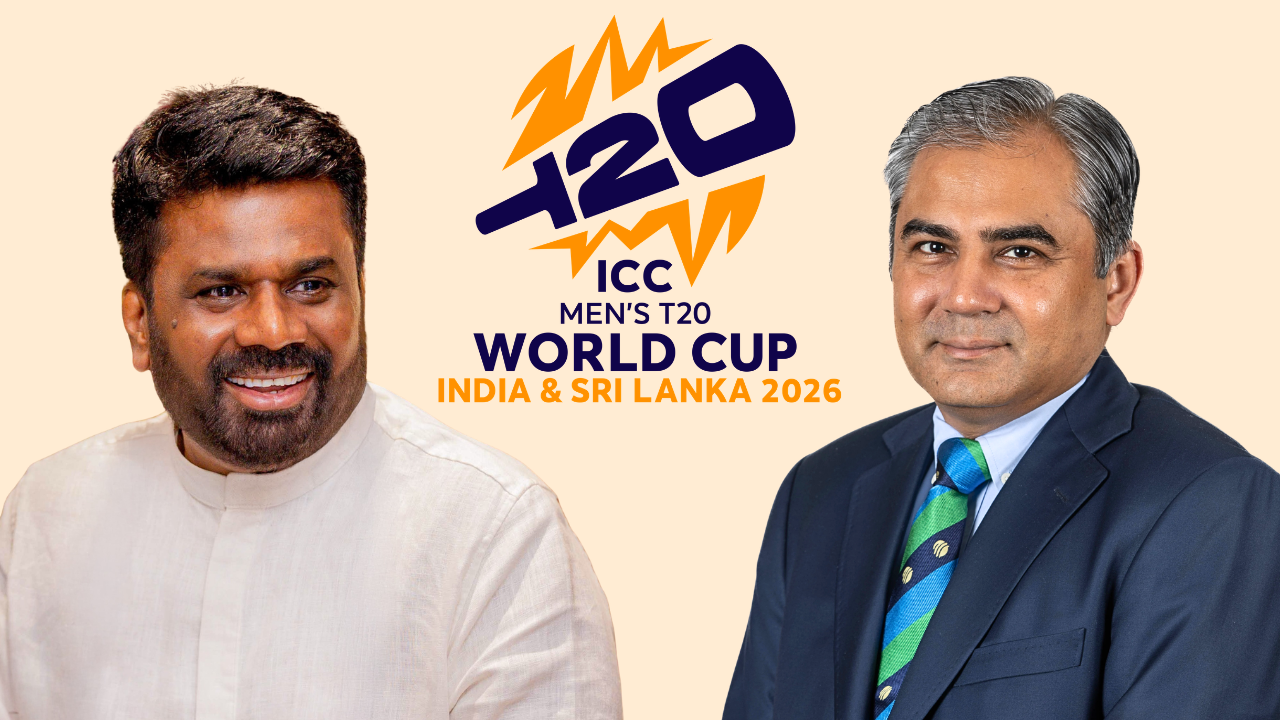
The turning point came on February 9, when Sri Lankan President Anura Kumara Dissanayake personally contacted Pakistan Prime Minister Shehbaz Sharif, urging him to allow the team to take the field.
After the match went ahead in Colombo, PCB chairman Mohsin Naqvi met President Dissanayake and publicly acknowledged his role in resolving the crisis. While speaking to the Sri Lankan president in the meeting, Naqvi conveyed the message from Pakistan’s top leadership and underscored the scale of the occasion.
“First of all, warm greetings from the President of Pakistan (Asif Ali Zardari) and the Prime Minister of Pakistan (Shehbaz Sharif). They specially asked me to convey their greetings to you. Actually, in yesterday’s match, you were the actual hero because 2 billion people were entertained because of you. So, it is only because of you that we played the match,” he said.
Naqvi went further, explaining how swiftly the situation shifted once the call was made. “We were having several issues regarding playing with India, but as soon as the Prime Minister received your call, he called me up and said, ‘There is no more issue… we have to play the match. That’s it.’ I am very thankful to you that you played a very critical role in this,” he added.
The PCB chief’s remarks confirmed that the diplomatic outreach directly influenced Pakistan’s reversal after days of uncertainty and behind-the-scenes negotiations.
How the boycott threat escalated during T20 World Cup 2026
Pakistan’s initial stance to boycott the India fixture triggered widespread debate within the cricketing world. The decision, framed as solidarity with Bangladesh following their refusal to travel to India, raised questions about the tournament’s integrity and scheduling stability.
As tensions mounted, the ICC, PCB and BCB engaged in extended discussions to find a resolution. The prospect of the India-Pakistan match being called off carried major sporting and commercial implications, given its status as one of the most watched events in global cricket.
Ultimately, it was the direct diplomatic channel rather than administrative negotiation that unlocked the impasse.
India dominate on the field in Colombo
Despite the dramatic build-up, the match itself proved one-sided.
At the R. Premadasa Stadium in Colombo, India posted 175 on a challenging surface, powered by a commanding 77 from Ishan Kishan. Pakistan, with Naqvi present in the stands, struggled in the chase as Indian bowlers tightened control and dismantled the batting order.
The result was a comprehensive 61-run victory for India, marking their third consecutive win in the tournament and leaving Pakistan under immediate pressure.
Pakistan seal Super 8s spot with dominant win over Namibia
Pakistan bounced back emphatically from their defeat to India, thrashing Namibia by 102 runs in Colombo to secure qualification for the Super 8s. Saeed Zada Farhan struck a century as Pakistan posted 199 for 3, before bundling Namibia out for 97, with Usman Tariq taking four wickets and Shadab Khan claiming three to complete a comprehensive turnaround.
While the on-field result did not favour Pakistan, the broader narrative of the match has already secured its place in tournament history. What began as a diplomatic standoff ended as a spectacle watched by billions, with Sri Lanka’s president emerging, in the words of the PCB chairman, as the “actual hero” behind the India-Pakistan clash going ahead.