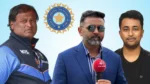
Political influence and cricket governance intersect again
With just days remaining before the deadline to file nominations for the BCCI elections, speculation is intensifying over who will emerge as the next president of Indian cricket’s most powerful body. Although the official election is scheduled for September 28 at the Annual General Meeting (AGM), the key decisions may be finalized even earlier—behind closed doors in Delhi.
According to reports in Cricbuzz and Zee News, a pivotal meeting between senior BCCI officials and top members of India’s ruling Bharatiya Janata Party (BJP) has been scheduled for September 20. The meeting, expected to take place at the residence of Home Minister Amit Shah, could determine the final composition of the new BCCI leadership.
Such political consultations are not new. A similar gathering in 2022 played a decisive role in replacing Sourav Ganguly with Roger Binny, despite Ganguly being eligible for a second term. The BJP, while not officially involved in sports governance, is known to back former players for leadership roles in key national sports bodies—including PT Usha (Indian Olympic Association), Dilip Tirkey (Hockey India), and Kalyan Chaubey (All India Football Federation).
Ganguly, Harbhajan, Bhatt among potential frontrunners
The list of possible candidates for the BCCI presidency includes several familiar names. Former India captain Sourav Ganguly is once again being linked to the top post, even as he prepares to take over as president of the Cricket Association of Bengal (CAB). Ganguly’s re-entry into the BCCI would not be barred by any constitutional clause if he is nominated again.
Harbhajan Singh has also emerged as a surprise nominee from the Punjab Cricket Association. Despite his silence since his name surfaced, his credentials—over 100 Test caps—make him a contender with strong political and cricketing appeal. Similarly, Raghuram Bhatt, the former left-arm spinner from Karnataka, has been proposed as a candidate by his state unit.
Another name circulating is that of former India wicketkeeper Kiran More, though he currently does not appear on the list of state unit representatives. However, Cricbuzz notes that the list of eligible candidates is still in flux, and changes are possible.
The list of eligible candidates could still change, as per the timeline set by the BCCI’s electoral officer. In a notification issued on September 6, the next key step in the process is scheduled for September 19: the ‘examination of objections and decisions thereon (ii) release of final electoral roll’. Until then, changes in state unit nominations remain possible.
Rajeev Shukla, other positions still in play
Rajeev Shukla, the current vice-president and acting president following Roger Binny’s mandatory exit upon turning 70, remains a significant figure in BCCI politics. While he has yet to confirm whether he will contest for the presidency, his longstanding role in board affairs makes him a potential compromise candidate should consensus not emerge around others.
In contrast, Sanjay Naik of the Mumbai Cricket Association is no longer being considered for any top-level post, including the IPL Governing Council chairmanship, despite earlier reports linking him to a senior role. He will, however, represent MCA at the AGM.
As for other roles, incumbents Devajit Saikia (secretary, Assam) and Prabhtej Bhatia (treasurer, Chhattisgarh) are expected to retain their positions. The vice-president and joint secretary posts remain undecided. Goa’s Rohan Dessai was initially expected to step into the joint secretary role, but internal issues within his state unit have cast doubt on his candidacy.
Selectors’ appointments underway ahead of AGM
Parallel to the election drama, the Cricket Advisory Committee (CAC) has begun interviews for new national selectors. Ashok Malhotra and Jatin Paranjpe conducted virtual interviews on September 18. Sulakshana Naik, the third member of the CAC, is no longer part of the panel, and a replacement is yet to be announced.
The CAC is expected to appoint two selectors to join Ajit Agarkar on the senior men’s panel, one member for the national junior committee, and four for the national women’s committee. All appointments are to be formalized after the AGM on September 28.
As the clock ticks down toward the key September 20 meeting in Delhi, the shape of the next BCCI leadership may be determined well before any ballots are cast—continuing a pattern where the politics behind the game plays as decisive a role as the game itself.