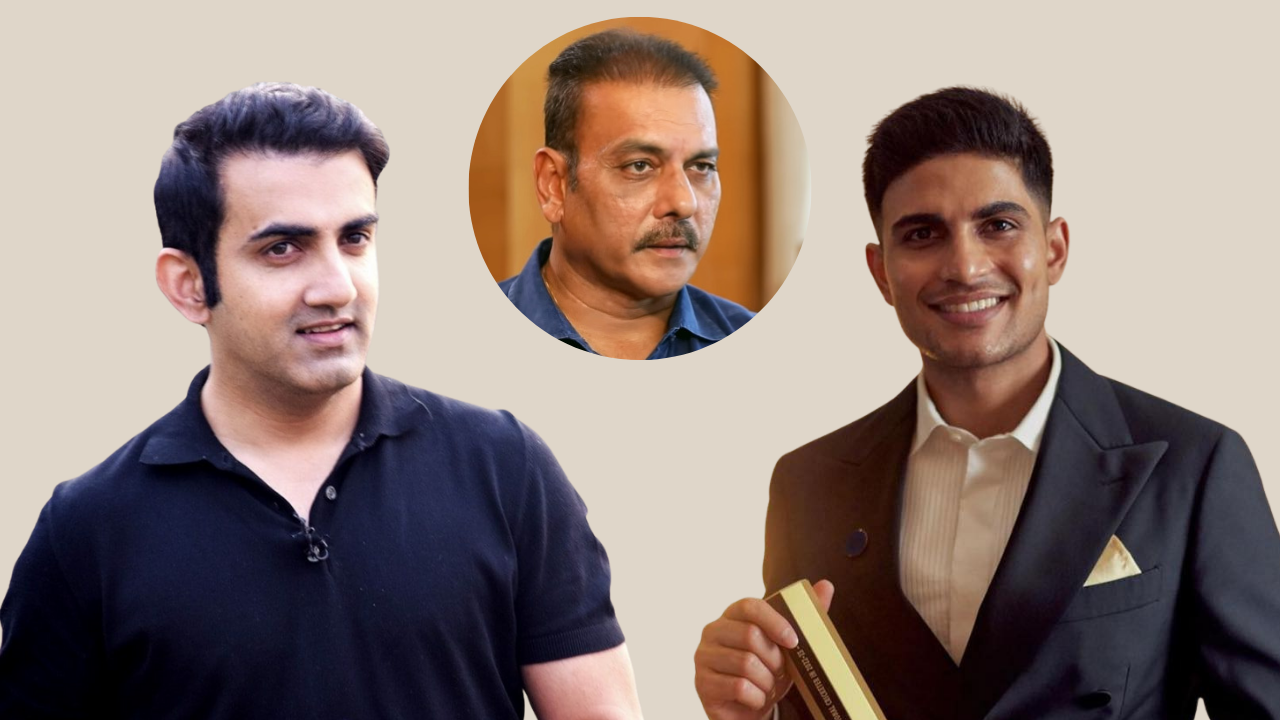
Shastri weighs in on Gambhir’s cultural reset
The start of Gautam Gambhir’s tenure as head coach came with more than just on-field challenges. After a turbulent stretch marked by back-to-back Test series defeats — a 0–3 whitewash at home to New Zealand and a 1–3 loss in Australia — the BCCI issued a strict ten-point directive aimed at reshaping team culture and focus.
Among the most debated policies was a restriction on family members and personal staff accompanying players throughout tours. Intended to reduce distractions and increase accountability, the decision sparked wide-ranging discussions.
Speaking on the Grade Cricketer podcast, former India head coach Ravi Shastri weighed in on the new rules — including the no-family diktat — and offered strong support for the direction Gambhir has taken.
“After a while, on tours, you’ve got to minimize things. When there are too many people around, you tend to get distracted.”
The shift, according to Shastri, was about restoring a sharp edge to the team’s focus — especially during high-stakes overseas assignments.
“He (Gambhir) must have seen it’s getting out of hand. So he just put a limit on what can be done and what cannot be done.”
While the current setup operates under stricter travel and support staff policies, Shastri clarified that such protocols weren’t in place during his time as head coach.
“Not really.”
However, he acknowledged that the environment has changed significantly, with greater structure now defining India’s approach to tours.
He also offered a dose of humour about the growing trend of players bringing along personal support staff.
“I don’t remember anyone coming with a chef during my time. The chef would’ve been very busy with me! I wouldn’t have minded one or two!”
India’s results vindicate the tougher approach
Since the BCCI’s updated code of conduct came into effect, India’s form across formats has notably improved. The team clinched the Champions Trophy and Asia Cup titles in 2025, followed by a Test series win over the West Indies and a thrilling 2–2 draw away against England.
Shastri noted that Gambhir’s early hurdles — especially in red-ball cricket — were natural in a new role.
“That’s bound to happen. It takes time to understand your players, to know what combination you should play. The fact that they came back in England to win the last Test, and then won the Asia Cup, those will help things settle down.”
With recent overseas Test wins under their belt, Shastri believes India are once again in a strong position to compete for the ultimate prize.
“The fact that they’ve beaten West Indies now and also got two Tests (wins) under their belt overseas makes them favourites once again to reach the World Test Championship (WTC) final.”
Leadership and calm: Gill’s emergence as a long-term asset
Beyond the cultural reset and tactical changes, India also entered a new chapter in limited-overs leadership. As Shubman Gill took charge as full-time ODI captain for the series against Australia, Shastri expressed full confidence in the young batter’s temperament and vision.
“The good thing for him is that he has got a captain now who is stable, composed, and calm. Gill is the man for the next decade for India.”
Gill, who debuted under Shastri’s coaching regime, represents a continuity of values shaped around discipline, clarity, and long-term thinking — all of which align closely with the team’s current ethos.
India vs Australia: white-ball battle underway
Shastri’s comments came before the start of the India–Australia white-ball series, which opened with a tightly contested ODI in Perth. Australia claimed a seven-wicket victory using the DLS method in the rain-affected clash, placing India under pressure ahead of the remaining fixtures.
The teams will now meet for the second ODI on Thursday 23rd Oct and third ODI on Saturday, 25th Oct, with India aiming to level the series before a five-match T20I leg kicks off.
While the outcome of the series remains to be seen, the broader message from Shastri is clear: stability, discipline, and focus — both on and off the field — are shaping India’s next chapter.