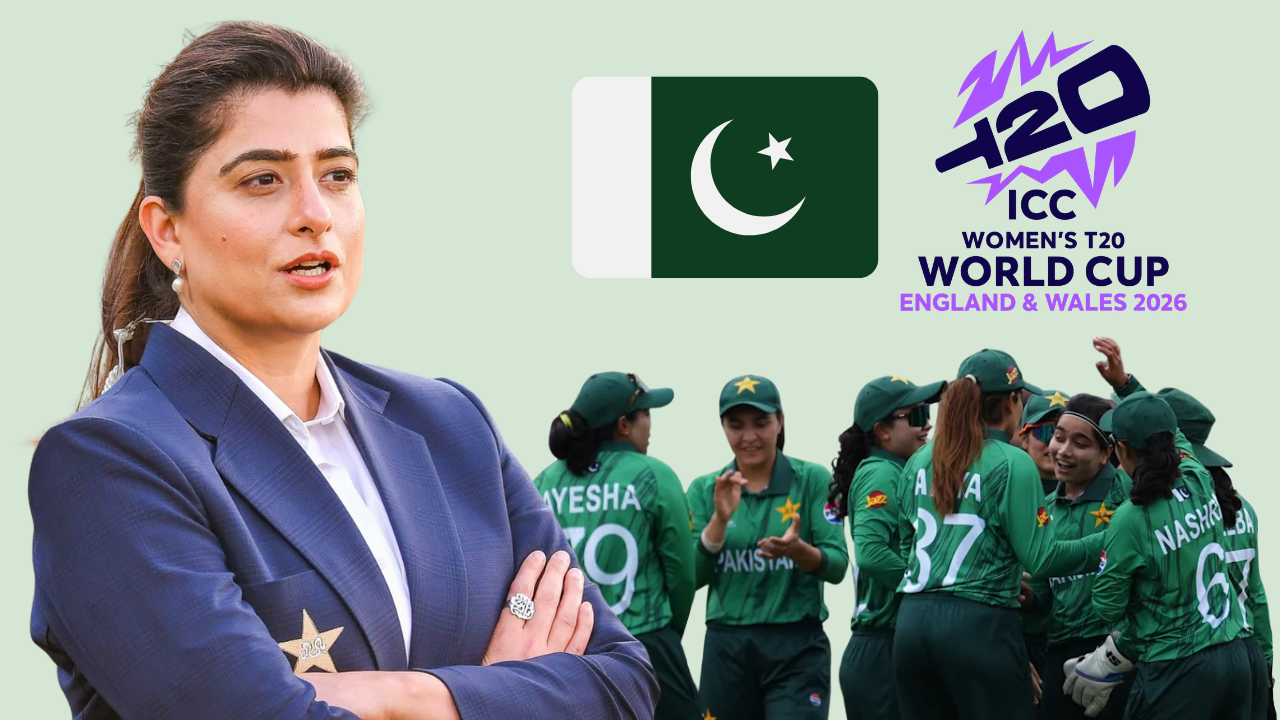
Pakistan’s disappointing Women’s T20 World Cup campaign has reignited debate over the state of the country’s women’s game, with former Pakistan Captain Sana Mir arguing that the reaction to the team’s exit has exposed deeper issues than results alone. Speaking in an interview with TOK Sports after the tournament, Mir criticised the sexist tone of the criticism directed at the national side, saying the team should be judged on its cricket rather than its gender.
Pakistan concluded its campaign with a 37-run victory over the Netherlands after posting 126 for 6 and bowling the Dutch side out for 89. However, the win came too late to prevent a group-stage exit following successive defeats to India, South Africa, Bangladesh and Australia.
The campaign featured several missed opportunities. Pakistan collapsed from 53 for 1 to 106 all out while chasing 171 against India, recovered from 50 for 8 to finish on 126 for 9 against South Africa before ultimately falling short, failed to chase a target of 124 against Bangladesh despite remaining in contention, and were then bowled out for a meagre 86 while pursuing 200 against Australia.
Mir questions double standards
Mir told TOK Sports, “I see double standards while talking about the performances of the men’s and women’s teams. I don’t agree with the tone of the criticism. Yes, the team has not come up to the expectations, but just because it is the women’s team, why add a sexist tone to it?”
Mir also questioned why criticism directed at the women’s team often included remarks suggesting players would be better off making rotis in the kitchen, noting that the men’s team has endured disappointing performances without attracting similar comments.
She added, “Even after so many years we still don’t give the required respect to the women’s team while discussing its performances.”
Results should not overshadow respect
The former Pakistan Captain acknowledged that the team had fallen short of expectations during the tournament, but stressed that disappointment over the results should not dictate the way the players are discussed.
She noted, “Everyone was disappointed with the team’s performance but it is the way we discuss the team is what is troubling for me.”
Mir also criticised the spread of AI-generated videos on social media that mocked Pakistan’s women cricketers and circulated misinformation, saying the content had caused significant distress to the players’ families. She said what troubled her most was seeing the team’s performances judged through the lens of gender rather than cricket itself.
Structural changes needed
She said, “Our players could not perform the way we expected. It took many years to convince everyone that Pakistan’s girls have what it takes, that they can cause upsets.”
Mir said Pakistan’s women’s game also requires greater long-term investment, including expanding the talent pool and staging more domestic competitions to strengthen competition for national selection.
She explained, “It is true that the players know there is no competition for spots in the team and it does affect their mindset.”
Changing attitudes
Mir said lasting progress will depend not only on improving standards on the field but also on changing attitudes towards women’s cricket across the country.
She added, “Until we change this mindset, we will get nowhere.”
Mir’s comments add to the wider discussion surrounding the future of Pakistan women’s cricket, with the former Pakistan Captain arguing that both cultural perceptions and stronger domestic structures must evolve if the national team is to become consistently competitive on the international stage.