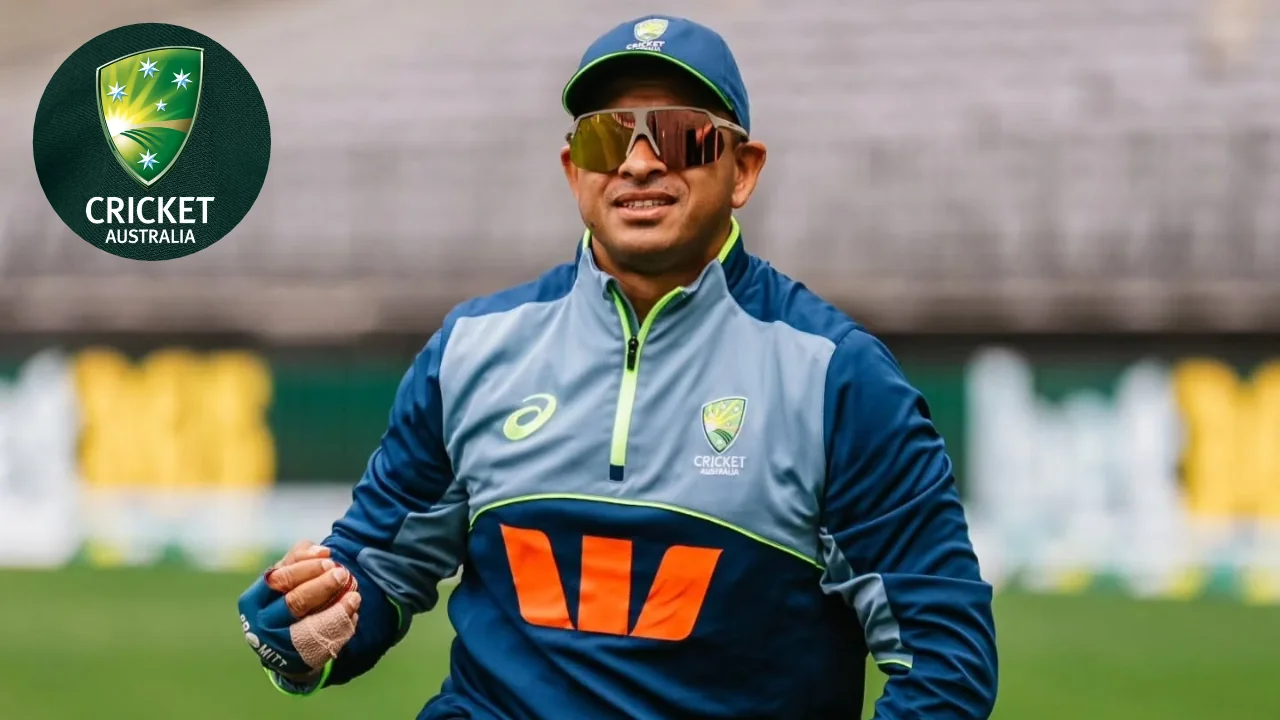
Usman Khawaja has widened the scope of the Sandpapergate controversy, alleging that Australia’s ball-tampering practices preceded and extended beyond the 2018 South Africa tour and were part of a broader team culture that developed under Cricket Australia‘s leadership.
Speaking on The Grade Cricketer podcast, Khawaja addressed the origins of the controversy, the divisions among Australia’s players and his efforts to persuade Cricket Australia CEO Todd Greenberg to pursue a collective resolution.
His latest revelations have placed renewed scrutiny on the organizational culture that preceded the Cape Town scandal, raising questions about accountability beyond the three players sanctioned following the incident.
Khawaja alleges ball tampering during preceding Ashes series
Khawaja claimed Australia’s attempts to illegally alter the condition of the ball were already taking place before the team travelled to South Africa in 2018.
“It wasn’t just that one instance or that one Test match or two Test matches where we used sandpaper. We’d been doing it that Ashes series before… ball maintenance, tampering, whatever you want to call it. It is tampering because what we were doing wasn’t within the laws of the game.”
The former Australia batter also suggested that the team’s conduct reflected a gradual erosion of standards rather than an isolated decision in Cape Town.
“When we talk about ball tampering, sandpaper didn’t just magically happen. We didn’t go from zero to 100.
“It was progressive during that time. We kept pushing the boundaries more and more and more during that two-year period.”
Cricket Australia’s leadership culture comes under scrutiny
Khawaja traced the origins of the team’s approach to 2016, alleging that pressure to deliver results permeated Cricket Australia‘s organizational hierarchy before influencing player behaviour.
“From 2016 and that ‘win at all costs’ mentality all the way to 2018. It came from CA up the top. It filtered down to the coaching staff. The coaching staff pushed it onto the players,” Khawaja told The Grade Cricketer.
He argued that Australia’s increasingly aggressive on-field conduct during that period was another manifestation of the same culture.
Khawaja also distinguished his broader allegations about the team’s ball-management practices from the question of which individuals knew about the use of sandpaper.
“I don’t want to speak on anybody’s behalf, but it was going on for a long time. We benefited as a team, we were winning games as a team through our tactics with the ball.
“We win as a team. We lose as a team. We share it as a team. We’re doing it to the ball as a team. There’s a concerted effort as a team.
“For me, over such a long period of time, we all knew we were trying to reverse swing the ball, and we all know how to reverse swing the ball. That’s the context. You can make up your mind on the rest.”
Bowlers’ 2021 statement deepened dressing room divisions
A central point of contention for Khawaja remains the public statement issued by Pat Cummins, Mitchell Starc, Josh Hazlewood and Nathan Lyon in 2021, denying prior knowledge of a foreign substance being taken onto the field during the Cape Town Test.
Khawaja revealed that he had approached then-Australia Head Coach Justin Langer following Cameron Bancroft’s comments in 2021, advocating a unified response from the team.
“It wasn’t even relevant who knew, who didn’t. It was just ‘let’s take it as a team’.”
However, Khawaja said the bowlers issued their statement without informing the other players, creating a distinction between members of the same touring party.
“And so for me, when I look back at that, the bowlers then went and put the statement out in 2021, and none of us even knew about it. It just happened. They just did it,” Khawaja said.
“It kind of left everyone else with our hands in our pockets. It created this separation. They separated themselves from the rest of the team at that point.”
Khawaja also recalled a conversation with Bancroft about the emotional consequences of the controversy.
“I talked to Bancroft about this. I was in touch with him all the way from 2018 … He said to me ‘that was the loneliest I’ve ever felt in my life’.”
Khawaja pushes for collective accountability
Rather than seeking further individual admissions, Khawaja has proposed that the members of Australia’s 2018 touring party collectively acknowledge their responsibility for the team’s conduct in South Africa.
The former batter disclosed that he had sent Greenberg a draft statement that also recognized the consequences endured by Steve Smith, David Warner and Bancroft.
“We accept as a group we were ball tampering by artificially altering the condition of the ball in South Africa in 2018,” the proposed statement reads.
“Furthermore, we would like to acknowledge that Steven (Smith), Cameron (Bancroft) and David (Warner) paid an enormous price for the sake of the team, for which we are sorry and eternally grateful.”
According to Khawaja, Greenberg indicated that the proposal was likely “not going to fly”.
Cricket Australia faces competing accounts of 2018 scandal
The renewed controversy has exposed persistent disagreements between members of Australia’s former dressing room.
While Bancroft and Warner have backed Khawaja’s account, Cummins has denied prior knowledge of the Cape Town ball-tampering operation. Starc, Hazlewood and Lyon have also maintained their position regarding the incident.
Cricket Australia’s original investigation held Smith, Warner and Bancroft responsible for the scandal. However, Khawaja’s autobiography and subsequent interviews have reignited debate over the extent of collective responsibility and the institutional culture surrounding the team.
Cricket Australia has ruled out reopening its investigation but has established a forum through which players can share their experiences of the 2018 controversy.
For the governing body, the challenge now extends beyond addressing conflicting accounts of the Cape Town Test to confronting wider allegations about the culture that preceded it.