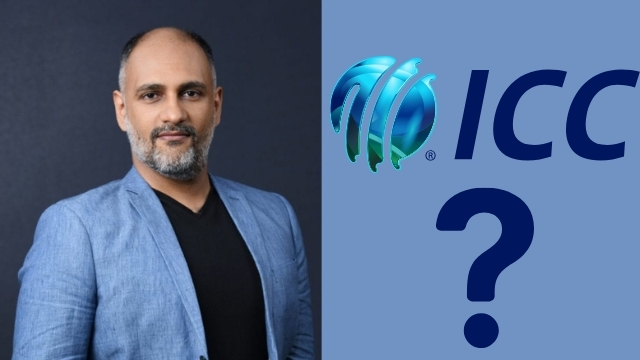
Sanjog Gupta, the influential head of Live Sports and Experiences at JioStar, has emerged as the leading contender to take over as the new chief executive of the International Cricket Council (ICC). According to The Guardian, three sources have confirmed that Gupta is the frontrunner to succeed current ICC CEO Geoff Allardice, who is serving his notice period until the ICC’s Annual General Meeting in July.
Gupta’s potential appointment would mark a significant shift in cricket’s power structure, further deepening India’s influence at the highest levels of the sport’s global administration.
Deep ties to Indian cricket and broadcast power
Gupta’s rise comes in the context of JioStar – the powerful broadcast entity that holds the ICC’s $3 billion global media rights deal – playing an increasingly central role in shaping cricket’s commercial landscape. The company, a joint venture between Viacom18, Reliance Industries, and Disney India, is also the domestic broadcaster of the Indian Premier League (IPL), the most valuable property in cricket.
A graduate in Economics from Delhi University, Gupta previously served as CEO of Sports at Star India before assuming his current role at JioStar. His leadership has been instrumental in navigating high-stakes media negotiations and growing India’s sports broadcasting footprint.
If appointed, Gupta would be the first major executive appointment under new ICC Chair Jay Shah – the former Secretary of the Board of Control for Cricket in India – who assumed the role in December 2024. Their prior collaboration in the Indian cricket ecosystem is seen as a factor strengthening Gupta’s candidacy.
Major challenges await the next ICC chief
Whoever steps into the ICC CEO role will face a complex set of challenges, starting with sensitive negotiations around the value of JioStar’s ICC media rights deal. Recent geopolitical tensions between India and Pakistan have raised questions about whether the two teams will continue to face each other in ICC tournaments – a factor that could significantly impact the commercial appeal of global events.
Beyond media concerns, structural issues in the sport loom large. While the current format of the World Test Championship is set to continue through the 2025-27 cycle, there is increasing pressure to overhaul the competition ahead of the next Future Tours Programme.
Franchise cricket also remains a dominant concern. The IPL is pushing for an expansion from 74 to 94 matches annually starting in 2028, a move that could further encroach on international cricket windows and force a recalibration of the global calendar.
Advocating for the international game
Gupta has been an active voice in the wider conversation about the future of international cricket. He was among the key figures interviewed by the World Cricketers’ Association (WCA) during the preparation of its recent report advocating for protected international windows amid the rise of franchise leagues. Tom Harrison, former ECB CEO and another industry heavyweight consulted for the report, has also been linked to the ICC role in the past.
As the ICC navigates an increasingly congested and competitive cricket calendar, the appointment of a commercially savvy executive like Gupta could signal a stronger alignment between the game’s administrative and broadcast stakeholders.
IPL resumes amid India-Pakistan tensions
Meanwhile, the IPL is set to resume this Saturday after being paused due to military hostilities between India and Pakistan. The remaining 17 matches will be held across five cities – Bengaluru, Jaipur, Lucknow, Mumbai, and Ahmedabad – with Dharamsala notably dropped from the revised schedule following the abandoned game before the hiatus.
The final, now rescheduled for June 3, is still awaiting confirmation on its venue. A key variable will be whether overseas players, including 10 from England who left amid rising tensions, will return for the closing stages of the tournament.
India’s growing grip on global cricket
Gupta’s expected rise to the ICC’s top executive role would mark another step in India’s consolidation of power within global cricket governance. With the ICC chair and potentially the CEO both hailing from India and both tied to its broadcast and board ecosystems, the direction of world cricket could increasingly be steered from the subcontinent.
If confirmed, Gupta will be tasked with navigating not just the commercial and scheduling pressures facing the game, but also balancing the competing interests of national boards, player unions, broadcasters, and fans – all while managing cricket’s strategic future as it prepares for its Olympic return in 2028.