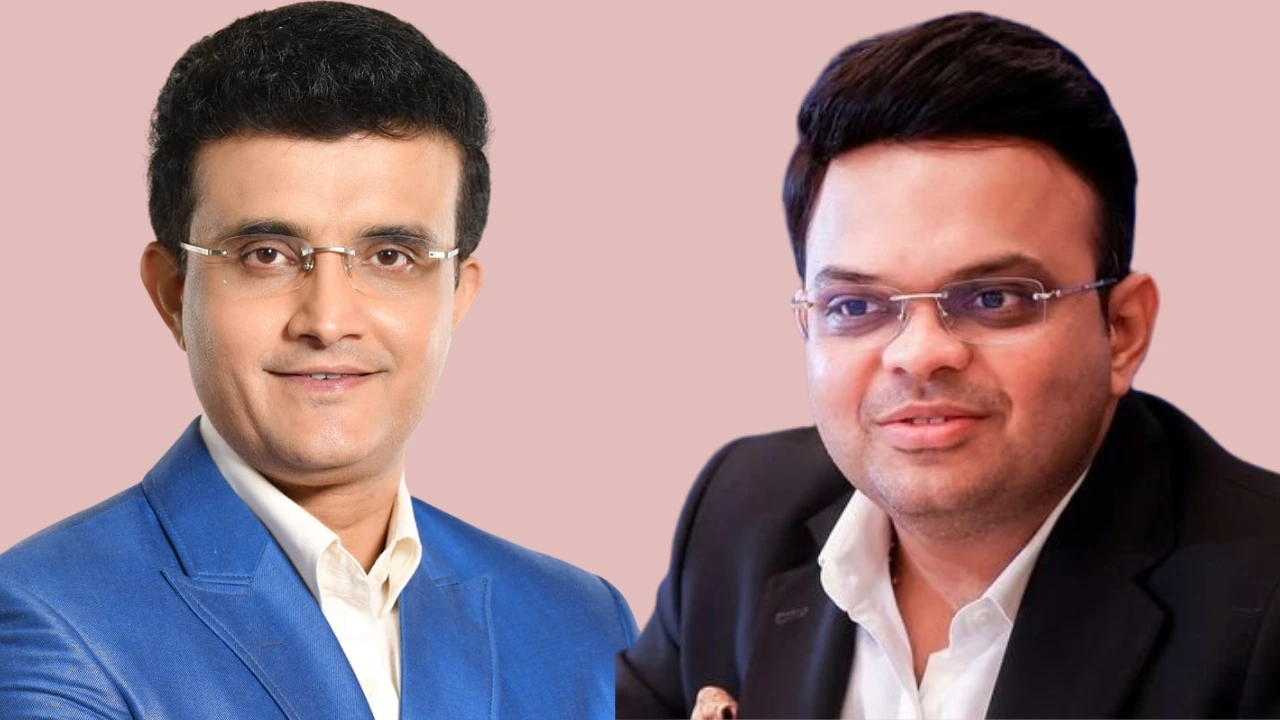
In a wide-ranging exclusive interview with PTI at his residence in Kolkata, former BCCI President Sourav Ganguly offered rare insights into his leadership tenure, including his professional relationship with current ICC Chairman Jay Shah and the behind-the-scenes drama around Indian cricket’s captaincy transition.
A working bond forged in crisis
Ganguly and Shah assumed their BCCI roles in October 2019, navigating one of the most turbulent eras in Indian cricket history — the global COVID-19 pandemic. Despite their vastly different backgrounds — Ganguly, a cricket legend, and Shah, the politically connected son of Home Minister Amit Shah — the two found common ground in their shared vision for Indian cricket.
“He (Jay) had his own way of doing things but the best thing about him was he wanted to do things properly for Indian cricket,” Ganguly told PTI in an exclusive interview at his residence in Kolkata.
Contrary to public perception that Shah’s political lineage would make him inflexible, Ganguly emphasized his integrity and approachability.
“See, he had the power, the support, so you expected certain kind of toughness, stubbornness from him but he would do things for Indian cricket,” he said.
Reflecting on Shah’s entry into the BCCI, Ganguly added: “Relationship was very good. It’s still very good. When he came in September 2019. He was a young boy, straight from Gujarat CA, very cooperative, approachable.“
Shah’s evolution from secretary to ICC Chairman
Over the course of their tenure, Ganguly watched Shah mature into a more seasoned administrator, eventually rising to become the youngest ICC Chairman at age 36.
“Obviously, he had opinions and rightfully so, he wanted to do things and still does, he is the ICC chairman and it is a bigger post,” said Ganguly.
He acknowledged Shah’s player-first mindset and growth on the job: “He is very supportive of players. He got better as he learnt. The good thing about him was he wanted to do good for the game.“
Even as their administrative paths diverged, their professional relationship remains intact.
“He has progressed; he is the ICC Chairman now. You see him at times because you live in different cities. I am not involved in administration, I wish him the best. I saw him in England this time for a little bit. I meet him in ICC meetings because I am the Chair of the (ICC cricket) committee and he wants the game to grow and go forward,” Ganguly said.
He praised Shah’s self-awareness and integrity throughout his rise in cricket administration: “He is very honest, he always had the thought (about) who he was at the back of his mind, what baggage he carried. So, he wanted to do things rightfully and properly all the time. All of us made mistakes, I did, he did. It was never intentional but the game never stopped.“
Behind the scenes of India’s captaincy shake-up
In one of the interview’s most candid revelations, Ganguly also reflected on the fraught transition from Virat Kohli to Rohit Sharma as India’s all-format captain — a move that led to public disagreements and intense media scrutiny.
He recalled how Kohli stepped down as T20I captain after the 2021 T20 World Cup, followed by the BCCI naming Rohit as white-ball skipper, a move that did not sit well with Kohli. However, Ganguly emphasized the board’s preference was always to retain Kohli.
“Quite natural, you have one captain for the white ball. 50 over and 20 over. We always wanted Virat to captain but he did not want to continue. Rohit was captaining Mumbai Indians, was captaining 50 overs and T20. We needed a Test captain because Virat was the Test captain till then, but he finished in South Africa. I always believed Rohit was a very good captain. So obviously, a request from the board went to him. He was reluctant because of workload. I remember having a conversation with him that you do not want to finish your career without captaining India in Test matches. He is a very adjustable and friendly person. If you have a conversation with him, he will accept. Who will not want to be India’s test captain? All these conversations were in person. I was a very hands-on board president. Meet players, talk to players.“
A legacy shaped by leadership and relationships
Ganguly’s presidency, though not without controversy, was defined by a mix of crisis management, administrative evolution, and personal engagement. From dealing with the pandemic’s impact to navigating high-stakes captaincy changes and shaping Indian cricket’s governance alongside Jay Shah, Ganguly leaves behind a tenure that was both impactful and instructive.
His interview not only underscores his influence during a pivotal chapter in Indian cricket but also illustrates the lasting impact of leadership built on mutual respect and purpose — even in a landscape as complex as Indian cricket administration.