When Desert Vipers clinched their first ILT20 championship in early January, the jubilant scenes at Dubai International Cricket Stadium captured something beyond sporting triumph. Amid the confetti and music, the green-clad players celebrated with reusable water bottles in hand—a small detail that encapsulates a much larger story.
Three years into their existence, the Avram Glazer-owned franchise has built something unprecedented in cricket: a championship-caliber team that also happens to be the sport’s most aggressive environmental innovator. It’s a dual identity that seems almost paradoxical in an industry where sustainability has historically been an afterthought, buried beneath priorities like player recruitment, commercial partnerships, and on-field performance.
But for the three executives steering this initiative—CEO Phil Oliver, Chief Strategy Officer Matthew Bailey, and sustainability lead Ben Hardy-Jones—the connection between environmental responsibility and sporting success isn’t paradoxical at all. It’s fundamental.

“There was an acknowledgement that we should be doing the right thing, but it was underpinned by the opportunity to do things differently in the franchise environment,” Oliver explains. When Oliver and Bailey took the idea to Avram Glazer (the American sports mogul who is Co-Chairman of Manchester United and co-owner of the NFL’s Tampa Bay Buccaneers), the buy-in was clear from the outset: support for a bold sustainability agenda wasn’t contingent on the team’s performance. It was part of the franchise’s identity.
The blank canvas advantage
The Desert Vipers entered the ILT20 in its inaugural season with something most sporting organizations never have: no legacy infrastructure to retrofit, no entrenched operational habits to break, and no institutional resistance to overcome. “Cricket needs to do things differently, and we were in the lucky position of having something of a blank canvas when we started,” Oliver notes.
That blank canvas became the foundation for an approach that Bailey, who architected the franchise’s strategic sustainability vision, describes with characteristic directness: “When we really sat down and thought about who we are, it could have gone in any direction.” Instead, the team arrived at what he calls a “blindingly obvious” conclusion: cricket, more than perhaps any other sport, has a sustainability problem it isn’t adequately addressing.

The data is stark. “Cricket is the most affected turf sport globally by climate change,” Bailey explains. “Serious physical exercise over about 31 degrees celsius is immediately prejudicial to human health—and yet here we are still playing.” This reality made sustainability not just ethically imperative but strategically sound. “We know we’re in a competitive marketplace when it comes to commercial opportunity in cricket and franchise cricket,” Oliver adds. “Particularly here in this region, we knew that we had to do things slightly differently.”
The decision to center the franchise’s identity around sustainability was, in Bailey’s words, “a bold decision—Phil’s decision—and it was signed off by Avram Glazer.” The symbolic representation of that commitment? Changing the playing shirt to green. “Being able to play in green and be known for being, we think, the most green cricket franchise in the world by the differences we’re making and the example we’re setting,” Oliver says, frames the entire enterprise.
The business case for green
One of the Desert Vipers’ most compelling arguments for sustainability in sport is also one of the simplest: it makes financial sense. Bailey is refreshingly candid about this. “I consider sustainability and commercial not to be at odds with each other—very firmly part and parcel of the same thing.”
The franchise’s first major operational change demonstrated this principle in action. “We immediately stopped flying business class because a business class flight accounts for three times the carbon of an economy flight,” Bailey recounts. The switch to premium economy for staff members didn’t just reduce the team’s air travel emissions by 36.9% from Season 1 to Season 2 (and overall team travel emissions by 30.1%) —it saved between $60,000 and $80,000. “The initial impacts we saw were cost savings rather than revenue—and to the greatest extent, that remains the case.”
Hardy-Jones, who later joined the organization as an intern fresh from completing his master’s in environmental change and management at Oxford, found similar efficiencies in kit procurement. “Our kit is an area where we’ve made enormous changes. The first thing we did wasn’t materials—it was cutting how much we actually need,” he explains. The audit revealed absurdities: non-playing staff members receiving lots of clothing they would never use. “As a non-playing member of staff, I had dozens of items—things I just don’t need to perform my role. It was crazy.”
By conducting what Hardy-Jones describes as the first comprehensive breakdown a supplier had likely ever been asked to provide, the franchise reduced its team and performance kit footprint by 15.9% from Season 2 to Season 3. “That’s enormous—it saves money, and then we reinvest that into more sustainable materials.” The approach is emblematic of the franchise’s philosophy: sustainability doesn’t require martyrdom. “Once you save money, you prove sustainability in sport works—saving money is one way of making money.”
Materials matter: the kit revolution
After rationalizing quantities, the Vipers turned their attention to materials, becoming the first professional cricket team anywhere to wear a kit made from 100% recycled materials – 87% recycled polyester and 13% recycled cotton. Bailey emphasizes that performance was non-negotiable: “It was absolutely paramount that none of this affected how the boys performed on the pitch.”
The proof? “We didn’t even really tell the players what we’d done—and that season we made the final. That’s a decent proof point.” The material change alone reduced the kit’s carbon footprint by over half. Hardy-Jones notes that this wasn’t cutting-edge technology requiring specialized facilities: “Switching to recycled polyester—something everyone can do today—reduces our carbon footprint by 51%.”
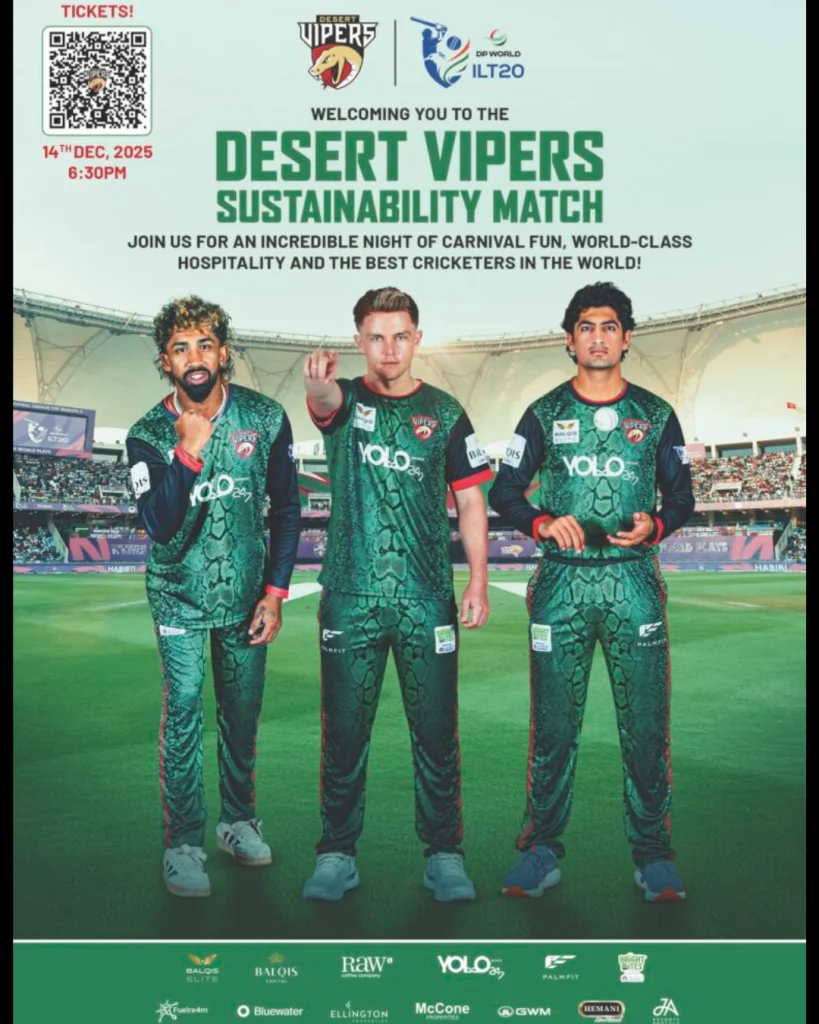
The franchise also implemented practical innovations like using tags instead of embroidered names on equipment bags, ensuring bags remain central property that can be reused year after year. These seemingly minor adjustments compound into significant impact when multiplied across seasons and scaled across the sport. “We do things in a way that can be replicated by others—we’re showing it’s possible,” Bailey stresses.
The 14,400-bottle revolution
If there’s a single initiative that best illustrates the Vipers’ approach, it’s the elimination of single-use plastic water bottles. “By eradicating single-use plastic, we saved 14,400 plastic water bottles every year—just from our team,” Bailey states. Hardy-Jones adds the obvious follow-up: “That’s crazy for one small franchise.”
The solution wasn’t simply handing players reusable bottles and hoping for compliance. The franchise installed water filtration systems that remove PFAs and microplastics, then remineralize the water specifically for athletic performance. “It’s actually better than bottled water,” Bailey argues. The infrastructure investment replaced what he calls an absurdity: “It’s ridiculous in sport that we just accept plastic bottles everywhere without questioning it.”
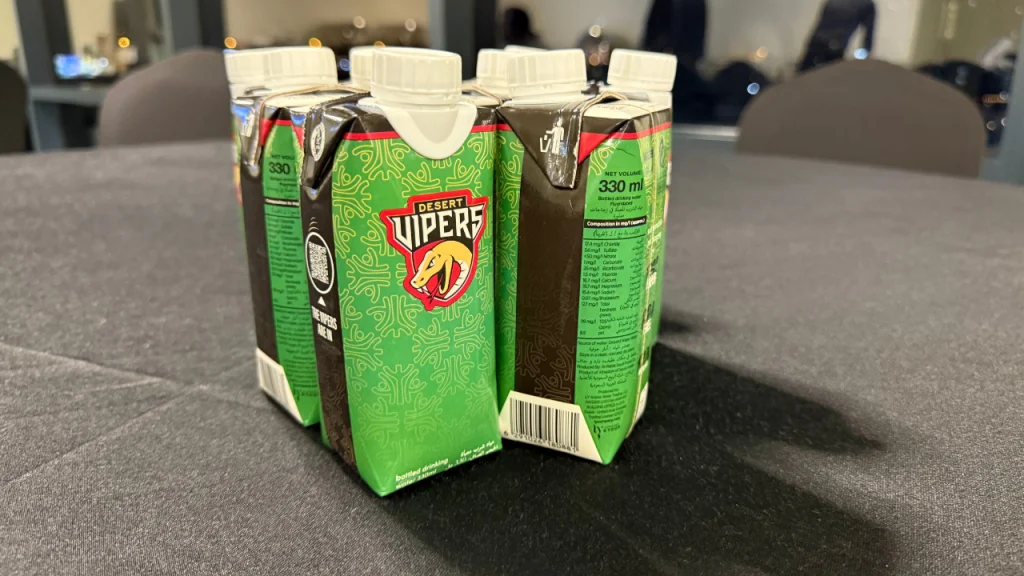
The change extended beyond water to all beverages. “A cricket player does not reach for a bottle of fizzy pop during a match—the fact those things are there is completely absurd,” Bailey observes. “You won’t see a fridge full of plastic bottles next to our dugout anymore.” The transformation is both practical and symbolic, with Hardy-Jones noting behavioral spillover: “We’ve actually seen behaviour change across other teams—players take the Vipers bottle with them and use it all year round.”
This amplification effect—players adopting sustainable behaviors and carrying them to other franchises—represents the real prize. “Giving players something premium that encourages sustainable behaviour helps cross languages and countries,” Hardy-Jones explains. It’s the kind of grassroots influence that formal governance struggles to achieve.
Radical transparency as strategy
In September 2023, the Desert Vipers became the first cricket organization ever to publish its carbon footprint publicly. The decision to bind themselves to annual reporting and reduction targets—50% by 2030 and net zero by 2040—was both ambitious and tactically shrewd. “We bind ourselves to report annually on our carbon emissions and set reduction targets,” Bailey explains.
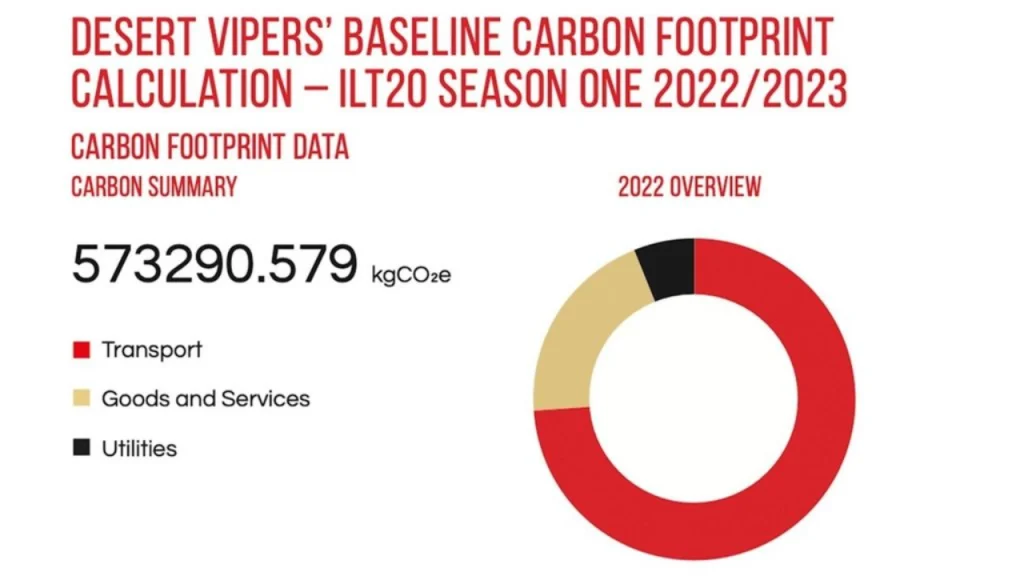
This transparency isn’t just about accountability; it’s about demonstrating replicability. “That comes from being transparent. We report, we account for everything, and we try to learn from any mistakes as we go,” Oliver says. Hardy-Jones elaborates on the approach: “We give the exact emissions of every single thing that we do and break it down into easy-to-understand areas.” The reports don’t hide failures. “If there are areas where we’re bad, we say it—and that’s what helps us improve.”
The franchise views this honesty as essential to credibility. “If you say you played well after a bad game, people know it’s rubbish—and sustainability is the same. People aren’t stupid,” Hardy-Jones argues. The transparency has generated tangible interest from across cricket. “We feel that in tangible ways—people getting in touch and asking what we’re doing and how they can follow our example,” Oliver notes.
Beyond carbon: people and community
The Vipers’ definition of sustainability extends beyond environmental metrics to encompass social impact. “Sustainability to us means people and community just as much as environment,” Bailey emphasizes. Hardy-Jones concurs: “Sustainability is environmental and social. Doing something for the planet is ultimately doing something for people.”
This philosophy manifests in the franchise’s community engagement, particularly youth education. “This calendar year we’ve coached 10,000 kids in the UAE through cricket and basic sustainability education,” Bailey reports. The programs don’t treat sustainability as separate from sport but as intrinsically connected through concepts like nature and biodiversity.
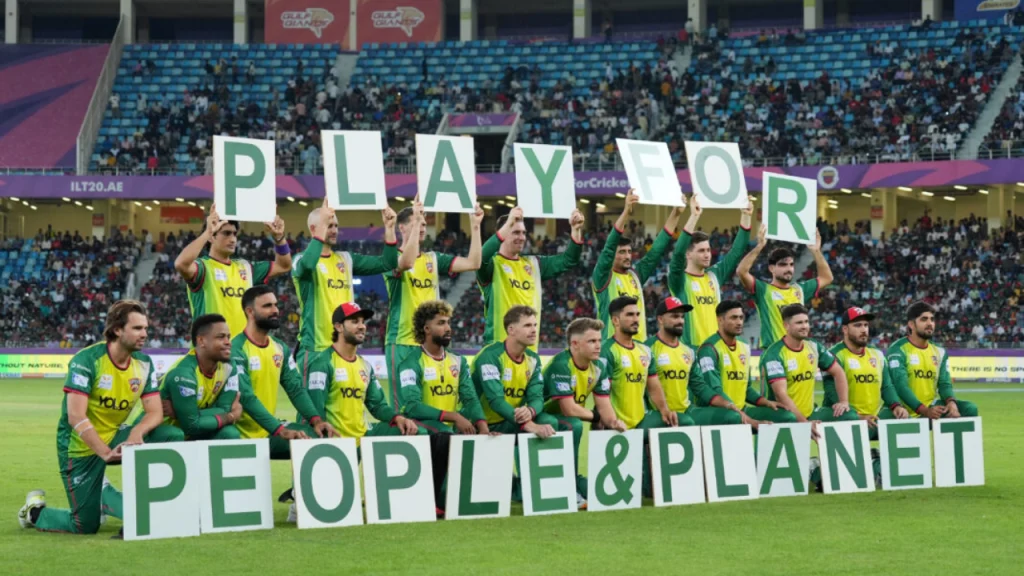
“A connection with nature is a gateway to thinking about sustainable behaviours,” Bailey explains. This season, nature has become the franchise’s main public-facing focus, with messaging built around the simple truth: “Without nature, there is no sport. Full stop.” The franchise uses biodiversity stripes—visual representations showing a 73% decline in global wildlife populations since 1973, then reversing to show the possibility of recovery—to make abstract concepts tangible.
Hardy-Jones highlights another dimension of the social mission: creating career pathways for young professionals passionate about environmental issues. “We’re trying to create this model where we provide opportunities to young people straight out of university who have expertise, give them a platform to make a difference, and hopefully jobs arise out of that.” His own trajectory—from intern to dedicated sustainability lead—proves the model’s viability. “I think that’s quite unique in sport.”
The cultural shift: normalization over evangelism
One of the franchise’s most significant achievements is what Oliver calls “normalisation.” “We’ve normalised a lot of the things we’re doing—like removing plastic from our team environment. These are just normal things now,” he says. “The players expect it when they turn up to play for us.”
This normalization required cultural buy-in, which wasn’t automatic. “It hasn’t been easy—we probably lost a couple of employees early on—but that’s part of committing properly,” Bailey admits. The approach with players has been notably non-confrontational. “This would fail if we were running it down their throats,” he acknowledges. Instead, the strategy focuses on integration and ease. “We embed it into the culture and make it easy—we’re only with players for a short window,” Hardy-Jones explains.
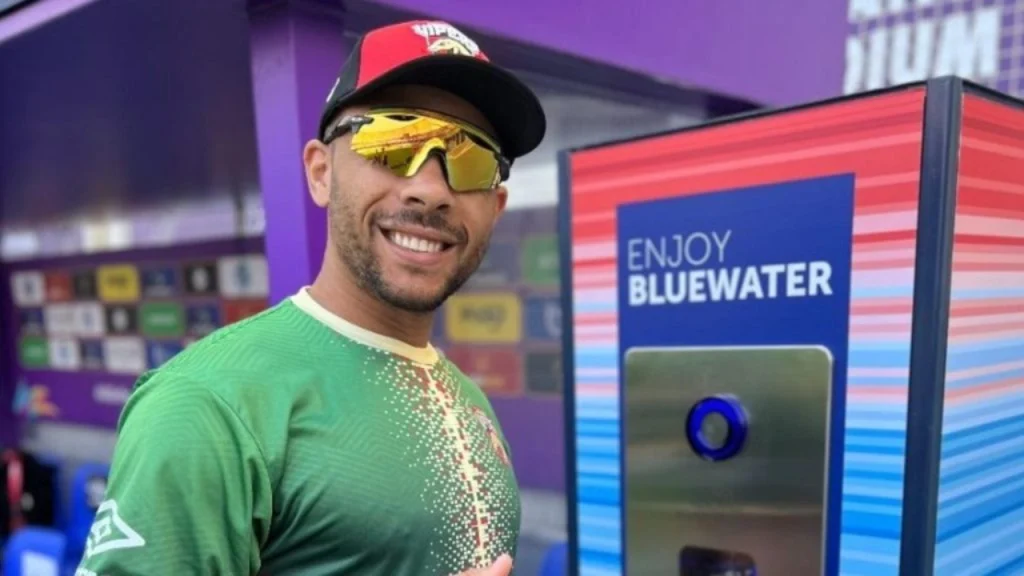
The evolution is visible in player comfort levels. “If I rewind to season one, it would have been hard to imagine players being this comfortable talking about it,” Bailey reflects. That comfort matters because player influence extends far beyond the franchise. “The real change happens when superstars are seen filling up reusable bottles in front of billions of people,” he argues.
Sport’s superpower: the amplification effect
Underlying the entire Desert Vipers sustainability mission is a conviction about sport’s unique power to influence behavior at scale. “Sport and its power to connect with people is probably unrivalled as a mechanism for delivering important messages, and it undervalues itself,” Bailey contends.
This amplification effect operates on multiple levels. At the individual level, players carry practices learned with the Vipers to other teams. At the institutional level, franchises across cricket are beginning to inquire about replicating Vipers’ initiatives. “We’ve shown that it is possible in a high-performance sporting environment to make these changes,” Oliver says. “High performance is very conducive to sustainability measures and initiatives.”
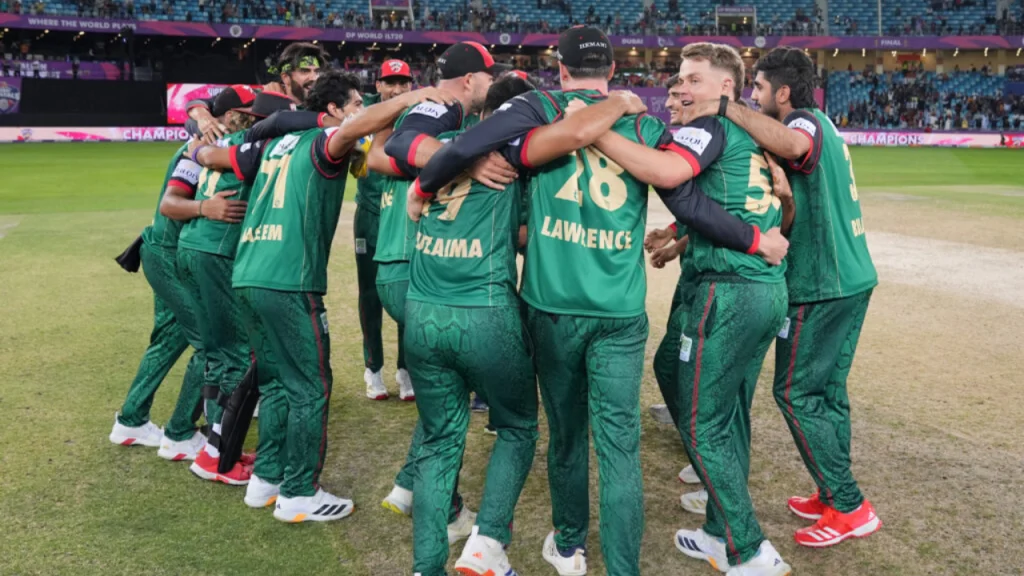
At the broadest level, sporting events watched by millions create opportunities for behavioral modeling that few other platforms can match. “Engaging your local and international fan base by being very community-orientated is all part of sustainability,” Oliver notes. “Sports teams can do more of that—and definitely in cricket.”
Bailey frames this as both opportunity and responsibility: “We chose to do this because we want to show there is a better way and have a positive impact on the sport.” The goal isn’t to be unique but to be influential. “There’s no point in us being the only cricket franchise placing sustainability at the heart—ultimately it’s a team effort,” Hardy-Jones emphasizes. “The holy grail is other franchises adopting the solutions we’ve trialled.”
Future-proofing the business model
Beyond the ethical and environmental arguments, Bailey identifies a commercial imperative that cricket franchises ignore at their peril: sustainability reporting will soon be table stakes for sponsorship. “Sponsors will increasingly need reporting across their entire supply chain—cricket teams included,” he explains. “If a team can’t report on impact, it’s going to be harder to sell sponsorship in an already tough environment.”
This regulatory and commercial landscape is shifting rapidly, and the Desert Vipers are positioning themselves ahead of the curve. “We’re part of a movement now. These sorts of things are going to become more normalised in cricket,” Oliver predicts. “The future could look very different for sports teams all around the world.” The franchise’s early investment in measurement, reporting, and reduction infrastructure means they’re prepared for changes that will likely catch others flat-footed. “We’re going to be very well prepared for those changes when they come.”
Bailey’s confidence in this trajectory is absolute: “If you’re trying to change things in sport, the best way is to show a new way that’s more commercially attractive.” The Desert Vipers aren’t just proving sustainability is possible in cricket—they’re demonstrating it’s profitable and necessary.
Not activists, just operators
A striking aspect of the Desert Vipers’ sustainability leadership is that, with the exception of Hardy-Jones, none of the principals are career environmentalists. Oliver’s background is in cricket analytics, having founded CricViz, one of the sport’s most influential data companies. Bailey spent years in sports marketing, partnerships, and commercial strategy, working everywhere from IMG to esports organizations. Neither arrived at the Vipers with a history of environmental activism.
“We’re not activists—we’re just trying to do the right thing,” Bailey states plainly. This positioning—not as zealots but as pragmatists—may actually enhance their influence within cricket’s conservative establishment. They speak the language of business, performance, and competition while advancing an environmental agenda that might otherwise face resistance.
Oliver frames his transition from CricViz founder to franchise CEO as similar challenges: “They’re both startups if you want to look at it that way.” The franchise required the same entrepreneurial mindset, the same willingness to experiment and iterate. “Having the opportunity to start something fresh with great people around me was something I’ve loved doing.”
Hardy-Jones, meanwhile, brings the technical expertise but emphasizes practical impact over ideological purity. “Plastic isn’t inherently evil—pointless plastic is entirely avoidable,” he argues. This pragmatism—focusing on what’s achievable and replicable rather than what’s theoretically optimal—runs through the entire operation. “What we try to do is make things repeatable, easy, and genuinely impactful.”
The long game
Despite their progress, the Desert Vipers executives are clear-eyed about what remains ahead. “We know we’ve made a lot of progress, but there is still a way to go, partly because we need to bring others with us on that journey,” Oliver acknowledges. The franchise’s approach isn’t about racing ahead alone but about creating a movement.
Bailey’s commitment to the mission is personal and long-term: “I’m not going to stop until I’ve sorted out this problem.” But sorting out the problem means systemic change, which requires influencing stakeholders across cricket—from other franchises to governing bodies to sponsors to fans. “We’re making a difference by making small changes that are very easy for others to make as well,” Oliver emphasizes.
The franchise continues to evolve its approach, learning and adjusting as it goes. “We don’t want to be adding things just for the sake of it—it’s about taking small steps where we can,” Oliver says. The focus remains on demonstrated impact and commercial viability. “No one who understands cricket can tell me that this isn’t better than a fridge full of plastic bottles,” Bailey – pointing to the Vipers’ water stations – argues with characteristic conviction.
The emphasis on authenticity and credibility remains paramount. “Authenticity matters. That’s why we have checks, balances, and proper expertise behind everything we do,” Bailey stresses.
Hardy-Jones adds an illustration of this authenticity and expertise: “We offset 100% of emissions in Season 1 and have partnered with Vuelta Carbon to offset 100% of emissions in Season 4, but we didn’t offset emissions in Seasons 2 or 3 — this was because we spent quite a bit of time looking for the right offsetting projects which we could support.”
Championship form
The Desert Vipers’ first ILT20 championship arrived in their third finals appearance, a trajectory that mirrors their sustainability journey—persistent, improving, and ultimately successful. “It’s all down to the team, on and off the field—that’s why it’s such an exciting future,” Oliver reflects.
The franchise has proven that environmental leadership and competitive excellence aren’t competing priorities but complementary ones. They’ve shown that sustainability initiatives can save money, attract players, engage communities, and prepare organizations for regulatory and commercial futures that cricket is only beginning to reckon with.

Perhaps most importantly, they’ve demonstrated that change is possible without waiting for perfect conditions or universal consensus. “You learn as you go. You can’t make all the changes you want when you’re trying to build a long-lasting legacy,” Oliver admits. “That’s why we work all year round to be proactive, in Dubai and beyond.”
The Desert Vipers’ sustainability mission has already influenced players, sparked conversations across cricket, and provided a blueprint that other franchises are beginning to examine. Whether their green revolution spreads throughout cricket depends partly on factors beyond their control—regulatory shifts, sponsor demands, governance decisions.
But the franchise has established something crucial: proof of concept. They’ve shown that cricket can do things differently, and that doing things differently can work. For a sport facing existential questions about its relationship with a changing climate, that proof might be their most valuable championship yet.