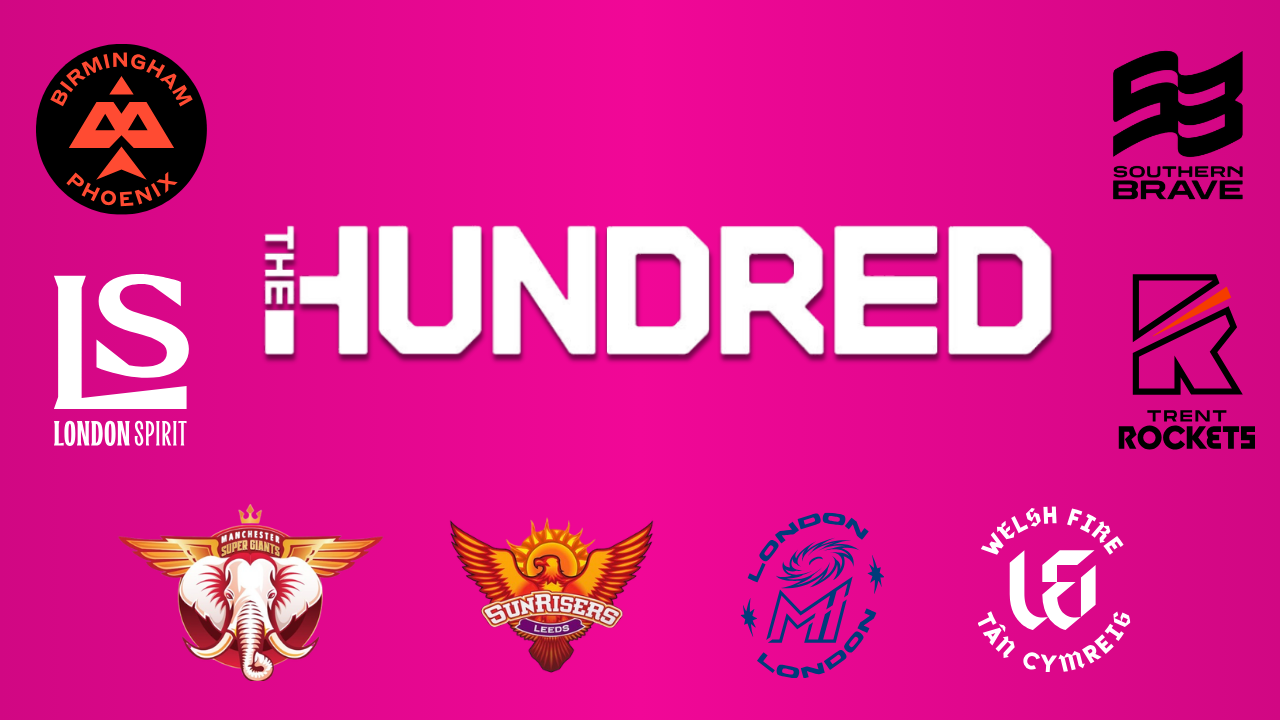
The Hundred returns for its 2026 edition on Tuesday with more changes than any previous season, as all eight franchises begin competing under new ownership structures for the first time and several teams take to the field under new names, new colours and new identities. The competition, which runs from 21 July to 16 August, opens with a women’s fixture between MI London and Sunrisers Leeds at The Oval before the men’s sides meet at the same venue later that evening.
A competition transformed by overseas investment
As previously reported by cricexec, the ECB completed the sale of stakes in all eight Hundred franchises, generating £520 million in investment earmarked for reinvestment into English and Welsh cricket at both professional and grassroots levels. This is the first season in which all new ownership groups are fully operational, giving investors their first genuine opportunity to shape the competition on and off the field. Four of the eight franchises have ownership groups directly affiliated with Indian Premier League sides, a development that has left a visible mark on the competition’s identity ahead of the new campaign.
Three teams playing under new names
The most visible consequence of the ownership shake-up is the rebranding of three franchises. The Northern Superchargers are now Sunrisers Leeds, aligned with the Sun Group that owns IPL side SunRisers Hyderabad and holds the entirety of the Leeds franchise. The Oval Invincibles have become MI London following the Ambani family’s Reliance Industries Limited securing a 49 per cent stake, connecting the franchise to five-time IPL champions Mumbai Indians. The Manchester Originals have been renamed Manchester Super Giants after the RPSG Group, which controls Lucknow Super Giants in the IPL, acquired a 70 per cent stake in the club.
The remaining five franchises have retained their names. Trent Rockets saw Chelsea co-owner Todd Boehly’s Cain International complete a 49 per cent acquisition in late 2025, while GMR Group — whose portfolio includes IPL’s Delhi Capitals and Hampshire — holds a 49 per cent stake in Southern Brave. American-based Tech Titans own 49 per cent of London Spirit, and Indian-American businessman Sanjay Govil, who also owns Major League Cricket’s Washington Freedom, holds a 50 per cent share in Welsh Fire. Birmingham Phoenix, meanwhile, now counts England footballer Jude Bellingham among its stakeholders after he acquired a 1.2 per cent share, with Knighthead Capital Management — who also owns football club Birmingham City FC — holding 48.4 per cent of the franchise.
Kits and colours overhauled across the competition
The IPL affiliations have driven significant changes to kit colours across the competition, with several franchises now wearing the same colour schemes as their Indian counterparts. MI London have moved from green to blue with gold trim to align with Mumbai Indians, while Sunrisers Leeds have switched from purple and white to orange and black to mirror SunRisers Hyderabad. Southern Brave have ditched their green strip in favour of blue and red, matching Delhi Capitals, and Manchester Super Giants have moved from black and grey to the red and blue stripes associated with Lucknow Super Giants.
Birmingham Phoenix will wear black this season having previously appeared in orange and yellow. London Spirit remain in blue but have added an MCC-inspired yellow and red stripe — a nod to the egg and bacon colours associated with the home of cricket. Welsh Fire stay in red and Trent Rockets continue in yellow and orange, leaving those two franchises among the least visually changed sides heading into the new campaign.
A new combined trophy adds cross-competition stakes
One of the most significant structural innovations for 2026 is the introduction of a combined men’s and women’s trophy, awarded to the franchise that performs best across both competitions over the course of the tournament. Every match win — whether in the group stage, the eliminator or the final — earns four points, with a franchise’s men’s and women’s totals combined into a single score. An additional four bonus points are available to the men’s and women’s sides that finish top of the group stage and advance directly to the final without going through the eliminator.
Should two franchises finish level on combined points at the end of the tournament, the title goes to whichever side won a final. If both or neither won a final, the tiebreaker moves to most finalists reached and, if necessary, combined net run rate. The innovation adds a new layer of consequence to every fixture and gives franchises an incentive to build competitive squads across both the men’s and women’s competitions rather than treating them in isolation.
Record auction fees reflect the competition’s growing commercial weight
The first player auction under the new ownership model took place in March and produced several landmark fees. England White-Ball Captain Harry Brook was the most expensive signing in the men’s competition, re-joining Sunrisers Leeds for £460,000 (approx.US$ 616.4K). England batter Phil Salt moved to Welsh Fire for £450,000 (approx.US$ 603K), while fast bowler Jofra Archer was retained by Southern Brave for £400,000 (approx.US$ 536K). England Test Wicketkeeper Jamie Smith also joined the Brave for £300,000 (approx.US$ 402K). Sussex all-rounder James Coles broke the record for the most expensive signing in The Hundred’s history, joining London Spirit for £390,000 (approx.US$ 522.6K), with Welsh Fire paying £200,000 (approx. US$ 268K) for Jordan Cox following his standout performances in 2025.
The women’s auction produced equally notable numbers. England all-rounder Dani Gibson earned £190,000 (approx. US$ 254.6K) at Sunrisers Leeds, while Australia batter Beth Mooney and New Zealand batter Sophie Devine each secured £210,000 (approx. US$ 281.4K) deals with Trent Rockets and Welsh Fire respectively. Eighteen-year-old England spinner Tilly Corteen-Coleman completed a £105,000 (approx. US$ 140.7K) move to Southern Brave, underlining the competition’s capacity to deliver life-changing contracts for emerging talent.
Competition schedule and format
The group stage runs daily from 21 July through to 12 August, with each day featuring a women’s fixture followed by a men’s match at the same venue. The eliminator, in which the second and third-placed sides from each competition meet for the right to face the group stage winners, takes place on 14 August. Both finals are scheduled for 16 August in a double header at Lord’s. Reigning women’s champions Sunrisers Leeds begin their title defence against MI London on opening day, while MI London enter the men’s competition seeking a fourth consecutive title.