
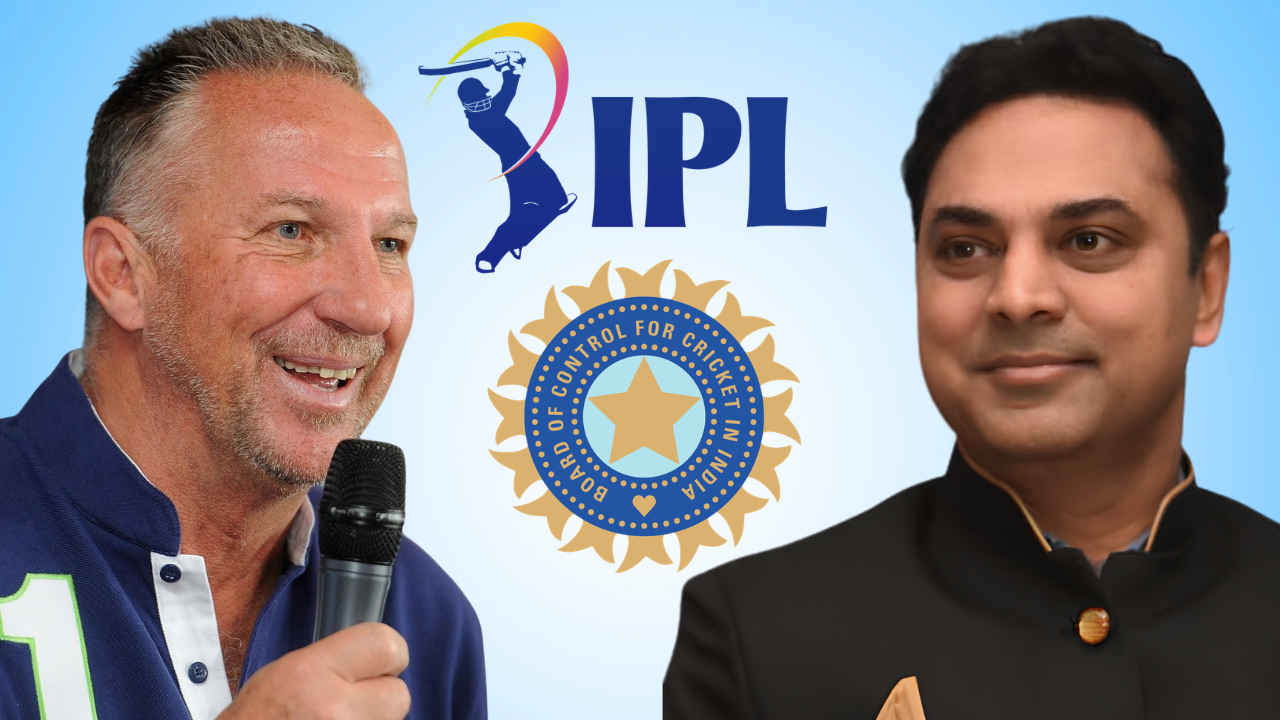
Indian cricket fans strongly criticised former England Captain Ian Botham after his remarks about the Board of Control for Cricket in India (BCCI)‘s financial influence and the Indian Premier League (IPL) reignited debate over the balance of power in world cricket. The discussion quickly expanded beyond social media, drawing responses that linked modern cricket economics with broader questions about history, governance and the sport’s changing commercial landscape.
What triggered the controversy
The debate followed Ian Botham’s appearance on The Overlap: Stick to Cricket podcast, where he discussed the BCCI‘s financial strength after being asked whether India holds too much influence in the global game. Indian broadcasters generate around 85% of the International Cricket Council‘s television revenue while receiving 38.5% of the governing body’s central revenue distribution.
Commenting on India’s financial position, the former England Captain said: “Yeah, well, that’s the thing. Look, they’ve created that with their spending, and that is the, what was it, 900 and something million? It’s getting on for a billion.”
The conversation later turned to the state of cricket in the Caribbean, where Botham linked the movement of leading players to franchise leagues with financial realities at home. Botham added: “Well, that’s a problem, and I think the reason that the best players in the Caribbean nowadays are going to the IPL and other formats normally is that they’re not getting paid the amount they should be, it must be.”
Krishnamurthy Subramanian defends India’s cricket economy
The controversy intensified after India’s former Chief Economic Adviser Krishnamurthy Subramanian responded on X, arguing that criticism of India’s financial position ignored Britain’s colonial history and the commercial transformation driven by Indian cricket.
Ian Botham (no, I will not call him “Sir”) says India’s financial dominance in cricket is a “problem” and the wealth should be “distributed more fairly.”
Let me get this straight.
Britain ruled India for nearly 200 years. Drained an estimated $45 trillion from the subcontinent.… pic.twitter.com/5Hv5gcZ52b— Prof. Krishnamurthy V Subramanian (@SubramanianKri) June 25, 2026
Introducing his response, Subramanian wrote: “Ian Botham (no, I will not call him ‘Sir’) says India’s financial dominance in cricket is a ‘problem’ and the wealth should be ‘distributed more fairly.’”
Referring to Britain’s colonial rule in India, he added: “Engineered famines that killed millions. Systematically dismantled industries so Indian textiles couldn’t compete with Lancashire mills. Extracted timber, cotton, opium, indigo, and called it civilisation.”
He continued by arguing that concerns over fairness had not surfaced during that period, writing: “Not once did Botham’s Britain worry about ‘fair distribution.’”
India’s commercial rise becomes part of the debate
Subramanian argued that India’s current financial position in cricket reflects investment, audience growth and the evolution of the IPL rather than historical exploitation.
He wrote: “India then rebuilt itself from near-zero. Created the IPL, which is the most valuable cricket property on the planet. Built the audiences, the passion, the broadcast revenues that turned cricket from a colonial gentleman’s sport into a global business worth billions.”
He continued: “Every rupee India earns in cricket was built. Not extracted. Built.”
Subramanian also questioned the timing of criticism directed at India’s financial success, writing: “Now that the money flows toward India rather than away from it, this man is suddenly concerned about equity.”
Addressing the migration of leading West Indies players to franchise cricket, he noted: “And West Indies players choosing IPL contracts over Cricket West Indies? That’s called the market. The same free market Britain championed for two centuries when it worked in Britain’s favour.”
Wider debate over cricket’s financial balance
Subramanian framed the discussion as part of a broader historical argument about wealth distribution, writing: “Colonialism is the greatest redistribution story in history. It just went the wrong way.”
Rejecting suggestions that India should reduce its financial influence within the game, he added: “India doesn’t owe cricket the world a rebate on its own success.”
He concluded: “The hypocrisy isn’t subtle. It isn’t even dressed up well. It’s just bare, brazen, and entirely unsurprised by itself.”
The exchange has added another chapter to the ongoing debate over cricket’s financial structure, with questions surrounding revenue distribution, the influence of the IPL and the BCCI’s position in the global game continuing to generate strong opinions across the sport.
Fans respond to Botham’s remarks
Many of the strongest reactions to Botham’s remarks came from Indian supporters, who argued that criticism of India’s financial position overlooked earlier periods when England occupied a dominant position in international cricket.
The Analyzer, an Indian social media user, wrote: “Interesting. Nobody seemed worried when England practically treated world cricket as its PRIVATE CLUB, hosted World Cups on repeat, & expected everyone else to be GRATEFUL for an invitation.”
Ian Botham says India's financial dominance is a PROBLEM for world cricket.
Interesting. Nobody seemed worried when England practically treated world cricket as its PRIVATE CLUB, hosted World Cups on repeat, & expected everyone else to be GRATEFUL for an invitation 🤡
Back then…
— The Analyzer (News Updates🗞️) (@Indian_Analyzer) June 24, 2026
Another Indian fan responded sarcastically: “Botham should distribute all his wealth and earnings.”
A separate social media user accused Botham of viewing cricket through a colonial lens, writing: “Ahhhh White People Ian Botham can speak for world cricket but how dare brown India speak for itself. @ECB_cricket should explain to Ian that India is not longer a British colony. He can be thankful we are not asking England cricket to bear the consequences of his loose talk.”
Ahhhh White People Ian Botham can speak for world cricket but how dare brown India speak for itself. @ECB_cricket should explain to Ian that India is not longer a British colony. He can be thankful we are not asking England cricket to bear the consequences of his loose talk. https://t.co/PNZ6FUJNLs
— ❄ 𝓐𝓶𝓻𝓲𝓽𝓻𝓪𝓳 ❄ (@AmritrajP) June 23, 2026


