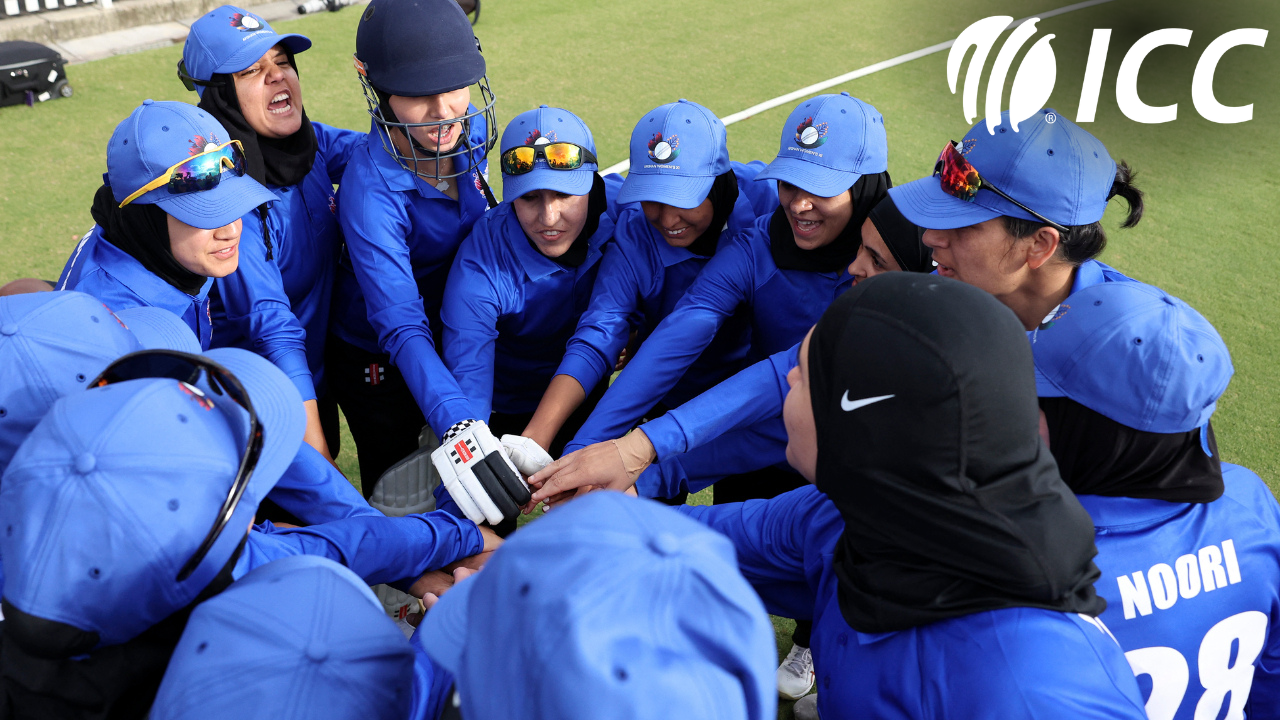
The Afghanistan women’s cricket team has renewed its call for the International Cricket Council to provide a clear roadmap for its future, saying the uncertainty surrounding long-term recognition and funding cannot continue despite the progress made since the players fled Afghanistan. Following their return to competitive cricket during an England tour, the squad is looking to the global governing body for a lasting solution that would allow the players to once again represent Afghanistan internationally.
Players call for certainty over their future
The squad, based primarily in Australia since fleeing Afghanistan in 2021, secured its first victory since leaving the country when it defeated an MCC Foundation XI, with celebrations on the field reflecting the weight of what the moment meant to the group. The win came after years of uncertainty, and the players wasted no time in directing their message toward the ICC.
Speaking to BBC Sport after the team’s victory over an MCC Foundation XI, Afghanistan Women’s Cricketer Firooza Amiri said: “Where are we going to end up? What is the next step? We need a clear answer.”
She added: “We are fully committed to this team and we’ve put everything else aside to play cricket. But we also need the ICC to give us a clear answer. Are they going to support us?”
Despite the joy of that first victory, Amiri has been frank about the difficulty of the journey that brought the players to this point. She has spoken about leaving Afghanistan without any choice, making terrifying escapes past Taliban checkpoints, and then facing the challenge of rebuilding life in a country with a different language, culture and way of life. Cricket, she has said, gave the squad something to hold on to — a sense of belonging at a time when everything else had been stripped away.
England tour provides another platform
As previously reported by cricexec, the team’s England tour followed its meeting with King Charles III at Clarence House, an engagement that the players described as both humbling and deeply motivating. Both Firooza Afghan and Amiri spoke warmly about the King’s interest in their individual journeys and said the encounter gave them real inspiration heading into their opening fixture.
The tour has provided five fixtures in total, including matches at the historic Fenner’s Ground in Cambridge against Cambridge University Cricket Club and a UK Armed Forces women’s team, as well as attendance at the Women’s T20 World Cup final at Lord’s.
Firooza Afghan said: “This match gives the girls confidence. When we play cricket, we’re not just playing for ourselves. It’s for Afghanistan and it’s for the women and girls back in our country.”
Afghan also dedicated the team’s efforts directly to women still living under Taliban rule, saying every shot and every wicket was played for their voice and their freedom. The players see each appearance as an opportunity to remind the world that Afghan women have not been forgotten, and that those still inside the country have people fighting on their behalf.
Long-term support remains the key issue
The current high-performance programme, established jointly by the ICC and the cricket boards of England, Australia and India in April 2025, has provided structured coaching, regular cricket sessions and strength and conditioning support throughout the past year. That programme concludes after the England tour, with discussions over future funding expected to take place at the ICC’s annual conference, and there is currently no plan in place for what follows.
Clare Connor, Managing Director of England Women’s Cricket at the England and Wales Cricket Board, told Press Association: “It’s an answer we’ve got to find. The global cricket community really needs to come together and develop a sustainable plan for this group of players.”
Connor, who played a key role in organising the England tour, said the objectives went beyond providing competitive cricket and that the experience was intended to remind the players that the cricket community still cares deeply for them. She described the encounter with the players as unbelievably special, saying hearing their voices, their stories and witnessing their love for the game had left a lasting impression.
Amiri also pointed to FIFA’s recent decision to restore Afghanistan’s women’s national football team to international competition as evidence that governing bodies can act when the will is there. “They deserve to be playing as Afghanistan’s national women’s football team, and we deserve the same thing,” she told BBC Sport.
Wider support continues to grow
Backing for the team’s campaign has extended well beyond cricket. At Fenner’s Ground in Cambridge, academics and community figures described the players’ return to the field as a landmark moment for Afghan women and girls everywhere.
Sir Laurie Bristow, President of Hughes Hall, told BBC News the fixtures represented a celebration of women’s sport and a public act of solidarity, saying the matches sent a clear message of support to those still living under Taliban restrictions. The event had been years in the planning, and hosting the team at a ground where generations of England cricketers had started their careers carried its own significance.
Afghan journalist and Hughes Hall By-Fellow Zahra Joya told BBC News: “It is a historical moment for Afghan girls, that they have this opportunity to play, and it shows their resilience and passion, their desire in sports.” Joya also warned that without continued international backing, future generations of Afghan girls risked losing hope entirely.
Campaign extends beyond cricket
For the players, recognition has never been solely about returning to international competition. The campaign is also intended to ensure that the voices of Afghan women and girls continue to be heard at a time when opportunities inside the country remain severely restricted under Taliban rule.
Amiri told BBC Sport: “We’re hoping that after all these matches and all the hard work we’ve put in, the ICC will see this team, recognise us, and finally give us what we deserve.” With the ICC’s annual conference approaching and the current funding programme drawing to a close, the decisions made in the coming weeks will determine whether the players’ years of persistence are finally rewarded with the recognition they have sought since leaving Afghanistan.