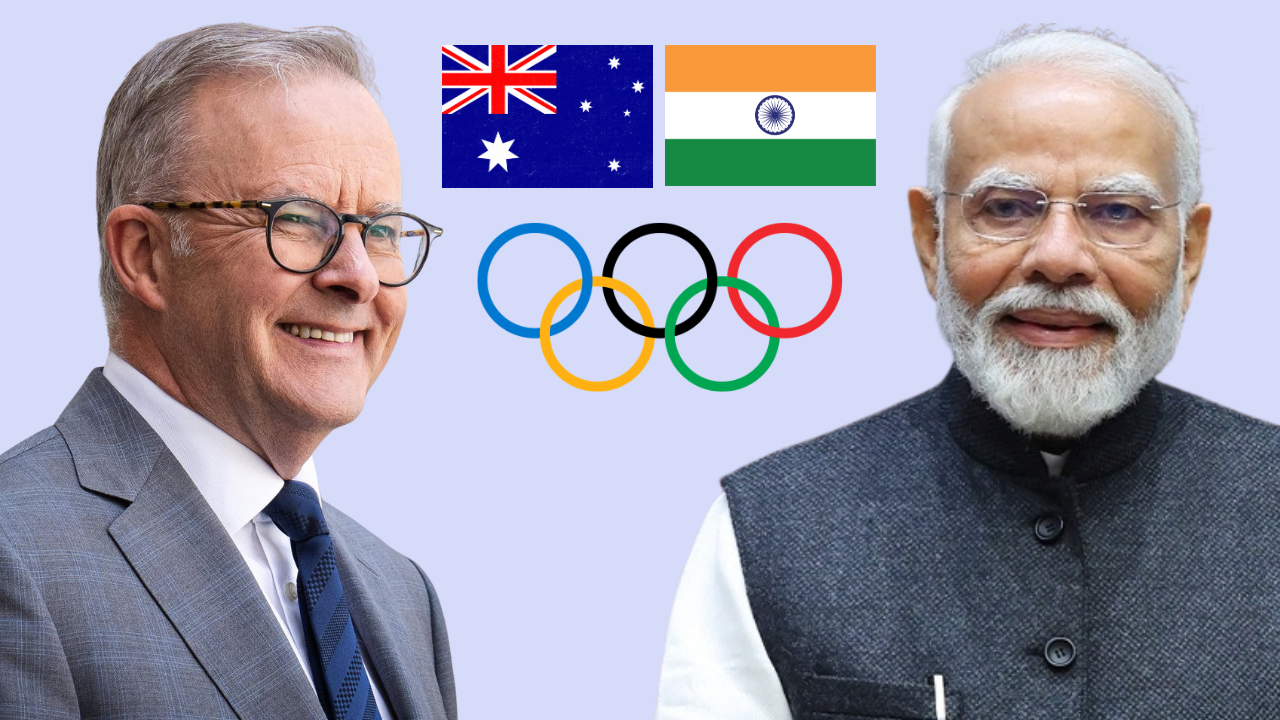
Australia has reaffirmed its support for India’s bid to host the 2036 Olympic Games as the two countries unveiled a new long-term sports partnership aimed at strengthening cooperation across elite sport, coaching, sports science, technology and investment.
Speaking at the launch of the India-Australia Sports Collaboration Roadmap at the Melbourne Cricket Ground, Indian Prime Minister Narendra Modi outlined India’s ambitions to host a series of major global sporting events over the coming decade.
“India is set to host the Commonwealth Games in 2030. We are also striving to host the Olympics in India in 2036. Brisbane will host the Olympics in 2032. Sports infrastructure will be developed on a mega scale to host these global events,” Modi said.
#WATCH | Melbourne, Australia | During his visit to Melbourne Cricket Ground (MCG), Prime Minister Narendra Modi says, "India is set to host the Commonwealth Games in 2030. We are also striving to host the Olympics in India in 2036. Brisbane will host the Olympics in 2032. Sports… pic.twitter.com/FdFSa4tm0Y
— ANI (@ANI) July 10, 2026
Olympic ambitions strengthen sporting partnership
Australia’s backing represents another significant step in India’s campaign to stage the Olympic Games for the first time, while also highlighting the growing role sport is playing within the broader bilateral relationship.
Australian Prime Minister Anthony Albanese reaffirmed Canberra’s support during the event, saying: “And with India hosting the 2030 Commonwealth Games, Australia hosting the 2032 Olympics, and India bidding for the 2036 Olympics, which I’m certain Australia will support, there is a decade of opportunity ahead of us for more friendly rivalry, serious contests, and increased cooperation right across the board.”
"Australia to support India's 2036 Olympic bid."
– PM Anthony Albanese at Melbourne Cricket Ground with PM Modi pic.twitter.com/czW1pWMtg7
— News Arena India (@NewsArenaIndia) July 10, 2026
The roadmap was launched as a framework to deepen collaboration in areas including high-performance sport, coaching, research, sports science, technology, industry investment and youth engagement, building on sporting links between the two nations.
Roadmap broadens cooperation beyond cricket
While cricket remains a central pillar of the relationship, the initiative is designed to extend cooperation across a much wider sporting landscape through knowledge sharing, athlete development and institutional partnerships.
Modi said: “Sports are a strong pillar of the relationship between India and Australia. It gives me great pleasure to launch the India-Australia Sports Collaboration Roadmap today along with Prime Minister Albanese. Through this initiative, we will strengthen cooperation not only in cricket but across a wide range of sports as well.”
The roadmap also proposes an India-Australia Youth Sports Festival to encourage greater sporting exchanges between young athletes, alongside collaboration on high-performance centres, coach education, para-sport, research and sports technology.
Wider sporting collaboration continues to expand
As previously reported by cricexec, Chennai will host the opening match of the 2026–27 Big Bash League season, marking the first official fixture from a foreign domestic cricket league to be played in India.
The roadmap further identifies opportunities for greater collaboration in sports industry investment, event management, sports equipment manufacturing, athlete wellbeing, women’s sport and major event delivery as both countries prepare to host significant international competitions during the next decade.
Highlighting the broader significance of the initiative, Albanese said: “Australia and India are united by our love and passion for sport. This sports roadmap will focus on practical priority areas such as capability building, technology and research to strengthen this cornerstone of our bilateral relationship.”
With India preparing for the 2030 Commonwealth Games and pursuing the 2036 Olympics, and Australia set to host the Brisbane 2032 Olympic Games, both governments have positioned the new roadmap as the foundation for closer sporting cooperation over the coming decade.