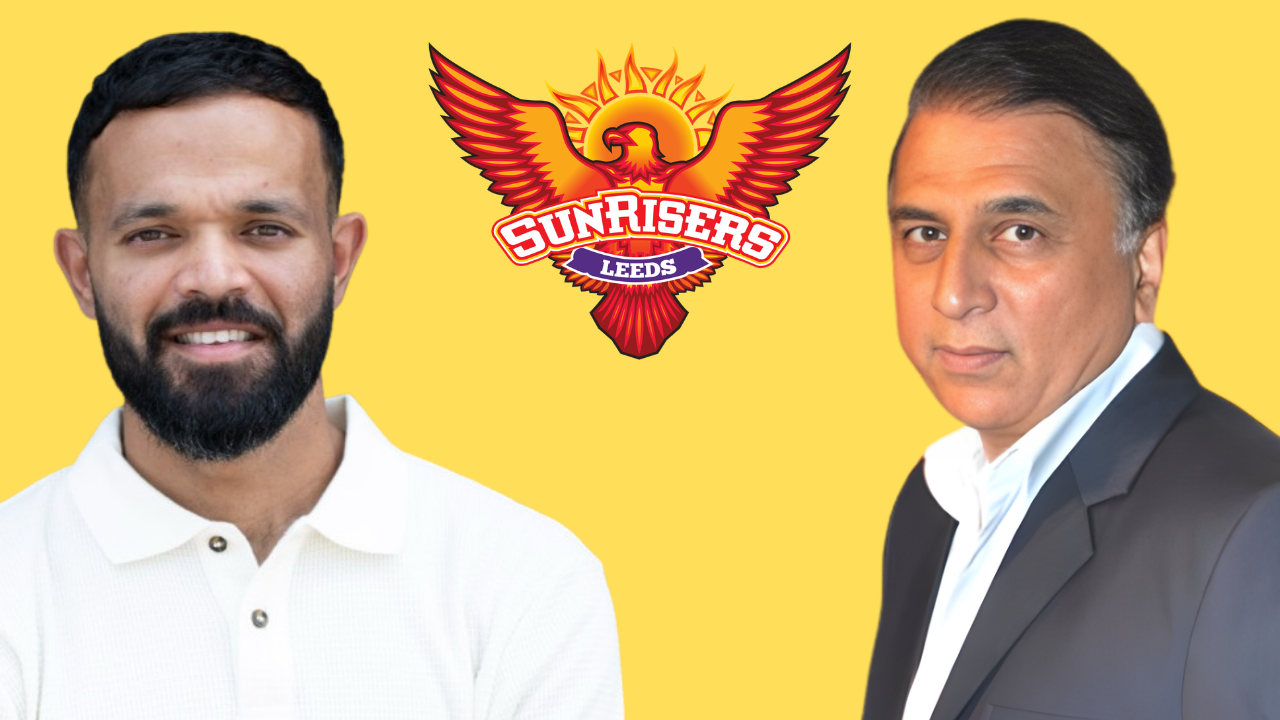
Cricket’s global franchise landscape is once again colliding with long-standing political sensitivities — and this time, the fallout has spilled directly onto social media. Abrar Ahmed’s signing has quickly escalated into a wider industry debate involving one of India’s most respected voices and a former England cricketer unafraid to respond.
Azeem Rafiq, reacting on X to Sunil Gavaskar’s recent remarks about Indian-owned teams signing Pakistani players, did not hold back. “This is absolutely ridiculous & should be condemned. How are these comments acceptable? I don’t care how many runs you have scored. Vile stuff from Gavaskar,” he wrote.
This is absolutely ridiculous & should be condemned ..
How are these comments acceptable? I don’t care how many runs you have scored
Vile stuff from Gavaskar https://t.co/sLYtUKmGnZ
— Azeem Rafiq (@AzeemRafiq30) March 16, 2026
Rafiq escalates criticism with follow-up post
The Karachi-born former Yorkshire cricketer continued his response with a second pointed message, questioning Gavaskar’s stance beyond written commentary. “Has Gavasker boycotted commentating in any of the fixtures? Guess not..,” he added.
Has Gavasker boycotted commentating in any of the fixtures?
Guess not .. https://t.co/FHHawQt38u
— Azeem Rafiq (@AzeemRafiq30) March 16, 2026
The back-to-back posts quickly amplified the conversation, shifting focus from a single signing decision to the broader consistency of positions taken by influential figures in the sport.
Gavaskar’s column triggers controversy around Hundred deal
The reaction stems from Gavaskar’s column in Mid-Day, where he addressed the controversy surrounding Sunrisers Leeds signing Pakistan mystery spinner Abrar Ahmed for GBP 190,000 (approx. US$ 255K) at The Hundred 2026 auction.
In his column, Gavaskar pointed to the historical backdrop shaping Indian franchise decisions. “The furore created by the acquisition of a Pakistani player by the Indian owner of a franchise in The Hundred is hardly surprising. Ever since the Mumbai attacks in November 2008, Indian franchise owners have simply ignored Pakistani players for the IPL”.
He further argued that financial transactions involving Pakistani players carry deeper implications. “Although belated, the realisation that the fees that they pay to a Pakistani player, who then pays income tax to his government which buys arms and weapons, indirectly contributes to the deaths of Indian soldiers and civilians is making Indian entities refrain from even considering having Pakistani artistes and sportspersons. Whether it is an Indian entity or an overseas subsidiary of the entity that is making the payment, if the owner is Indian then he or she is contributing to the Indian casualties. It’s as simple as that”.
Franchise ownership and decision-making under spotlight
Sunrisers Leeds, owned by Chennai-based Sun TV Network — which also owns Sunrisers Hyderabad in the IPL — became the focal point of the debate after securing Abrar Ahmed at the auction.
Head Coach Daniel Vettori indicated that the franchise had identified Abrar as a priority target, particularly after missing out on England spinner Adil Rashid, and that there were no internal discussions restricting the selection of Pakistani players.
However, Gavaskar questioned whether ownership should have intervened, writing: “Daniel Vettori, the coach of the team in The Hundred who hails from New Zealand, may not understand this simple dynamic and so may have wanted some Pakistani players in his team, but surely the owner should have had an understanding of the situation and discouraged the purchase. Is winning a tournament in a format that no other country plays in much more important than Indian lives?”
Wider governance questions emerge across global leagues
The situation has also drawn responses at the administrative level, with BCCI Vice-President Rajeev Shukla clarifying that the Indian board has no involvement in decisions made by Indian-owned franchises operating in overseas competitions.
That separation underscores the growing complexity of cricket’s franchise ecosystem — where ownership structures are global, but political and national considerations remain deeply influential.