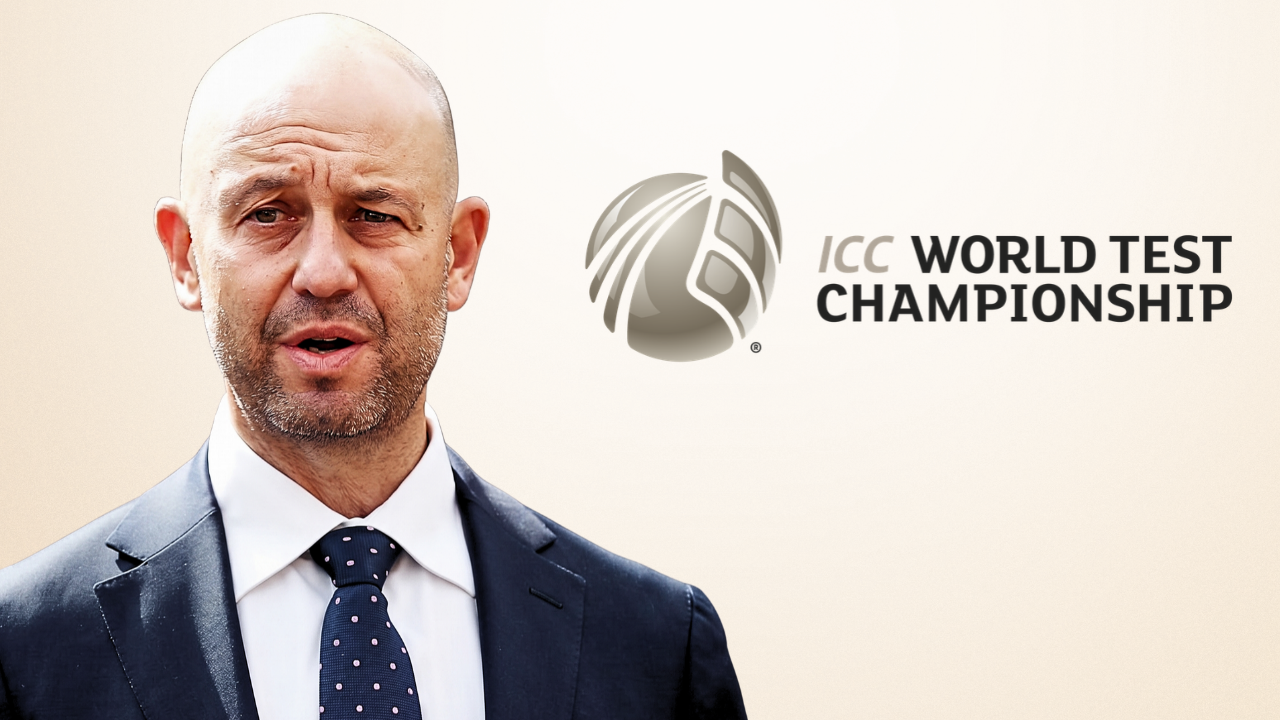
Cricket Australia CEO Todd Greenberg expects the World Test Championship (WTC) to expand to 12 teams from the 2029–31 cycle, but believes the financial realities of international cricket could eventually leave some nations unable to continue playing Tests.
The proposed expansion would bring Zimbabwe, Ireland and Afghanistan into the competition alongside its nine existing participants. It comes as the International Cricket Council (ICC) and national boards negotiate the next Future Tours Programme (FTP), with the future of bilateral cricket forming an important part of those discussions.
Test cricket’s financial model faces difficult questions
Greenberg has questioned whether every Test-playing nation can maintain its international commitments under the existing financial arrangements.
Cricket West Indies provides one example of the commercial difficulties confronting boards. Its CEO, Chris Dehring, recently expressed serious concerns about the financial outcome of a home season featuring Test visits from Sri Lanka and Pakistan, alongside a white-ball tour by New Zealand.
Broadcasting income from those fixtures was limited, as compared to the costs associated with staging an international home season.
The financial challenges extend beyond the immediate returns from bilateral cricket. National boards must also consider the expenditure involved in maintaining domestic structures capable of producing Test players.
Greenberg, who has previously suggested that fewer countries may participate in Test cricket over time, addressed that broader challenge while speaking to reporters in Durban ahead of Australia’s opening Test against South Africa.
He said: “It wasn’t very popular when I said that [about Test cricket], but I still say it’s a statement of fact that over time it’s getting more and more difficult for countries to play Test cricket because it is so expensive. When I say it’s expensive, don’t take that comment as being [about] putting on Test matches. It’s the ability to invest in your system to create a structure for red-ball cricketers. You can’t just magically find 11 players to play Test cricket.”
Bilateral cricket may require a different approach
The financial outlook has also brought traditional international touring arrangements into focus.
Greenberg raised the possibility of countries reconsidering the balance between hosting and touring, particularly where home Test matches generate insufficient commercial returns.
He stated: “I think there is a world where there will be member nations who don’t play Test cricket, or they might have to play more away Test cricket than they do at home in order to keep Test cricket in their country [alive] and keep playing that format. I think we’ve got to think about it differently. This whole reciprocal nature is potentially sending some countries broke.”
The practical difficulties of organising bilateral cricket are evident even in Australia’s discussions with established Test-playing opponents.
Cricket Australia would like to arrange a five-Test home series against South Africa, but the countries’ overlapping international seasons create scheduling complications. Both boards have their own home windows to protect, making an extended tour difficult to accommodate.
Greenberg intends to continue discussions with South African officials and has expressed support for the country’s continued involvement in Test cricket despite its financial challenges.
Pakistan is another potential opponent for longer Australian Test series, with the country’s expatriate community in Australia offering commercial opportunities.
The proposed WTC expansion takes shape
Against that financial backdrop, the ICC is considering a broader World Test Championship that would provide opportunities for all 12 Full Member nations.
Since the WTC began in 2019, participation has been limited to nine teams. Each plays six series over a two-year period, split between three home and three away assignments, before the leading sides contest the final.
A working group chaired by former New Zealand batter Roger Twose previously examined a two-division structure. Several Full Member nations opposed that proposal, and attention subsequently shifted towards an expanded championship.
The revised model could allow one-off Tests to count towards WTC standings, potentially accommodating Zimbabwe, Ireland and Afghanistan without requiring every series to contain at least two matches.
Asked whether the 12-team proposal was likely to proceed, Greenberg responded: “I think that’s what will happen for the next two years.”
The ICC is expected to consider the championship’s future at its meetings in Bali next month, with any revised structure intended for the 2029–31 cycle.
Expansion raises questions about long-term participation
The prospect of including every Test-playing country does not necessarily resolve the financial differences between participating boards.
Greenberg acknowledged the reasoning behind a wider championship while discussing the financial responsibilities facing individual nations.
He explained: “I think for the next iteration [of the WTC], I can understand why it is that number because they want to give every Test nation the opportunity. But, ultimately, countries are going to have to make hard decisions themselves because if revenues don’t continue to come in from the ICC at the levels that we’ve enjoyed, or they can’t generate their own FTP arrangements, then ultimately any business, ours is the same, you can’t continue to distribute more than you earn every year. That’s where global cricket finds itself in some parts.”
The proposed changes therefore sit alongside negotiations over the distribution of international fixtures and the revenues boards can generate from their respective FTP agreements.
Australia’s future schedule reflects competing priorities
Cricket Australia’s forthcoming home commitments illustrate how international boards are planning their bilateral programmes while the next FTP takes shape.
Pakistan are scheduled to visit for three Tests in December 2027, followed by Sri Lanka in February 2028 after the Big Bash League.
Australia will then host India in 2028–29 and England in 2029–30, while its home Test opponents for 2030–31 remain undecided.
Cricket Australia has also reserved January beyond the Sydney Test for other scheduling priorities, except in seasons when Australia tour India.
The existing commitments provide a framework for Australia’s home Test programme as discussions continue over potential longer series against South Africa and Pakistan.
ODI cricket also faces a scheduling review
The wider FTP negotiations include discussions about the future of One Day Internationals, with the ICC examining ways to give bilateral 50-over matches greater competitive significance.
An ICC workshop in Dubai considered possible multilateral competitions, including an Intercontinental Cup involving leading teams from different continents.
However, the introduction of additional tournaments would need to account for existing international commitments and the financial returns attached to bilateral agreements.
Greenberg has suggested that ODI schedules could vary over a four-year World Cup cycle, with more matches played closer to the tournament and fewer during other periods.
He also identified the importance of 50-over cricket in developing international players and the ODI World Cup’s contribution to global cricket revenues as considerations in any restructuring.
The next significant decision concerning the international calendar is expected at the ICC’s Bali meetings, where the proposed 12-team World Test Championship could move closer to formal approval.