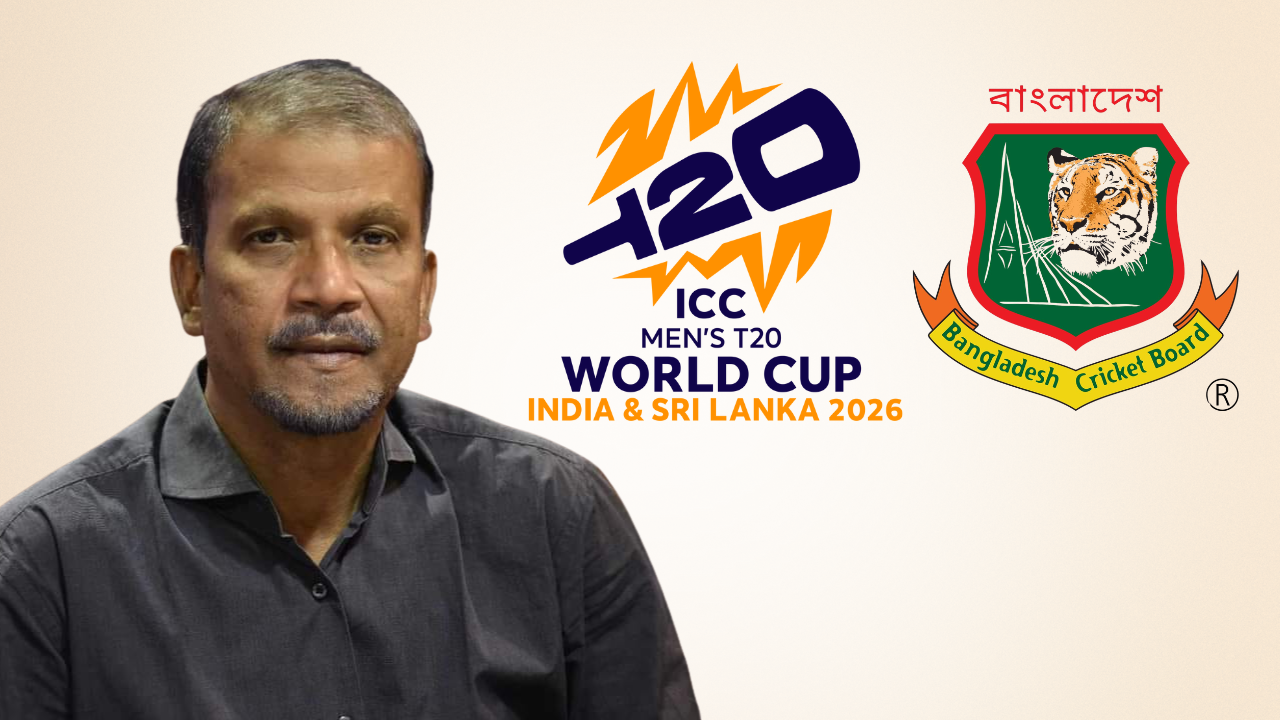
From security concerns to national dignity: a shifting narrative
What began as a firm political stance has now evolved into a layered and conflicting tale of blame deflection, with Bangladesh’s abrupt exit from the 2026 T20 World Cup continuing to draw scrutiny. On Tuesday, February 10, Bangladesh’s sports advisor Asif Nazrul stood before reporters with a notably different explanation than the one he had firmly presented just weeks earlier.
“There is no question of regret. This decision was taken by the BCB and the players, as they made sacrifices for the safety of the country’s cricket, the safety of the people, and to protect national dignity,” he told reporters — marking a dramatic departure from the government-led narrative he had repeatedly pushed in January.
The latest statement comes after the ICC announced it would not impose sanctions on Bangladesh for its non-participation, even confirming that the country would remain in consideration to host an ICC tournament in the 2028–31 cycle. That prompted praise from Nazrul, who added, “The ICC has said there will be no sanctions and that Bangladesh will be considered for hosting an international tournament. This is a brilliant achievement. I salute the Bangladesh Cricket Board.”
January stance: a government directive, not a collective choice
Just three weeks earlier, however, Nazrul had insisted the opposite — stating unequivocally that the choice to withdraw from the World Cup was solely a decision of the Bangladesh government, driven by unresolved security concerns over playing group-stage matches in India.
“I think we did not get justice from the ICC. Whether we will play in the World Cup or not is entirely a government decision,” he told reporters on January 22.
His comments had followed weeks of strained negotiations with the ICC, during which Bangladesh requested that their matches be shifted to Sri Lanka. When the request was denied and the schedule left unchanged, the country opted to exit the tournament altogether, eventually being replaced by Scotland.
Adding to the confusion at the time were revelations that many of the national players had not been consulted before the decision was made. Reports from within the Bangladesh camp indicated that players were briefed after the fact, rather than included in the process. Nazrul later clarified the nature of those discussions.
“The purpose of the meeting was simply to explain to the players why the government took this decision and give them the context. I believe they understood. That was the purpose — nothing else,” he told reporters on January 22.
Political tensions and the Mustafizur flashpoint
While Nazrul’s shifting narrative now places the decision in the hands of the Bangladesh Cricket Board and its players, earlier tensions had clearly been rooted in diplomatic and regional unease. Among the flashpoints was the BCCI’s decision to release Mustafizur Rahman from Kolkata Knight Riders’ IPL squad, which reportedly sparked frustration within Bangladesh’s political circles. That move came amid rising tensions between the two countries and appears to have deepened the divide that led to the withdrawal.
The ICC, despite receiving Bangladesh’s formal request to relocate their fixtures, held firm on its scheduling and eventually replaced them in the tournament lineup after weeks of deadlock.
Aftermath and diplomatic fallout
Bangladesh’s exit triggered a ripple effect across the cricketing world. Pakistan, in a show of solidarity, briefly threatened to boycott their own match against India. However, under pressure and after last-minute negotiations involving multiple parties — including the BCB — Pakistan ultimately reversed its stance.
Bangladesh, while thanking Pakistan for its support, urged the country to play, framing it as a decision for the greater good of the game.
Now, with the tournament underway and Bangladesh on the sidelines, questions linger not just about the decision itself, but about who truly made it — and why the explanation keeps changing.
What remains clear is that the confusion has only deepened Bangladesh’s cricketing and diplomatic complications — and Asif Nazrul’s contradictory statements have done little to clarify the story.