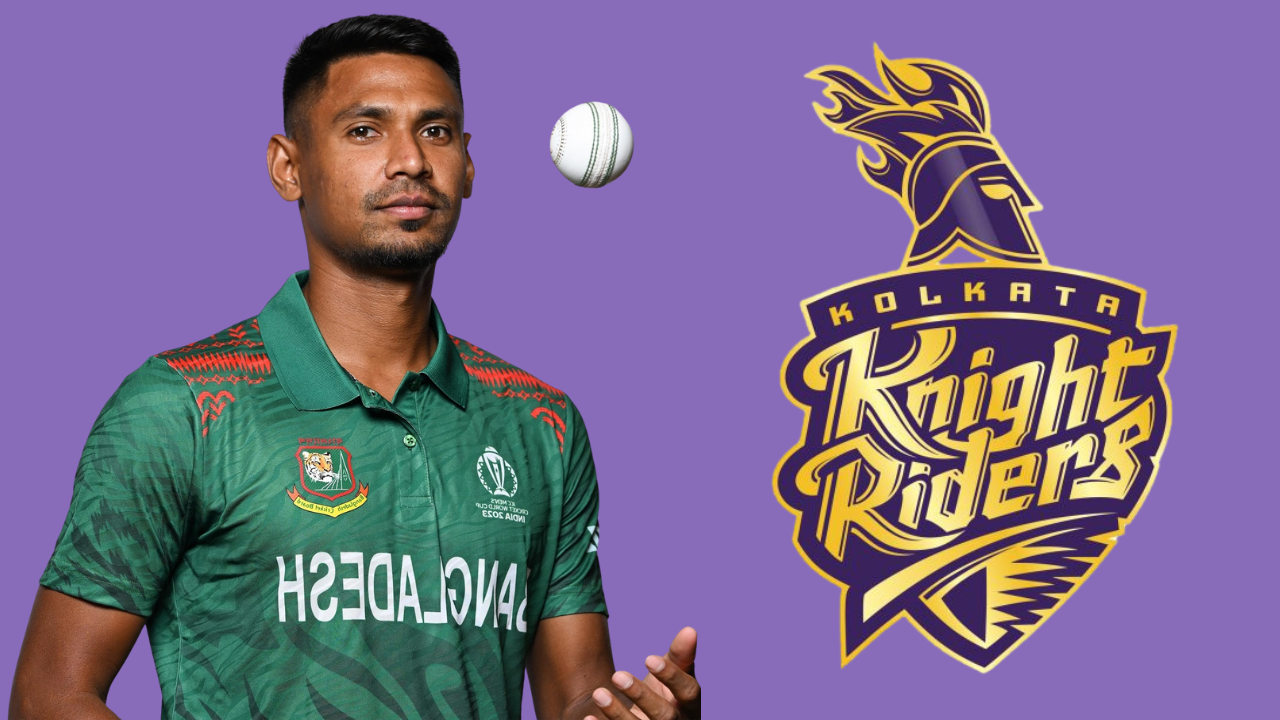
KKR release triggers controversy over politics in sport
The 2026 Indian Premier League was jolted several weeks before its start when Kolkata Knight Riders confirmed the release of Bangladesh pacer Mustafizur Rahman, who had been bought for ₹9.2 crore (approx. US$1 million) at the auction. The move came after the Board of Control for Cricket in India (BCCI) issued a directive to the franchise amid growing political unrest between India and Bangladesh.
The directive followed days of intensifying political and public backlash. Tensions between the two countries had escalated after reports of violence against Hindu minorities in Bangladesh, sparking outrage among several religious and nationalist groups in India. Protests erupted in cities like Ujjain, while fringe outfits issued warnings against Bangladeshi players participating in IPL matches. The issue quickly gained traction online, with calls to boycott matches involving Bangladesh cricketers and harsh criticism directed toward KKR’s co-owner Shah Rukh Khan, who had backed the signing of Mustafizur despite the unrest.
In a statement, KKR confirmed the decision was taken upon the instruction of the BCCI. “Kolkata Knight Riders confirms that BCCI/IPL as the regulator of IPL has instructed it to release Mustafizur Rahman from the squad ahead of the upcoming Indian Premier League (IPL) season. The release has been carried out following due process and consultations, upon the instruction of the Board of Control of Cricket in India. BCCI will allow Kolkata Knight Riders a replacement player in line with IPL regulations, and further details will be communicated in due course,” the franchise stated.
KKR Media Advisory. 🔽 pic.twitter.com/ZUZB620Uv7
— KolkataKnightRiders (@KKRiders) January 3, 2026
The sudden turn sparked immediate political reactions, especially after BCCI secretary Devajit Saikia said, “Due to the recent developments which is going on all across, BCCI has instructed the franchise KKR to release one of their players, Mustafizur Rahman of Bangladesh, from their squad and BCCI has also said that if they ask for any replacement, BCCI is going to allow that replacement,” speaking to ANI.
Mustafizur, who is currently playing in the Bangladesh Premier League, was the only Bangladeshi player picked for IPL 2026. His acquisition and removal have turned him into an unexpected figure at the center of a geopolitical maelstrom.
BCCI’s balancing act amid political sensitivities
The BCCI has faced increasing pressure from various quarters since Mustafizur’s signing. With rising tensions and incidents of communal violence reported in Bangladesh, right-wing organizations in India had demanded action.
Yet, the board’s stance has not been monolithic. In the weeks following the auction, BCCI officials appeared to project differing tones — some cautious, others more assertive. While public and political pressure mounted on the board, officials were reportedly holding consultations with security agencies and keeping tabs on the unfolding situation in Bangladesh. The ambiguity in their public messaging suggested an attempt to balance multiple considerations: diplomatic sensitivities, franchise expectations, and the precedent such a move might set for future international player involvement in the IPL.
According to a report in The Indian Express, the BCCI is expected to seek government approval before taking a final call on the Indian team’s scheduled tour to Bangladesh, reflecting the board’s cautious approach amid the evolving diplomatic situation.
Initially, a senior BCCI functionary told NDTV, “For all foreign players – Bangladeshi or not govt clearance is mandatory. Seven Bangladesh players registered and 1 was picked. Franchise picks players that are in the pool. BCCI has to go by what Govt says. We shall wait for directives.”
Later, in what seemed like a signal of internal disagreement or shifting dynamics, a senior BCCI official told InsideSport, “We have to understand that it is a delicate situation. We have always been in touch with the government on evolving diplomatic situations and haven’t heard anything that would push us to ban players from Bangladesh. So yes, Mustafizur will play in IPL. Bangladesh is not an enemy nation.”
Other sources, however, continued to reflect uncertainty. “Let’s not get into this. It is not in our hands. We have not received any communication from the government directing us to prevent Bangladesh players from participating in the IPL… Can’t comment much as of now,” a BCCI source told IANS.
Mustafizur responds, Bangladesh takes diplomatic steps
Reacting to his ouster, Mustafizur offered a resigned response. “If they release me, there is nothing much I can do,” he said while speaking to BDCricTime.
The fallout extended beyond IPL. Bangladesh’s government is now seeking changes to its World Cup schedule. The move came in direct response to what Bangladeshi officials described as a humiliation on the global stage. Within hours of KKR’s announcement, Bangladesh’s sports ministry convened an emergency meeting with the cricket board, pushing for diplomatic pressure on the ICC. With three of Bangladesh’s four T20 World Cup league games scheduled in Kolkata and the fourth in Mumbai, Dhaka expressed concerns about player safety and political backlash, arguing that a neutral venue like Sri Lanka would be more appropriate under the current circumstances. BCB president Aminul Islam speaking to reporters during a media briefing, said, “The ICC is organising the World Cup; the host is India. If we have to contact anyone, we have to speak to the ICC.”
His colleague, BCB media committee chairman Amzad Hossain, echoed similar concerns: “ICC will decide which is the appropriate venue. Our players’ security is our first priority. The players are our responsibility, so we will do everything to ensure that,” he told reporters.
In an accompanying protest, Asif Nazrul, a government advisor, wrote on Facebook, “I have requested the Adviser for Information and Broadcasting to ensure that the broadcast of IPL matches in Bangladesh is suspended. Under no circumstances will we tolerate the humiliation of Bangladesh, Bangladeshi cricket, or Bangladeshi cricketers. The days of subservience are over.”
Politicians and former players clash over BCCI’s call
Reactions across India to BCCI’s decision have been polarizing. Lok Sabha member and intellectual Shashi Tharoor took to X, formerly Twitter, to ask, “Recalling my views on the subject, now that @bcci has deplorably pulled the plug on @Mustafiz90. And what if the Bangladeshi player in question had been @LittonOfficial or @soumyasarkar_06? Who are we punishing here: a nation, an individual, his religion? Where will this mindless politicising of sport lead us?”
In follow-up remarks to reporters, he elaborated, “Cricket should not be made to bear the burden for attacks on minorities in Bangladesh. We should try to insulate some areas from others. We are reaching out to Bangladesh and urging them to do the right thing to protect and look after their minorities, and this messaging must continue.”
Defending the player, he added, “Mustafizur Rahman is a cricketer and has nothing to do with any of these things. He has not been personally accused of any hate speech or condoning or defending any attacks. Mixing these two things is simply not fair.” He warned that isolating neighbors could backfire: “If we become a country that isolates all of our neighbours, and say nobody is playing with any of them, how does it do any good? It is purely a sporting decision, and we should not let politics come into this. We surround Bangladesh on three sides. We cannot isolate them. We have to play with them.”
Recalling my views on the subject, now that @bcci has deplorably pulled the plug on @Mustafiz90. And what if the Bangladeshi player in question had been @LittonOfficial or @soumyasarkar_06? Who are we punishing here: a nation, an individual, his religion? Where will this mindless… https://t.co/KSftpw0YGa
— Shashi Tharoor (@ShashiTharoor) January 3, 2026
Tharoor’s remarks echoed a growing concern within civil society and parts of the cricketing ecosystem about the dangerous precedent of politicising franchise cricket. The backlash against Shah Rukh Khan, in particular, became a lightning rod for broader cultural anxieties. Several right-wing commentators accused him of ignoring national sentiment by supporting a Bangladeshi player, while others argued that targeting an IPL franchise owner for auction outcomes was an overreach. The intensity of the reactions underscored how deeply entangled cricket, identity, and nationalism have become in the current climate.
1983 World Cup winner Madan Lal expressed concern over cricket being pulled into political turbulence. “You know, I think the BCCI has taken this decision because nobody can challenge them. Not even Shah Rukh Khan, because they come under the BCCI. So the BCCI has taken the decision. But I don’t know why there is so much politics entering sports. I have no idea where cricket is heading, where sport is heading,” he told India Today.
He criticized using athletes as political scapegoats: “The things that happened in Bangladesh are very, very sad. But you see, a lot of these associations take the players into the firing line. That is the problem. They use the players. It’s a very sad thing that is going on. Politics should not be involved in sport.”
He added, “Yes, definitely. Because of what is going on in Bangladesh, that is why they must have taken this decision. I am talking straight here. There must have been pressure from the high command. That is why this decision was taken.” Addressing the backlash on KKR’s owner, he clarified, “What is Shah Rukh Khan’s fault? This is a committee that takes decisions. When they sit in the auction, they are the people who pick the players and everything.”
Debating responsibility and repercussions
Former cricketer Atul Wassan echoed the view that targeting Shah Rukh Khan was misplaced. “…Whatever has happened has cascading effects, and these things were bound to happen in the backdrop of Bangladesh unrest. But blaming Shah Rukh Khan is unfair, as he is not the only owner of KKR and KKR were not the only team bidding for the player. Removing a player will not make any difference…” he told ANI.
He argued that symbolic gestures don’t solve deeper issues: “And just by removing one player, our revenge doesn’t get fulfilled. And I think we should mature a little and think about it. If we have to show our anger to Bangladesh and make sure that they should not be able to take advantage of whatever is beneficial for them, then you did the right thing. But that decision, by pre-empting it, you put all the blame on KKR, or Shah Rukh Khan, that seemed a little strange.”
Wassan further stated, “I think it’s okay. People say politics and sports are different, but they’re not. And we should not compare the situation of India and Pakistan with India and Bangladesh. The problem with Bangladesh can be improved. That country is also in turmoil. There is a lot of transition going on. So we should be a little patient. The government is very mature and understands how it is going.”
Meanwhile, BJP leader Sangeet Singh Som celebrated the BCCI’s action. “Thanks to BCCI for its decision in view of the 100 crore Sanatanis of India. We said yesterday that cognisance will be taken of this matter because the sentiments of 100 crore people cannot be taken lightly…This is the victory of the Hindus of the entire nation,” he told ANI.
He also took aim at the KKR co-owner: “Shah Rukh Khan has understood that he should not go against Sanatanis while living in India. He has also understood that thousands of Sanatanis have made him Shah Rukh Khan.”
Former India captain Mohammed Azharuddin also defended the BCCI’s call. “The board has not done anything wrong. What is happening in Bangladesh isn’t good. But in sports, it is different. However, whatever decision the board has taken, they must have taken it after consulting with the Ministry of External Affairs and the Ministry of Home Affairs,” he told ANI.
As IPL 2026 approaches, Mustafizur Rahman’s exclusion remains a flashpoint in a wider debate over the politicization of sport. With Bangladesh’s World Cup participation also under scrutiny and bilateral cricket ties in flux, the unfolding developments are likely to shape not just the tournament, but also the future of cricket diplomacy in South Asia.