
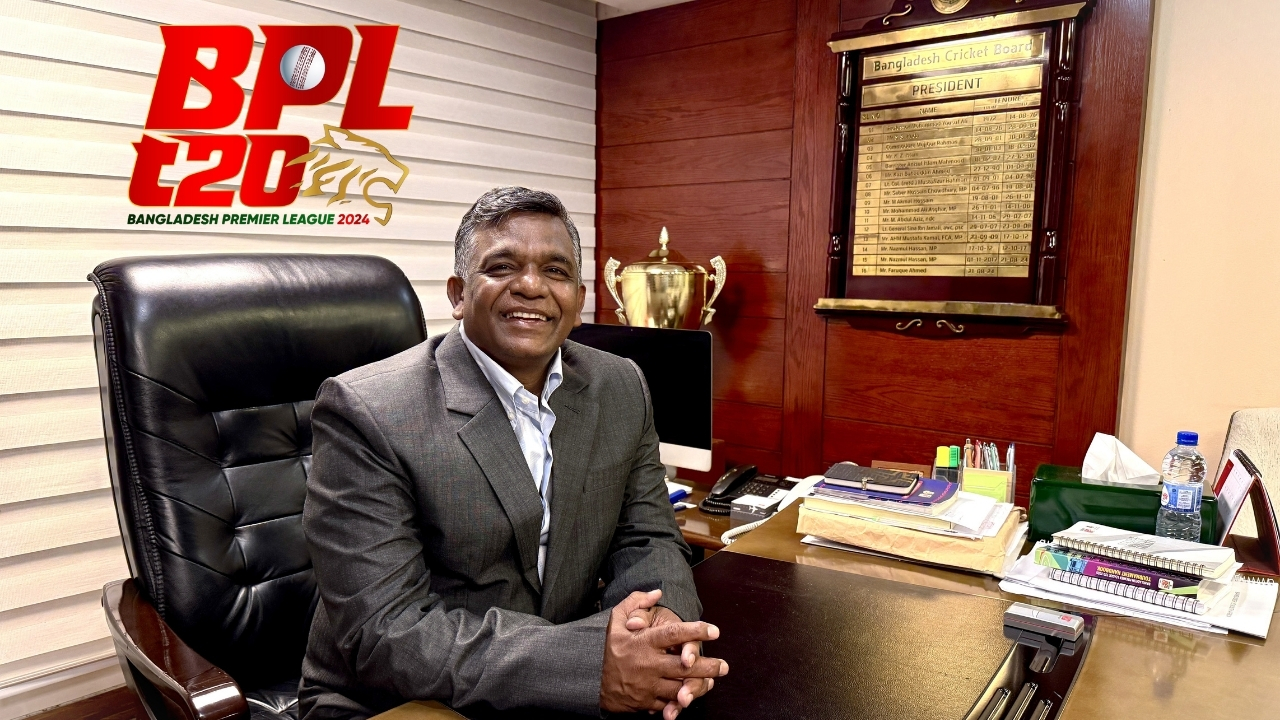
The Bangladesh Premier League (BPL) is on the verge of its most comprehensive transformation to date, as the Bangladesh Cricket Board (BCB) attempts to chart a bold new course to restore credibility, expand globally, and modernize its structure on the heels of multiple scandals involving non-payment of both domestic and international players.
At a press conference following a lengthy board meeting, BCB President Aminul Islam Bulbul acknowledged the continued scrutiny and attention the league attracts.
“Listening to all these questions, it seems the BPL is very popular!” Bulbul said, drawing laughter but also spotlighting the pressure to reform.
Sweeping changes revealed after marathon board meeting
BCB Media and Marketing Committee Chairman Iftikhar Rahman, speaking after the board’s extended deliberations, laid out a reform package covering nearly every aspect of the league—from franchise structure to management, scheduling to transparency.
“There’s been a lot of criticism in the last edition, and even before that. So we’ve decided to do what other countries do—like the IPL or PSL—and hire a renowned sports agency to manage the event,” Rahman announced, confirming that an international-standard management firm will now run the BPL.
The league will now be held in a consistent December-January window annually, a move aimed at better planning and avoiding scheduling conflicts.
“We’ve fixed the BPL time frame for December-January,” Rahman said, adding that the dates align with national priorities and have secured government approval.
Five-year team deals and a new financial model
One of the most consequential changes will reshape team ownership. Franchises will be granted five-year contracts—extending stability and encouraging deeper investment.
“The franchises will be given for at least five years,” Rahman confirmed.
Complementing the extended ownership terms, the BCB will introduce a revenue-sharing system to replace the existing financial arrangement.
“We’ll negotiate a new financial model with them. It won’t be like before. We’ll develop a revenue-sharing model after consulting all stakeholders,” he said.
Governance overhaul with outside experts
In an attempt at restoring accountability, the BCB will involve independent professionals in the BPL’s organizing committee.
“The most significant decision for transparency is to have people from outside the board involved,” Rahman stated.
This marks the first time external specialists will formally contribute to the league’s governance and operations.
“We want to complete the BPL with a truly clean image, so the committee will include external specialists from different disciplines,” he added.
International ownership opens new doors
For the first time in BPL history, international franchises will be allowed to bid for team ownership in an attempt to to globalize the league and tap into broader commercial markets.
“The BPL will be open to everyone,” Rahman said.
He further clarified that selection criteria would be crafted with guidance from leading global agencies and tailored to comply with Bangladesh’s legal framework.
“We’ll finalize criteria based on our experience and advice from successful agencies. Once the board approves those criteria, and assuming they meet our government’s regulations, foreign franchises will be able to own teams.”
Can the BCB deliver?
Despite continued popularity among fans and viewers, the BPL has long been criticized for its opaque operations, inconsistent management and shocking attitude of owners towards paying players.
With sweeping reforms now on the table—from professional oversight and revenue sharing to global expansion—the BCB is attempting to change that narrative.
Whether it can translate these ambitious plans into real-world execution remains the key question.


