On 5 July, the final of the ICC Women’s T20 World Cup will be played at Lord’s. The tournament has come home to England, and across its various intersections of governance and ceremony, the same name keeps surfacing. Clare Connor chairs the ICC Women’s Cricket Committee.
She was the first woman to serve as President of the Marylebone Cricket Club. She was the first woman to hold — even on an interim basis — the Chief Executive role at the England and Wales Cricket Board. She is the Deputy Chief Executive Officer of that organisation today. In February, she announced she would leave the ECB at the close of the summer’s tournament, after nearly two decades inside the game’s national governing body.
The weight of the moment is not lost on her.
“It’s certainly busy at the moment. Time for reflection, but also looking ahead with real excitement for the next few months,” Connor said to cricexec. “It’s an interesting time that I obviously haven’t found myself in before.”
Connor joined the ECB in 2007 as the only employee with sole focus on women’s cricket, the year after retiring from international cricket as the England captain who had ended a 42-year Ashes drought. Two summers after she took up the role, in 2009, England hosted the first ever ICC Women’s T20 World Cup, run in conjunction with the men’s tournament. England had just won the 50-over World Cup in Australia and went on to win the home T20 World Cup that summer too.
“I can’t believe that was 17 years ago,” she said. “We are in a completely different world from then in terms of the standing of the women’s game and all of the opportunity and progress that those years have yielded.”

The Lord’s final on 5 July will also be the second time in nine summers that English women’s cricket has staged a World Cup decider at the ground. England won the 2017 ICC Women’s World Cup at Lord’s under the ECB structure Connor then led as Director of England Women’s Cricket.
A different room
Connor’s account of the room she walked into at the ECB in 2007 is striking. The board was all male. The leadership group, with the exception of Connor and the HR Director, was all male. The infrastructure dedicated to the women’s game — the people, the resources, budgets — bore no resemblance to what exists today.
Her path into the role was, by her own account, conditional. Connor had spent seven years teaching English at Brighton College, combining classroom and pastoral work with her England playing career, and the move into administration was not predetermined. “I grabbed the chance, even though I adored teaching,” she said of the ECB opportunity. “I felt that if I wasn’t very good at cricket administration or if it wasn’t satisfying or rewarding, then I would go back to teaching. But that never happened.”
“It used to be quite a lonely place. I had some good male allies,” she said. “But there were virtually no other women working across the game in positions of influence so the drive to make cricket more gender equal – or at the very least – more inclusive of women and girls on and off the pitch was an enormous challenge. And quite a lonely place to be.”
The metrics she now cites read like a different organisation. The leadership group of the ECB, she said, has just crossed 50 percent female representation for the first time in the game’s history. Across boards in the professional and recreational game in England and Wales, women now hold roughly 35 percent of seats; five years ago, that figure was around 10 percent. The club cricket ratio has shifted from one female cricketer for every ten male cricketers a decade ago to one for every four today.
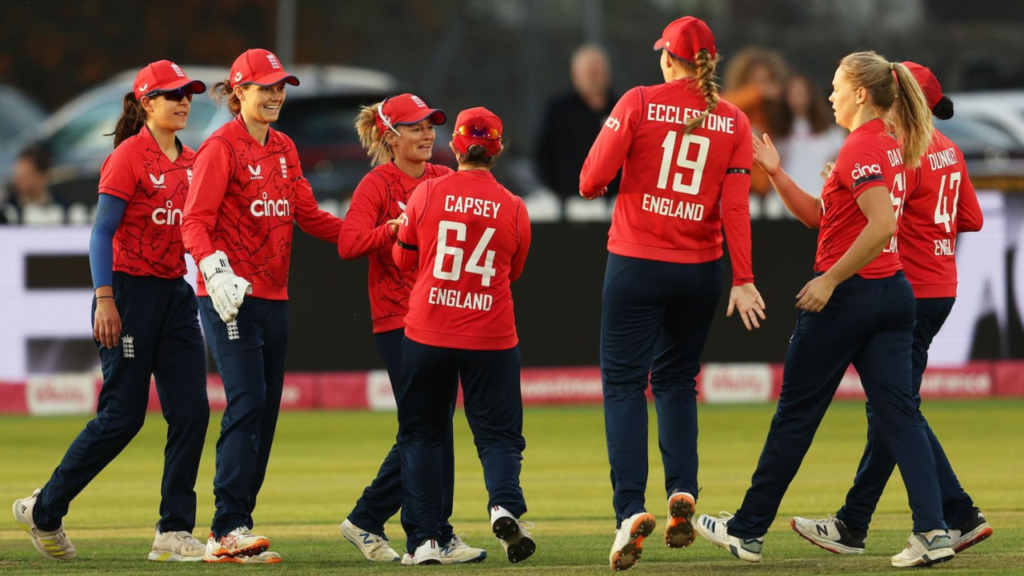
The professional pathway is the most measurable shift. Ten years ago, there were no female professional cricketers in England. Today, the England squad is centrally contracted earning equal match fees to England men, and 150 domestic women play professional county cricket with a starting salary equal to that of their male counterparts.
“We’ve gone from no female professional players 10 years ago to a centrally contracted England group earning really, really good salaries, rewarded much more equitably,” Connor said. “That’s really satisfying.”
The Hundred and what it taught a generation
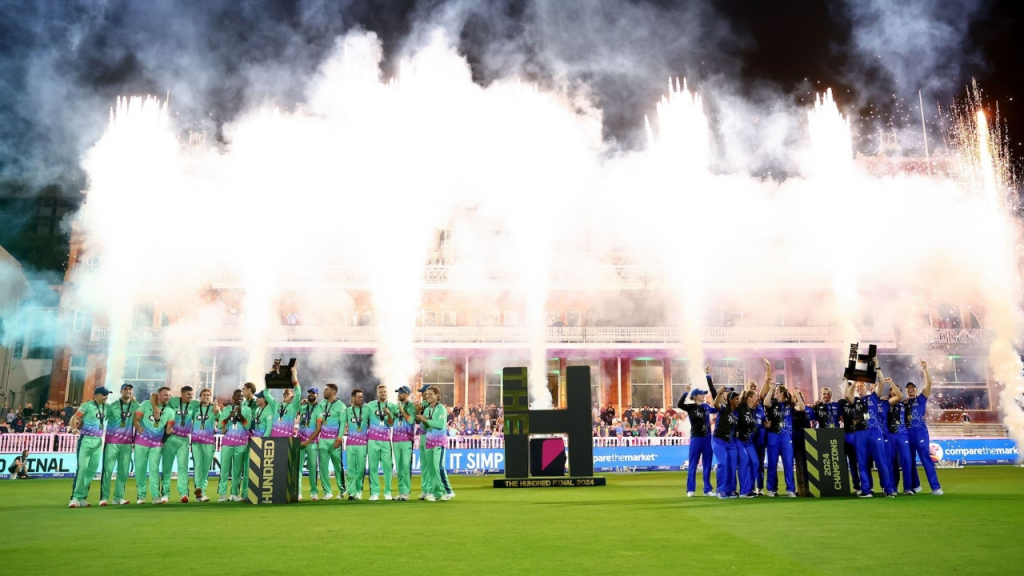
If a single development inside English cricket has done the most to fold the women’s game into the mainstream conversation, Connor sees it as The Hundred, which launched in 2021 with men’s and women’s competitions running side by side from ball one.
“Nearly half a million people are buying tickets to watch the Women’s Hundred,” she said. “The double-header model has had a huge impact, as has launching that competition with eight men’s teams and women’s teams completely side by side from ball one, same branding, same look and feel, same matchday experience.”
The audience effect she finds most encouraging runs through the next generation.
“It’s wonderful to hear kids now say, ‘my favourite London Spirit players are Charlie Dean’ and whoever else from the men’s game,” she said. “They just don’t see a gender difference, or that one is more important than the other or better than the other.”
That positioning, she added, matters as much for the boys watching as for the girls. “We sometimes laser in too much on the impact of all of this for girls and for women,” she said. “It’s so important that boys and men are seeing that evolution and transformation and positioning of women’s cricket and women in cricket in that way.”
The global picture
In her role as Chair of the ICC Women’s Cricket Committee, Connor’s reading of women’s cricket extends well beyond England. Her assessment of where the global game arrives in summer 2026 separates the commercial and competitive trajectory from a governance question that has not been resolved.
With respect to the World Cup tournaments, the indicators are uniformly positive. Prize money has taken what she called “another huge leap forward” since the 2024 edition. The officiating panel will be entirely female, with the ICC moving toward part-time elite contracts for female umpires. Major sponsors including Google and Budweiser will be present around the grounds.
Connor pointed to a second strand of ICC activity that does not always surface: a roughly five-million-US-dollar investment over the next few years aimed at more competitive opportunity for the highest-ranked Associate Members — Thailand, Papua New Guinea and others — to close the gap to Full Member nations. She also flagged emerging programmes in countries with relatively little men’s cricket history but a strong push for women’s cricket.
“Brazil would be a good example of that,” she said. “There is the opportunity with ICC funding for countries like that to say, ‘OK, we don’t have the baggage of the men’s game or we don’t have the structures of what men’s cricket has looked like, and some of the hurdles that can exist from that history and tradition. Let’s build it our way.’”
The governance critique she offers, though, is unambiguous.
“For two years until just recently, the ICC had no female representation on its board. I think that was a problem. And I think that was widely spoken about as a problem,” she said. “There was no independent director for a long time on that board. And I think every shred of evidence on good governance guidance in the world would tell us that good governance requires independence and diversity.”
The independent seat on the ICC board, she noted, was previously held by Indra Nooyi — the first woman to sit on the ICC board — and was vacant until it was just announced this past May 30 that Dr. Ros Rivaz was appointed to the board seat. Connor said she expects governance reform to feature in the ICC’s next strategic period.
A historic but challenging chapter
Connor’s eleven-month stint as Interim Chief Executive Officer of the ECB, which began in mid-2022, overlapped with two pressures that she does not soften in retrospect. The first was the post-COVID recovery, which she described as a brutal stretch for cricket employees personally and professionally. The second was the discrimination scrutiny that flowed out of Yorkshire and led the ECB to establish the Independent Commission for Equity in Cricket.
“It was a very bruising time, those two things,” she said. “I think having a woman in the CEO role brought a different style than the ECB had experienced before. And I think that at that time that was welcomed.”
She did not apply for the permanent role.
“I didn’t want to do it on a permanent basis, but also I thought actually – I don’t know that I am the right person for the next part of the ECB’s journey and the work that’s required,” she said. “It was a huge honour to step into that role for that period. We were grappling with some really big things on a human level so I tried to bring a compassion and an empathy and a sense of humility to that role at a time when I think we as an organisation and the sport needed it.”
The framework she returns to when she talks about leadership transitions is timing and understanding what’s needed. “I think timing is everything in terms of leadership roles,” she said, applying the same logic to head coaches as to chief executives. “Where is that group of players on their journey, what’s on the horizon, where do we need to get to? Ok, well, this head coach is going to be better than that head coach on the basis of those answers.”
Those eleven months marked the first time at the ECB Connor’s remit had not been wholly focused on the women’s game. She described it as a “great learning curve” while preparing her for the subsequent role as Deputy CEO.
What stays
Connor’s plans for after she leaves the ECB are deliberately unfixed. What she has made clear is what she will not be doing — namely, removing herself from the sport entirely. She remains a Trustee of the MCC Foundation, whose mission to transform lives through cricket sits closer to the work she has described as most meaningful.
In October, she is travelling to Brazil with the Foundation to coach and to see programmes that, in her telling, are growing the game without inheriting the structures, expectations and constraints carried by older cricket nations. A few years ago, during her MCC presidency, she travelled to Beirut with a small group from MCCF to coach in a Syrian refugee camp.
“The stories of those children’s lives, particularly girls who now have cricket in their lives and the confidence and empowerment that that’s brought, I’m so passionate about that,” she said. “Cricket is very, very special for what it gives young people and communities, breaking down barriers and empowering young people.”

She has seen the sport, she said, from three vantage points: as a player, as an administrator, and as a volunteer coach in a refugee camp. The consistent factor, in her account, has been the capacity of the game itself to build something in the people who encounter it. The throughline running between professional contracts for England Women, the expansion of recreational pathways under the ECB’s remit and a coaching session in Beirut is, in her framing, the same.
Not the peak of the mountain
Connor’s framing of the summer ahead is not that of a retiring administrator looking for a triumphant ending. Instead, she has a clear message to the English and global cricket communities: that the World Cup is a marker rather than a destination.“This summer’s World Cup is not the peak of the mountain,” she said. “It is yet another catalyst to care more and do more and build more for women in the game.”
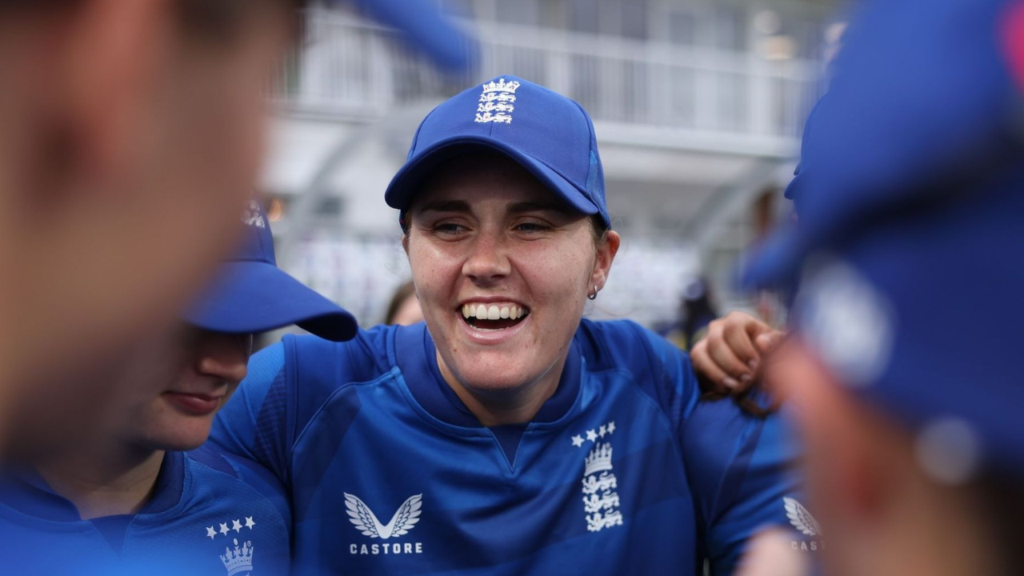
On 5 July at Lord’s, her hope, stated plainly, is that Nat Sciver-Brunt will be the one lifting the trophy. What she leaves behind, regardless of the outcome on the day, is a structure with full professional contracts at England and county level, a Hundred competition that the next generation watches without gendered hierarchy, and a global game whose governance, by her own assessment, still has significantly further to travel. Whoever sits next in the ECB’s Deputy Chief Executive seat — and, eventually, in the Women’s Cricket Chair she has held at the ICC since 2011 — will inherit a sport unrecognisable from the one she joined.
Connor’s playing career ended in 2006, with a hundred caps and a first Ashes victory in 42 years. It was, by any honest reading, a summit. What it also turned out to be was the start of the next chapter and two decades of changing and redefining the women’s game. If there is a pattern in the way Connor’s career has unfolded, and in her outlook, it is that the moments which look like peaks can instead become starting points. If the same proves true of the summer of 2026, the game will be all the better for it.