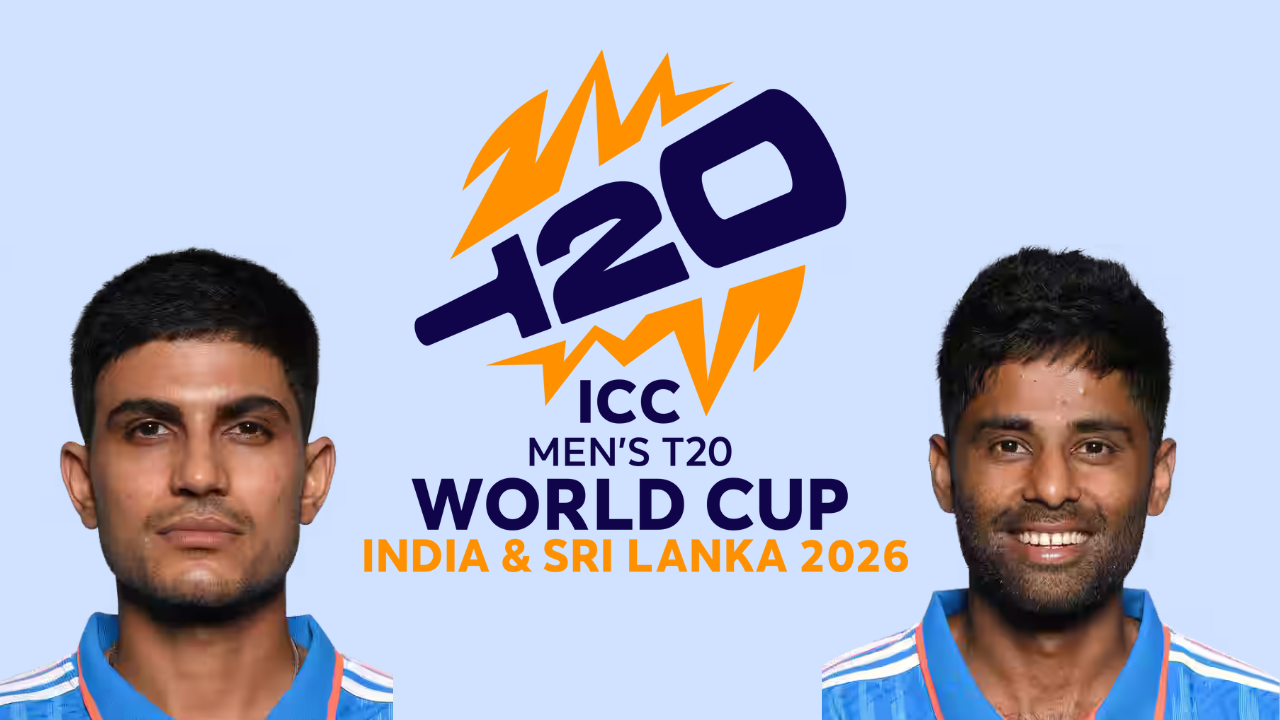
India’s T20 World Cup squad announcement has reignited a familiar debate about role clarity, format demands and selection philosophy, after Shubman Gill was left out despite previously being elevated as vice-captain. The decision has prompted strong reactions from former players and coaches, reopening questions about how India balances technical excellence with explosiveness in the shortest format.
Raman questions selection logic and leadership timing
Former India batter and coach WV Raman expressed surprise at the sequence of decisions that saw Gill first fast-tracked into leadership and then omitted altogether. Speaking to The Times of India, Raman framed the call as one driven by format-specific priorities rather than individual failure, saying, “Gill hasn’t been dropped for any significant fault of his. Just that the players around him are more explosive than him, a quality that is essential in modern-day T20 cricket. In an imaginary scenario, it is almost like choosing Kris Srikkanth over Sunil Gavaskar for the T20 format, knowing full well who the better batter in the format actually could be. That’s why I was wondering why it was necessary to make him the T20 vice-captain at that stage, when so many others fit the T20 bill so well.”
Raman also dismissed suggestions that Gill’s technical adjustments had limited his power-hitting. Addressing concerns over Gill’s straighter bat, he pointed to examples at the top level, noting, “Rohit Sharma plays with a straight bat, but does that restrict his hitting? Sometimes a straight bat opens up more scoring options even in T20 cricket. It is more about who you are as a player and we have to admit that some of the others around him are naturally more explosive.”
From Raman’s perspective, the omission should not be framed as a setback to Gill’s standing in Indian cricket. Emphasising the mental side of professional sport, he added, “If I was his coach, I would have told him that there is no place for emotion in a player’s life. It is a decision that has been taken with the team composition in mind and Gill should not think for a second that he has become a lesser player.”
Manjrekar calls it a correction, not a snub
Gill’s numbers in the format have also added weight to the selectors’ decision. Since returning to India’s T20I setup, he has gone without a half-century across 15 innings, with a highest score of 47 and a strike rate that has remained below 140. That lack of momentum showed up repeatedly, including during the South Africa series, where a brief stay ending with 4 off two deliveries was followed by a golden duck in the next match. Even when pressure was relatively low, the issues persisted. In a modest chase in Dharamsala, Gill struggled to lift the tempo, playing himself in without finding a release shot before eventually falling for 28 off 28 balls, an innings that sharpened questions around his ability to recalibrate when T20 games demand urgency rather than accumulation.
While Raman focused on leadership planning and player management, former India batter Sanjay Manjrekar took a more direct view of Gill’s suitability for T20 cricket. Writing on X, Manjrekar argued that the decision reflected a reassessment rather than a reversal, stating, “When you pick someone excitedly on Test performance for T20s, this is what happens. Gill omission is basically selectors rectifying a mistake they made when they got a bit carried away after the England tour.”
When you pick some one excitedly on Test performance for T20s, this is what happens. Gill omission is basically selectors rectifying a mistake they made when they got a bit carried away after the England tour. #T20WorldCup
— Sanjay Manjrekar (@sanjaymanjrekar) December 20, 2025
Manjrekar’s critique centred on output and tempo, particularly in a format where strike rates often outweigh milestones. Expanding on that point, he wrote, “He hasn’t got a single 50 in 20 innings. A stat often cited to suggest loss of form. T20s is & will always be about strike rates. The last thing you want is an out-of-form batter playing cautiously when he comes close to 50. This will lose you the game.”
He hasn’t got a single 50 in 20 inngs. A stat often cited to suggest loss of form. T20s is & will always be about strike rates.
The last thing you want is an out of form batter playing cautiously when he comes close to 50. This will lose you the game.— Sanjay Manjrekar (@sanjaymanjrekar) December 23, 2025
The comments reflected a broader argument about T20 selection criteria, where prolonged lean patches and cautious batting are seen as liabilities rather than phases to be played through, especially with a home World Cup on the horizon.
Surya addresses form amid wider scrutiny
The debate around Gill has unfolded alongside renewed focus on form across India’s T20 setup, including the captain himself. Speaking to reporters in Mumbai at a press conference after India announced their squad for the T20 World Cup, Suryakumar Yadav contextualised the scrutiny players face during lean spells, saying, “I am sure everyone has seen this in their respective careers.”
Rather than deflecting questions, Suryakumar projected confidence in his own process and preparation. Looking ahead to upcoming assignments, he added, “I know what to do. I know where things are going wrong. I have got some time to work on it. We have the New Zealand series coming up and then the important T20 World Cup. You will definitely see Surya the batter.”
A broader selection conversation
Gill’s omission has become a flashpoint not because of a single decision, but because it sits at the intersection of leadership planning, format-specific demands and the pressure to deliver immediate impact. As contrasting views from Raman and Manjrekar illustrate, the debate is less about Gill’s talent and more about how India defines value in T20 cricket.
With the World Cup approaching and competition intensifying across roles, the selectors’ choices signal a clear preference for explosiveness and clarity of role. Whether that approach delivers the balance India are seeking will only be answered on the field, but the conversation around Gill’s place has already exposed the fine margins shaping India’s T20 thinking.